Dunbar-Manhattan Heights in Lubbock in Lubbock County, Texas — The American South (West South Central)
Willie Lusk Jr.
(1914-1976)
Photographed by Allen Lowrey, March 14, 2026
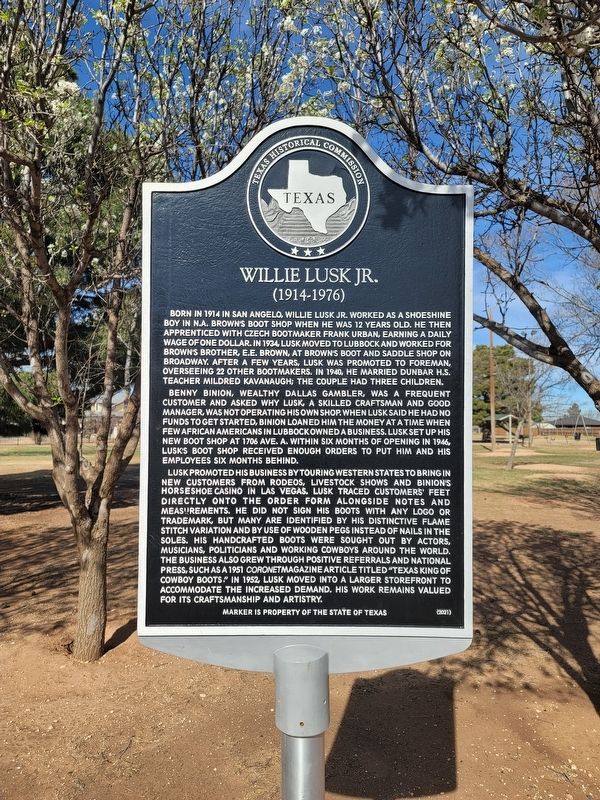
1. Willie Lusk Jr. Marker
Born in 1914 in San Angelo, Willie Lusk Jr. worked as a shoeshine boy in N.A. Brown's boot shop when he was 12 years old. He then apprenticed with Czech bootmaker Frank Urban, earning a daily wage of one dollar. In 1934, Lusk moved to Lubbock and worked for Brown's brother, E.E. Brown, at Brown's boot and saddle shop on Broadway. After a few years, Lusk was promoted to foreman, overseeing 22 other bootmakers. In 1940, he married Dunbar H.S. teacher Mildred Kavanaugh; the couple had three children.
Benny Binion, wealthy Dallas gambler, was a frequent customer and asked why Lusk, a skilled craftsman and good manager, was not operating his own shop. When Lusk said he had no funds to get started, Binion loaned him the money at a time when few African Americans in Lubbock owned a business. Lusk set up his new boot shop at 1706 Ave. A. Within six months of opening in 1946, Lusk's boot shop received enough orders to put him and his employees six months behind.
Lusk promoted his business by touring western states to bring in new customers from rodeos, livestock shows and Binion's Horseshoe Casino in Las Vegas. Lusk traced customers'
this page online
Erected 2021 by Texas Historical Commission. (Marker Number 23366.)
Topics. This historical marker is listed in these topic lists: African Americans • Industry & Commerce. A significant historical year for this entry is 1914.
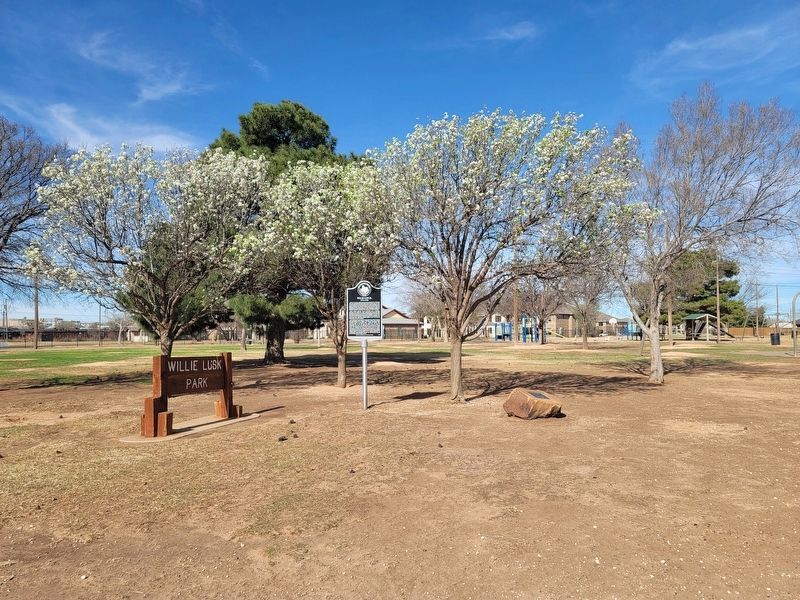
Location. 33° 34.241′ N, 101° 49.229′ W. Marker is in Lubbock, Texas, in Lubbock County. It is in Dunbar-Manhattan Heights. It is at the intersection of Oak Avenue and E 26th Street, on the right when traveling south on Oak Avenue. Touch for map. Marker is at or near this
Photographed by Allen Lowrey, March 14, 2026
2. Willie Lusk Jr. Marker

Regionally, this marker is on Texas’ South Plains. It is also on the American Great Plains, specifically on the Southern Plains, and specifically on the High Plains. Globally, it is in North America, a Gulf of Mexico state, the Western Hemisphere, the Western World, and the Anglosphere. Historically, it finds itself in what was once New Spain, the Comanchería, the Republic of Texas, and one of the Confederate States of America.
Other nearby markers. At least 8 other markers are within walking distance of this marker: Mary & Mac Private School (approx. 0.4 miles away); City of Lubbock Cemetery (approx. 0.4 miles away); Buddy Holly Historical Marker (approx. 0.4 miles away); Mount Gilead Baptist Church (approx. 0.6 miles away); Congressional Medal of Honor Recipients (approx. 0.6 miles away); Greater St. Luke Missionary Baptist Church (approx. 0.7 miles away); Bradford Knapp (approx. 0.8 miles away); Paul Whitfield Horn (approx. 0.9 miles away). Touch for a list and map of all markers in Lubbock.
Another marker is
Photographed by Allen Lowrey, March 14, 2026
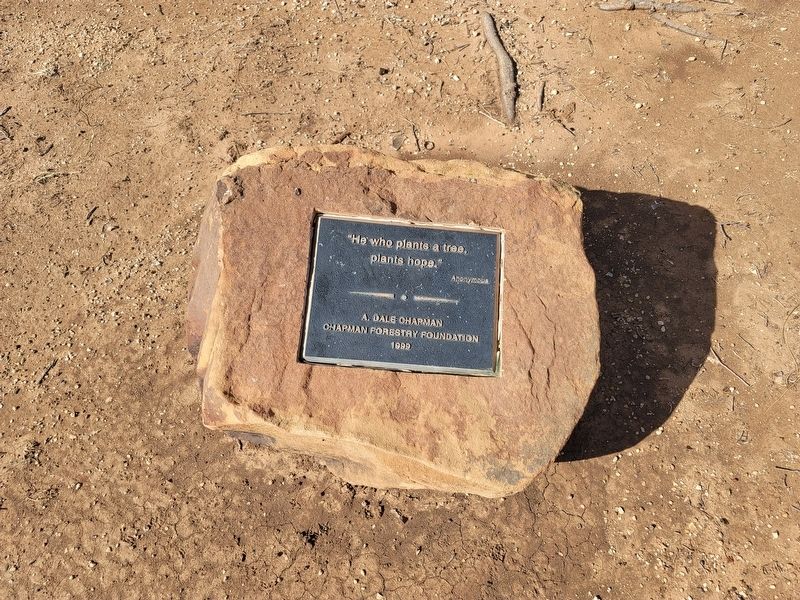
3. Rock and plaque next to the Willie Lusk Jr. Marker
Credits. This page was last revised on March 18, 2026. It was originally submitted on March 17, 2026, by Allen Lowrey of Amarillo, Texas. This page has been viewed 23 times since then. Photos: 1, 2, 3. submitted on March 17, 2026, by Allen Lowrey of Amarillo, Texas. • James Hulse was the editor who published this page.
