
Little Italy in Chicago in Cook County, Illinois — The American Midwest (Great Lakes)
Joseph Lovings
1878-1919
| — | Chicago Race Riot of 1919 Commemoration Project | — |
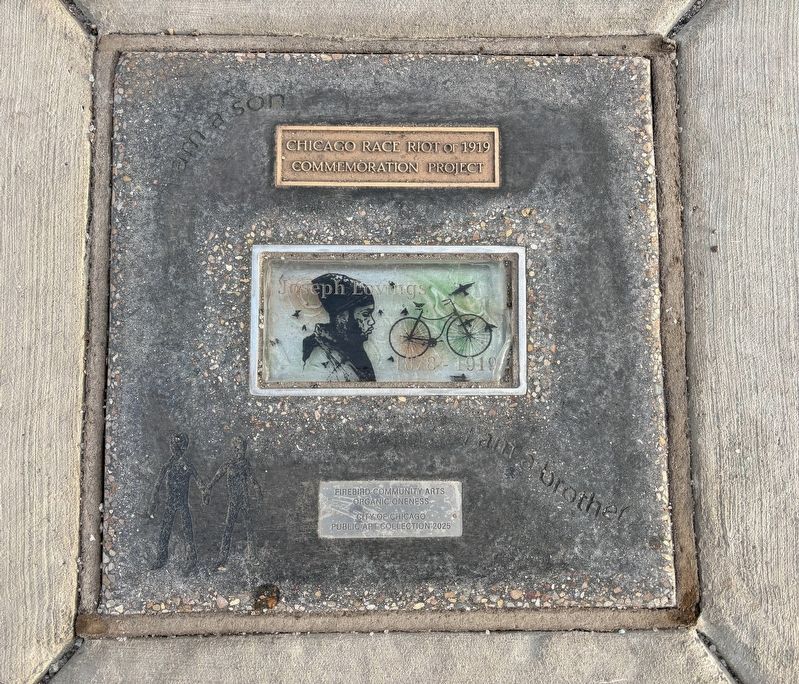
Photographed by Sean P. Flynn, March 21, 2026
1. Joseph Lovings Marker
I am a son
I am a brother
Erected 2025 by Chicago Race Riot of 1919 Commemoration Project.
Topics and series. This historical marker is listed in these topic lists: African Americans • Disasters. In addition, it is included in the Chicago Race Riot of 1919 Commemoration Project, Illinois series list. A significant historical date for this entry is July 29, 1929.
Location. 41° 52.167′ N, 87° 39.574′ W. Marker is in Chicago, Illinois, in Cook County. It is in Little Italy. It is on West Taylor Street east of South Ada Street, on the right when traveling west. The marker is embedded in the sidewalk, near the southeast corner of the National Public Housing Museum. Touch for map. Marker is at or near this postal address: 919 South Ada Street, Chicago IL 60607, United States of America. Touch for directions.

Regionally, this marker is in the American Midwest. Globally, it is in North America, on the Great Lakes, in the Western Hemisphere, in the Western World, and in the Anglosphere. Historically, it finds itself in what was once the Viceroyalty of New France, the territory of the Mississippian Culture, and the Northwest
this page online
Other nearby markers. At least 8 other markers are within walking distance of this marker: Still Here: Zhegagoynak, A Monument and Memorial (here, next to this marker); Jane Addams Homes (a few steps from this marker); The Demolition of the Jane Addams Homes (a few steps from this marker); Deverra Beverly (within shouting distance of this marker); Deverra Beverly's Quilt (within shouting distance of this marker); Benedict Kabakow (within shouting distance of this marker); Jane Addams Homes Garden (within shouting distance of this marker); Saint Frances Xavier Cabrini (approx. 0.2 miles away). Touch for a list and map of all markers in Chicago.
More about this marker. This sidewalk marker near the National Public Housing Museum in Chicago's near west side Little Italy neighborhood was erected as part of the Chicago Race Riot of 1919 Commemoration Project, created in remembrance of those killed during the deadly racial violence that gripped Chicago in the summer of 1919. Inspired by the Stolpersteine ("Stumbling Stones") project in Europe, which erects sidewalk markers honoring Holocaust victims, these markers in Chicago
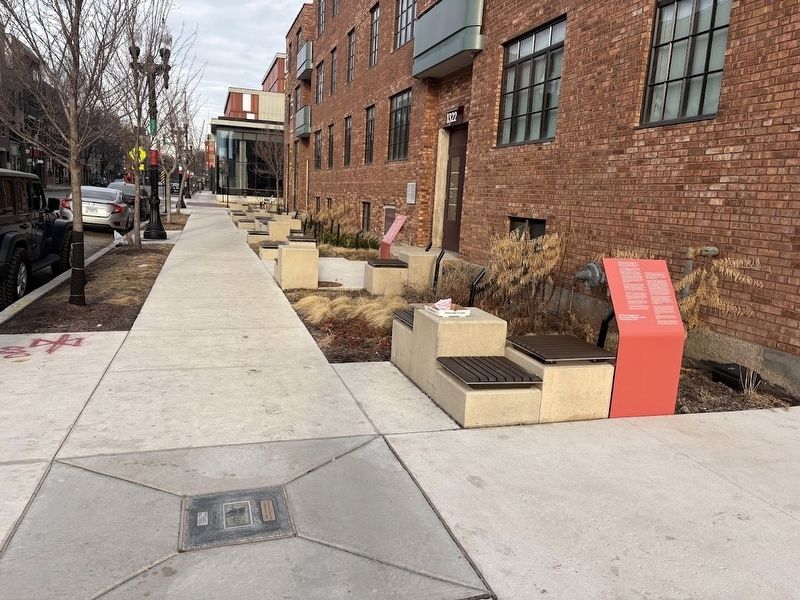
Photographed by Sean P. Flynn, March 21, 2026
2. Joseph Lovings Marker in front of the National Public Housing Museum
Regarding Joseph Lovings. On July 27, 1919, Eugene Williams, a Black 17-year-old, was riding in a homemade raft with four friends in Lake Michigan when it accidentally floated past the invisible boundary that demarcated what was a de-facto "whites-only" part of the beach. A white man, George Stauber, threw stones at the boys and killed Williams. The scene set off a wave of protests followed by a week of racially driven violence. Between July 27 and Aug. 3, 38 people died (23 were Black and 15 white), more than were 500 injured, and more than 1,000 people, most of them Black, had their homes destroyed.
Joseph Lovings was a Chicago native, one of the 23 Blacks killed in the riots, served in the U.S. Army during World War I. At the time of the riots he lived at 2032 S. Dearborn, about 2½ miles southeast (by street routes) from the spot of this memorial. On the evening of July 29, Lovings was biking home from his job as a barbershop porter. At the same time, a rumor
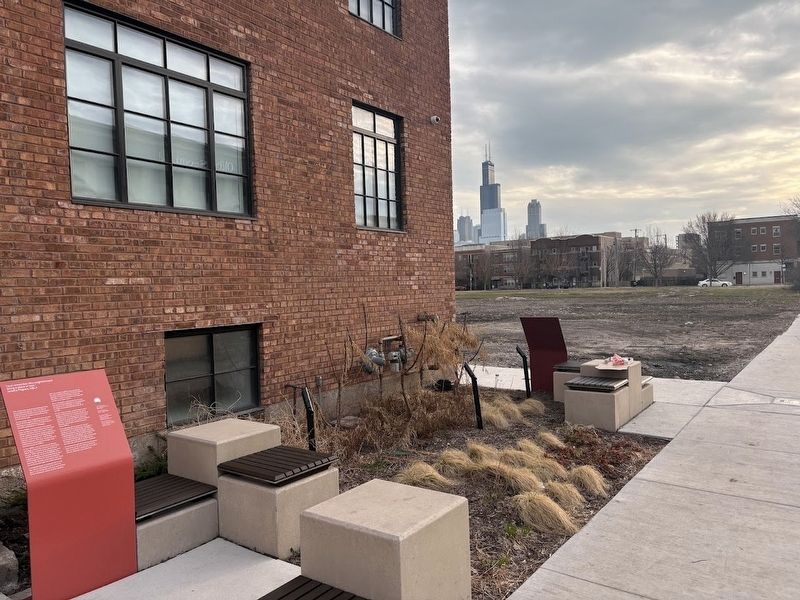
Photographed by Sean P. Flynn, March 21, 2026
3. Joseph Lovings Marker
The National Public Housing museum is on the left, with Chicago's skyline in the distance.
Also see . . . Joseph Lovings. From the Race Riot Commemoration Project's official site. (Submitted on March 23, 2026, by Sean P. Flynn of Oak Park, Illinois.)
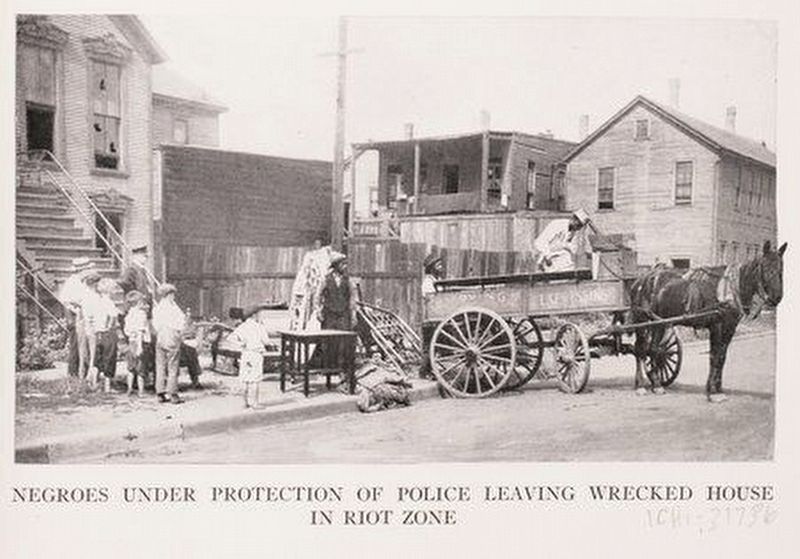
University of Chicago Press, courtesy of Chicago History Museum (ICHi-031736), circa 1919
4. Black citizens flee during 1919 race riots
Black residents of pack their belongings into wagon after their home was vandalized during the 1919 riots.
Credits. This page was last revised on March 24, 2026. It was originally submitted on March 23, 2026, by Sean P. Flynn of Oak Park, Illinois. This page has been viewed 13 times since then. Photos: 1, 2, 3. submitted on March 23, 2026, by Sean P. Flynn of Oak Park, Illinois. 4. submitted on December 11, 2025, by Sean P. Flynn of Oak Park, Illinois.
