Central London in Middlesex County, Ontario — Central Canada (North America)
Paul Peel
1860 1892
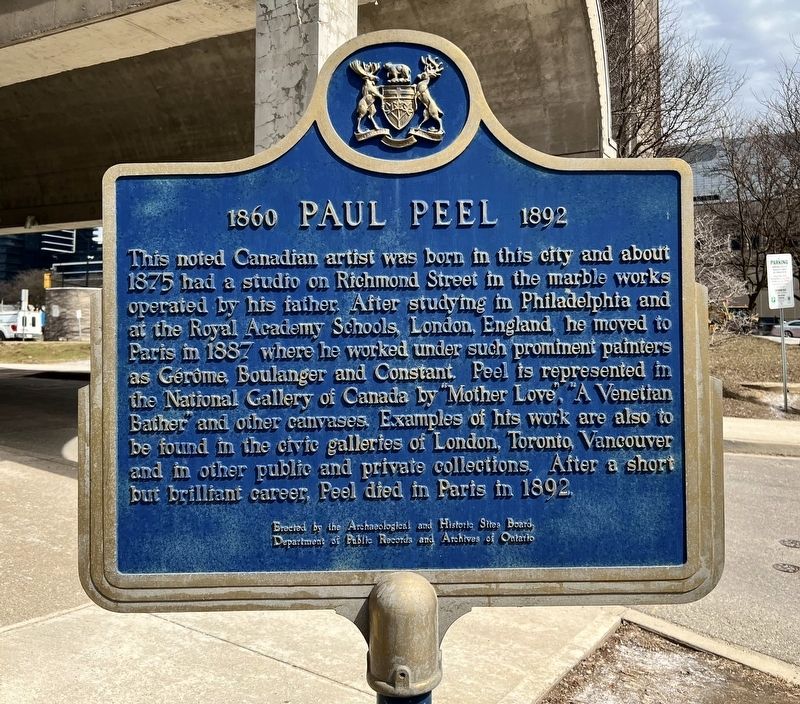
Photographed by Tim Boyd, March 30, 2026
1. Paul Peel Marker
Topics and series. This historical marker is listed in this topic list: Arts, Letters, Music. In addition, it is included in the Canada, Ontario Heritage Trust series list. A significant historical year for this entry is 1860.
Location. 42° 58.946′ N, 81° 15.287′ W. Marker is in London, Ontario, in Middlesex County. It is in Central London. It is at the intersection of Dundas Street and Ridout Street North, on the right when traveling west on Dundas Street. Touch for map. Marker is at or near
this page online

Regionally, this marker is in the Southwest Ontario Area and in Southwestern Ontario. It is also in Central Canada. Globally, it is in North America, the Western Hemisphere, the Western World, and the Anglosphere. Historically, it finds itself in what was once a British colony, the Viceroyalty of New France, the Haudenosaunee (Iroquois) Confederacy, and Rupert’s Land.
Other nearby markers. At least 8 other markers are within walking distance of this marker: The Founding of London (within shouting distance of this marker); Middlesex Court House (within shouting distance of this marker); The Gaol and Courthouse, London, c.1843 (about 90 meters away, measured in a direct line); The Petition of John Ewart (about 90 meters away); The Ridout Street Complex (about 150 meters away); Eldon House (about 240 meters away); King Street Bridge (approx. 0.2 kilometers away); The Farmer’s Advocate (approx. 0.3 kilometers away). Touch for a list and map of all markers in London.
Also see . . . Peel, Paul (Dictionary of Canadian Biography).
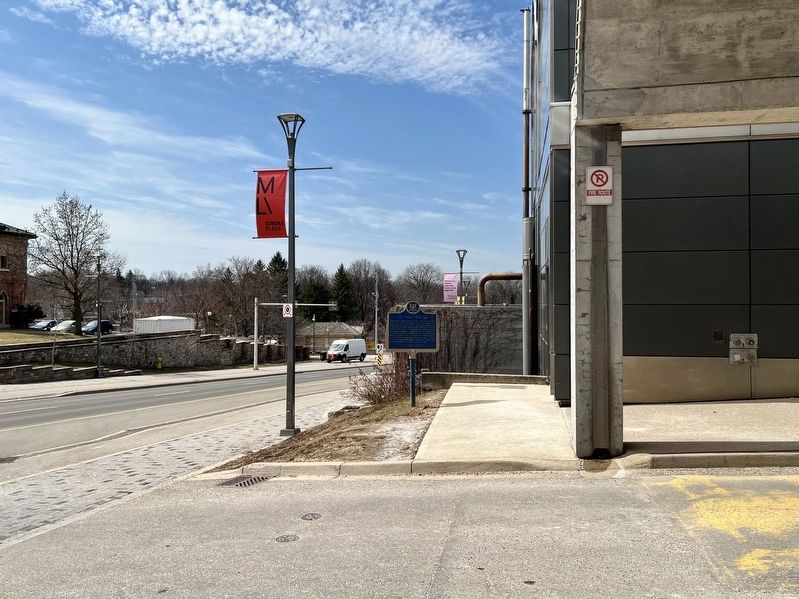
Photographed by Tim Boyd, March 30, 2026
2. Paul Peel Marker
Facing west on Dundas Street
Although Peel left a substantial body of work, he must be seen as a talented painter at the threshold of achieving his full artistic maturity. Despite a certain unevenness often found in the work of young artists, Peel’s creative output made him, in his day, perhaps Canada’s best-known painter in Europe. His frequent displays of technical virtuosity, especially in the depiction of the human body, his adherence to the conservative tenets of the juste milieu, and his fascination with domestic scenes of women and children – always touching, occasionally erotic – perfectly reflect 19th-century European bourgeois values and the artistic concerns of most of his generation.(Submitted on April 3, 2026, by Tim Boyd of Hamilton, Ontario.)
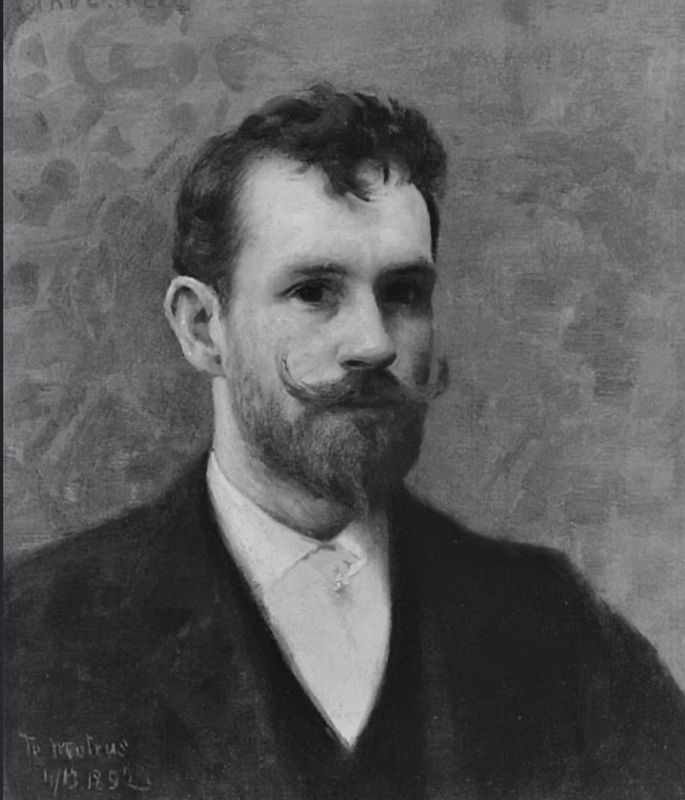
1892
3. Paul Peel, self-portrait, 1892
National Gallery of Canada (public domain)
Credits. This page was last revised on April 4, 2026. It was originally submitted on April 3, 2026, by Tim Boyd of Hamilton, Ontario. This page has been viewed 24 times since then. Photos: 1, 2, 3. submitted on April 3, 2026, by Tim Boyd of Hamilton, Ontario. • Andrew Ruppenstein was the editor who published this page.
