
Krondorf in Schwandorf, Bavaria, Germany — Central Europe
Felsenkeller
⎯⎯⎯
Rock Cellar
Photographed by James Hulse, March 20, 2026
1. Felsenkeller / Rock Cellar Marker

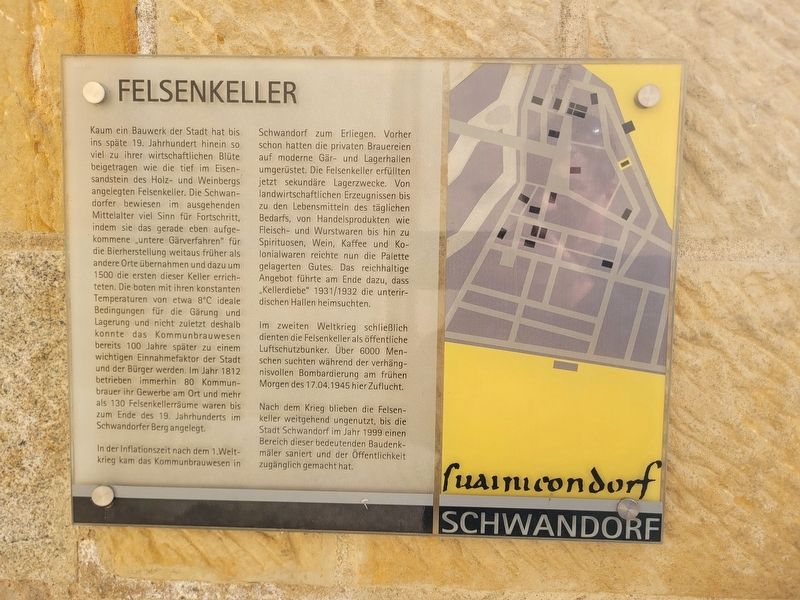
Kaum ein Bauwerk der Stadt hat bis ins späte 19. Jahrhundert hinein so viel zu ihrer wirtschaftlichen Blüte beigetragen wie die tief im Eisensandstein des Holz- und Weinbergs angelegten Felsenkeller. Die Schwandorfer bewiesen im ausgehenden Mittelalter viel Sinn für Fortschritt, indem sie das gerade eben aufgekommene „untere Gärverfahren“ für die Bierherstellung weitaus früher als andere Orte übernahmen und dazu um 1500 die ersten dieser Keller errichteten. Diese boten mit ihren konstanten Temperaturen von etwa 8 °C ideale Bedingungen für die Gärung und Lagerung, und nicht zuletzt deshalb konnte das Kommunbrauwesen bereits 100 Jahre später zu einem wichtigen Einnahmefaktor der Stadt und der Bürger werden. Im Jahr 1812 betrieben immerhin 80 Kommunbrauer ihr Gewerbe am Ort, und mehr als 130 Felsenkellerräume waren bis zum Ende des 19. Jahrhunderts im Schwandorfer Berg angelegt.
In der Inflationszeit nach dem 1. Weltkrieg kam das Kommunbrauwesen in Schwandorf zum Erliegen. Vorher schon hatten die privaten Brauereien auf moderne Gär- und Lagerhallen umgerüstet. Die Felsenkeller erfüllten nun sekundäre Lagerzwecke.
this page online
Im Zweiten Weltkrieg schließlich dienten die Felsenkeller als öffentliche Luftschutzbunker. Über 6000 Menschen suchten während der verhängnisvollen Bombardierung am frühen Morgen des 17.04.1945 hier Zuflucht.
Nach dem Krieg blieben die Felsenkeller weitgehend ungenutzt, bis die Stadt Schwandorf im Jahr 1999 einen Bereich dieser bedeutenden Baudenkmäler sanierte und der Öffentlichkeit zugänglich machte.
Hardly any structure in the city contributed as much to its economic prosperity up to the late 19th century as the rock cellars carved deep into the iron sandstone of the Holz- and Weinberg hills. In the late Middle Ages, the people of Schwandorf showed a strong sense of innovation by adopting the newly developed bottom-fermentation method for brewing beer much
Photographed by James Hulse, March 20, 2026
2. Felsenkeller / Rock Cellar Marker
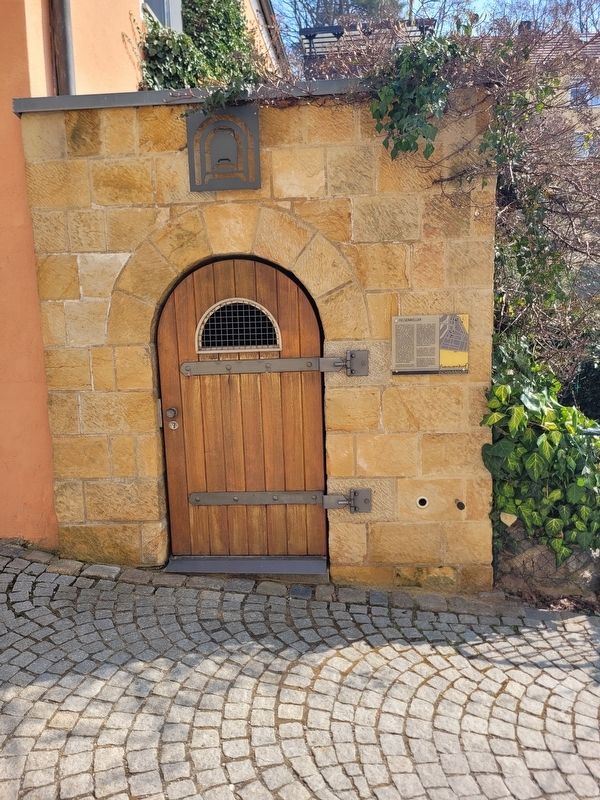
The entrance to the cellars with the marker on the right side.
During the inflation period after the First World War, communal brewing in Schwandorf came to an end. Even before that, private breweries had converted to modern fermentation and storage facilities. The rock cellars were then used for secondary storage purposes. The range of goods stored included agricultural products, everyday foodstuffs, commercial goods such as meat and sausage products, as well as spirits, wine, coffee, and colonial goods. This abundance eventually led to “cellar thieves” plundering the underground halls in 1931/1932.
During the Second World War, the rock cellars served as public air-raid shelters. More
Photographed by James Hulse, March 20, 2026
3. Felsenkeller / Rock Cellar Marker
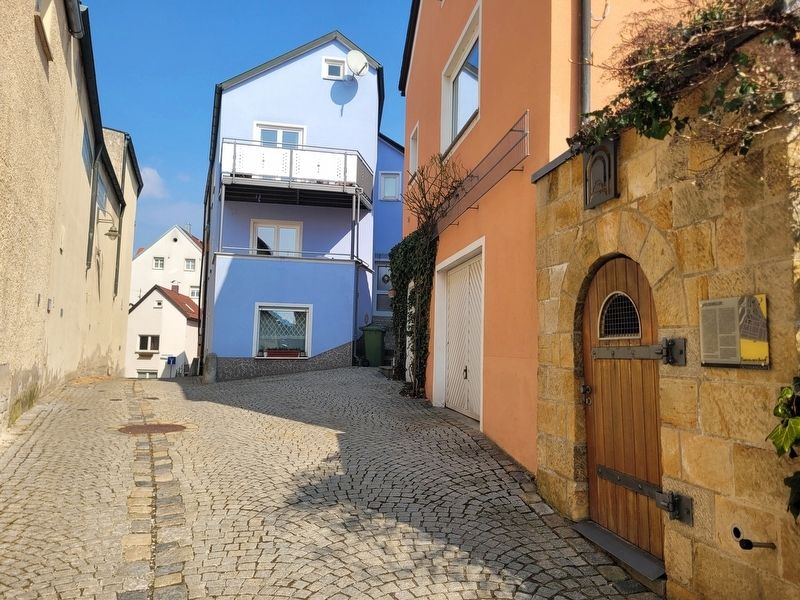
The view of the cellar door along the street.
After the war, the rock cellars remained largely unused until the city of Schwandorf restored part of these important historical structures in 1999 and opened them to the public.
Topics. This historical marker is listed in this topic list: War, World II. A significant historical date for this entry is April 17, 1945.
Location. 49° 19.785′ N, 12° 6.517′ E. Marker is in Schwandorf, Bayern (Bavaria). It is in Krondorf. It is on Spitzwegstraße just north of Berggasse, on the right when traveling north. Touch for map. Marker is at or near this postal address: Spitzwegstraße 32, Schwandorf BY 92421, Germany. Touch for directions.

Regionally, it is in Europe, the European Union, Atlantic Europe, Central Europe, the Schengen Area, Western Europe, and the Western World. Historically, it finds itself in what was once the Holy Roman Empire and also the former West Germany.
Other nearby markers. At least 8 other markers are within walking distance of this marker: Konrad Max Kunz (within shouting distance of this marker); Gasthof zur Post / Inn “Zur Post”
Photographed by James Hulse, March 20, 2026
4. Felsenkeller / Rock Cellar Marker
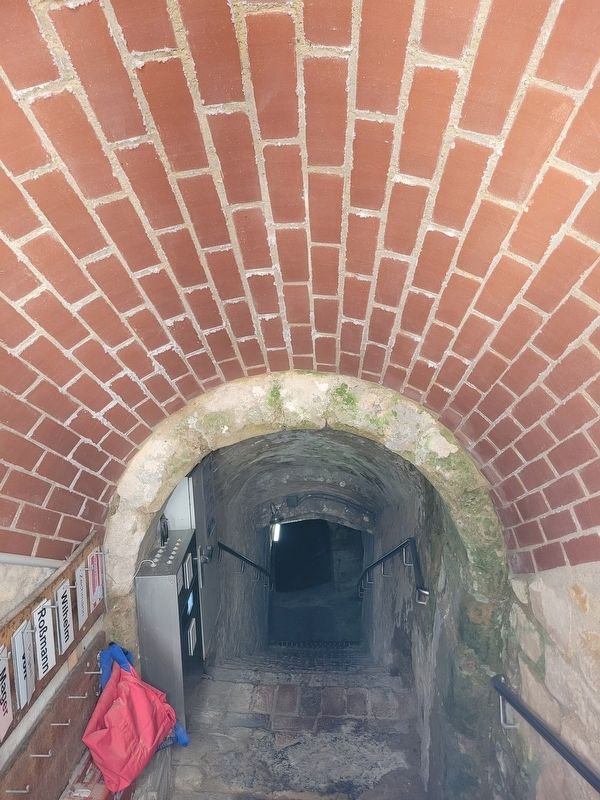
The view of the cellar through the door.
Credits. This page was last revised on April 9, 2026. It was originally submitted on April 7, 2026, by James Hulse of Medina, Texas. This page has been viewed 16 times since then. Photos: 1, 2, 3, 4. submitted on April 9, 2026, by James Hulse of Medina, Texas.
