Kennett City Hall and Masonic Lodge
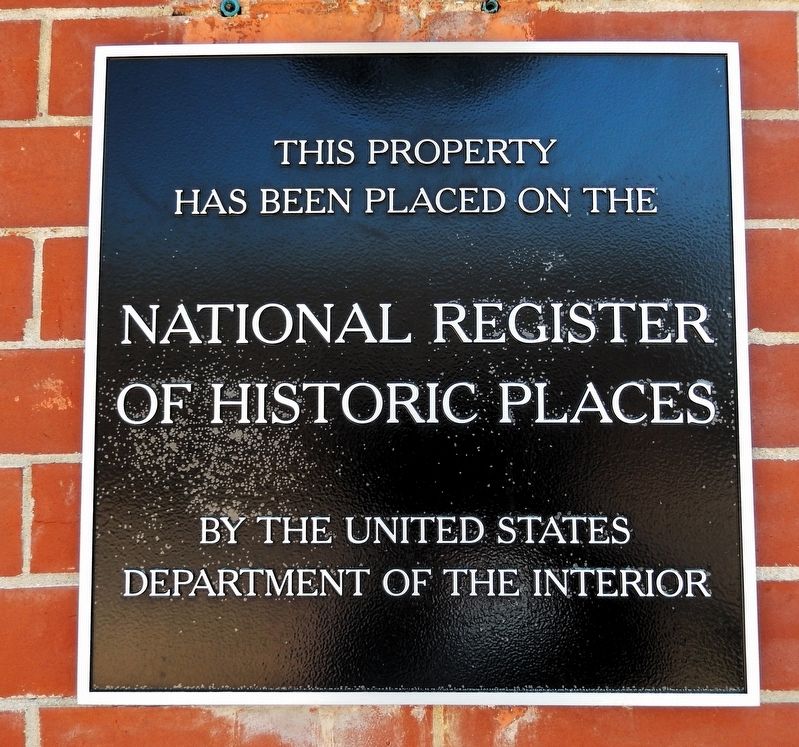
This property has been placed on the
National Register of Historic Places
by the United States Department of the Interior
Topics and series. This historical marker is listed in these topic lists: Architecture • Fraternal or Sororal Organizations • Notable Buildings. In addition, it is included in the National Register of Historic Places (NRHP) series list. A significant historical year for this entry is 1903.
Location. 36° 14.234′ N, 90° 3.331′ W. Marker is in Kennett, Missouri, in Dunklin County. It is on College Avenue just north of North Court Square, on the right when traveling north. The marker is mounted directly on the subject building, on the left side of the west/front entrance. Touch for map. Marker is at or near this postal address: 122 College Avenue, Kennett MO 63857, United States of America. Touch for directions.

Regionally, this marker is in the Missouri Bootheel. It is also in the American Mississippi Delta, in the Ozarks, in the Lewis & Clark Corridor, and in the Corn Belt. Globally, it is in North America, the Western Hemisphere, the Western World, and the Anglosphere. Historically,
this page online
Other nearby markers. At least 8 other markers are within 13 miles of this marker, measured as the crow flies: Independence Township War Memorial (within shouting distance of this marker); Gold Star Memorial (about 300 feet away, measured in a direct line); The Village of Kennett (about 300 feet away); Kennett Sound Studios (approx. 0.9 miles away); Deering (approx. 10 miles away); Clay County Veterans Memorial (approx. 12.6 miles away in Arkansas); First Appointed Officals of Clayton County - Later Clay County, Ar. (approx. 12.7 miles away in Arkansas); Pfeiffer-Janes House (approx. 13 miles away in Arkansas). Touch for a list and map of all markers in Kennett.
Another marker is no longer nearby. Kennett (was here, next to this marker but has been confirmed missing).
Regarding Kennett City Hall and Masonic Lodge. National Register of Historic Places № 81000333.
From the National Register Nomination prepared by Carol Goldsmith and Mrs. W.R. Carter, 12/1979:
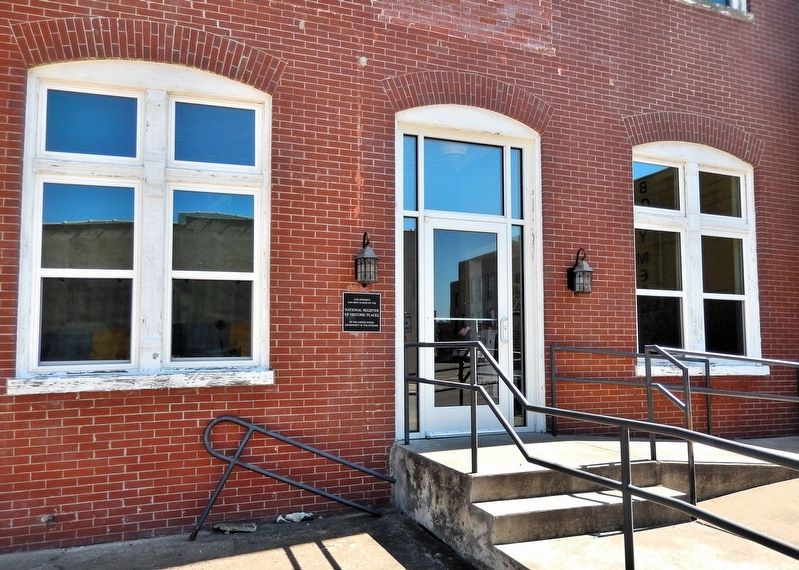
The former Kennett City Hall andMasonic Lodge, a two-story rectangular brick structure, measures 85' along its north and south sides and 35' on its east and west axis. Construction of the building commenced in June of 1902 as a joint project by the City of Kennett, population 1,509, and the Helm Royal Arch Chapter and the Masonic Lodge AF & AM #68, organized in 1888. The building was constructed on plans by Cape Girardeau architect Blackwood, with labor provided by day workers, at a total cost of $6,000.Photographed by Cosmos Mariner, September 28, 20252. Kennett City Hall and Masonic Lodge MarkerThe marker is on the left side of the front entrance.Constructed of brick, the building stands on a solid concrete and hard brick foundation originally featuring a stretcher bond, red-pressed brick facade with a balcony over the front door. The building's front was altered in the 1920's, following a fire, and the balcony with balustrade was removed and the exterior plastered over and painted white. The first floor was used exclusively as Kennett's City Hall and the second floor reserved for the Masonic organizations. In 1976, the city vacated the premises, approximately twenty years after the Masonic Order ceased utilizing the upstairs lodge. The building was leased to the Board of Directors of the Dunklin County Museum
as an historical museum for the county by the City of Kennett for a sum of $1.00 per year.Photographed by Cosmos Mariner, September 28, 20253. Kennett City Hall and Masonic Lodge
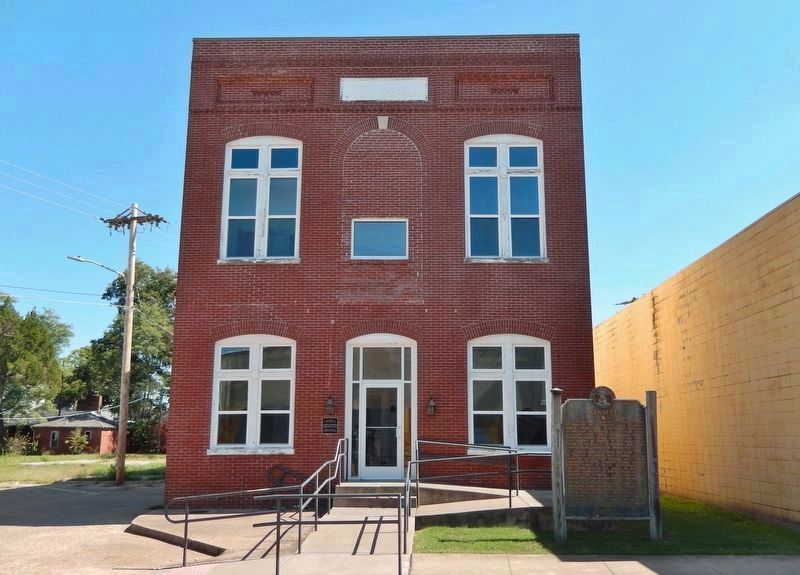
(west/front elevation)Notable design features of the building include its ceilings of pressed metal, its roof of extra heavy sheet metal, its wide stairway of oak, its 14 ½' ceilings and its 24 double hung windows, twelve of which were imitation cathedral translucent glass. The first floor is divided into a council room, three offices, and two "holding" cells. The second floor is approached by a wide, oak stairway leading to a landing which leads to the 27' long waiting room, which adjoined three anterooms. The central room on the second floor was the lodge room proper, 30' x 53.4', with the original suspended oxidized copper electric light fixtures. Brick for the building, which was Kennett's first formal City Hall, supposedly was manufactured locally, from brick clay found on Crowley's Ridge and along the St. Francois River in Dunklin County. The building has been in continuous use as a public building since its construction except for the period (July 1976-June 1977) delineated by the moving of the municipal government to new facilities and the finalizing of building
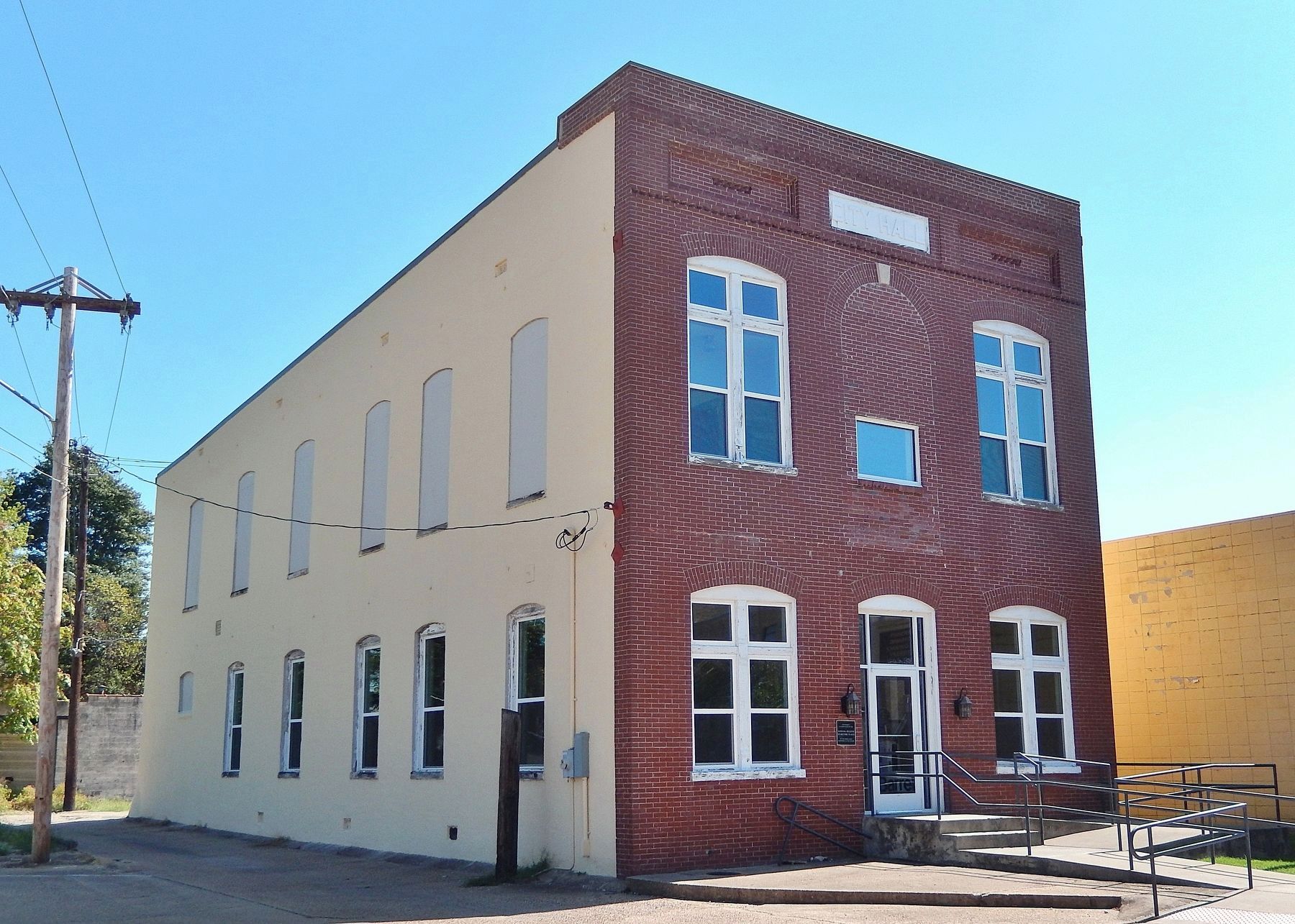
preparation as a museum.Photographed by Cosmos Mariner, September 28, 20254. Kennett City Hall and Masonic Lodge (northwest elevation)Originally constructed to jointly house the Kennett municipal government offices and the Kennett Masonic Lodge, the building is considered of significant importance to the community of Kennett and preserved as a local landmark. Instead of razing the structure and replacing it at the present site with a new municipal building, the mayor and council purchased land to the north of the building to construct the new municipal building, leasing the 1903 building to the Dunklin County Museum for the preservation of artifacts and memorabilia of Dunklin County and environs.
The building represents the first permanent municipal offices for the city of Kennett. Municipal government operated for nearly three quarters of a century from the ground floor offices. The second floor of the municipal building served as the second permanent home of the Masonic order, Helm Royal Arch Chapter, reputedly the city's leading fraternal organization, founded in 1888. With the dedication of the building in 1903, the town observed Masonic week, demonstrating the respect with which the city held the Masonic order.
Historically, the site
is in the immediate vicinity of the purported camp site of the Indian Chief, Chilletecaux, for whom Kennett was originally named in the early 1800's. The name was changed to Kennett in the 1850's to honor Luther Kennett, Mayor of St. Louis and railroad promoter.
Also see . . . Kennett City Hall and Masonic Lodge (Wikipedia).
Excerpt: As originally constructed in 1903, the first floor was used exclusively as Kennett's City Hall and the second floor was occupied by several local Masonic organizations. The Masons moved to a new building in the 1950s, and in 1976 the city vacated the premises as well. In 2013, the building was housing the Dunklin County Museum, an historical museum for the county. It was listed on the National Register of Historic Places in 1981.(Submitted on April 7, 2026, by Cosmos Mariner of Cape Canaveral, Florida.)
Credits. This page was last revised on August 3, 2026. It was originally submitted on April 7, 2026, by Cosmos Mariner of Cape Canaveral, Florida. This page has been viewed 21 times since then. Photos: 1, 2, 3, 4. submitted on April 7, 2026, by Cosmos Mariner of Cape Canaveral, Florida.
