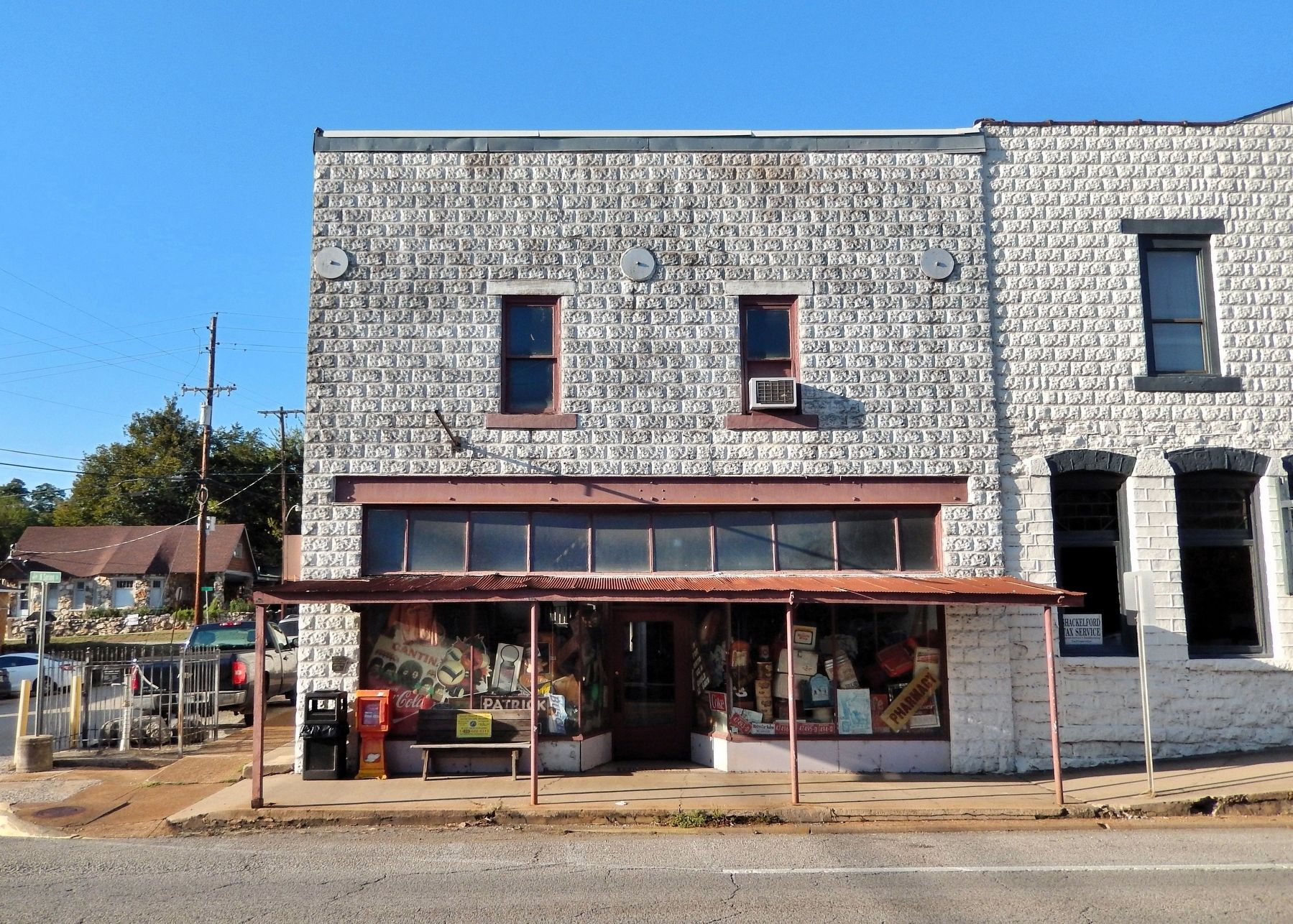
Biggers Mercantile Building
108 East Main Street
| — | Hardy Downtown Historic District | — |
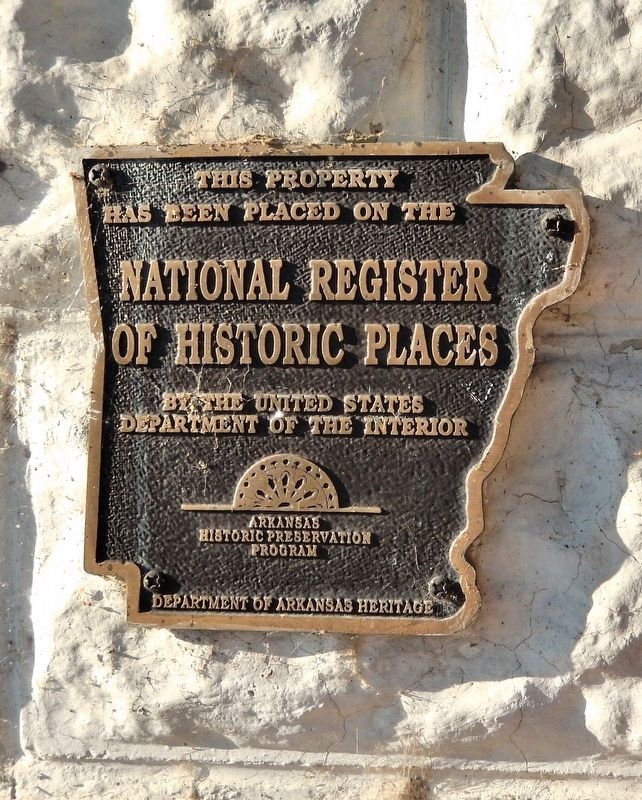
This property has been placed on the
National Register of Historic Places
by the United States Department of the Interior
Erected by Arkansas Historic Preservation Program, Department of Arkansas Heritage.
Topics and series. This historical marker is listed in these topic lists: Architecture • Industry & Commerce • Notable Buildings. In addition, it is included in the National Register of Historic Places (NRHP) series list. A significant historical year for this entry is 1920.
Location. 36° 18.943′ N, 91° 28.959′ W. Marker is in Hardy, Arkansas, in Sharp County. It is at the intersection of East Main Street (Business U.S. 63) and North Spring Street, on the right when traveling west on East Main Street. The marker is mounted directly on the southwest corner of the building, facing East Main Street. Touch for map. Marker is at or near this postal address: 108 East Main Street, Hardy AR 72542, United States of America. Touch for directions.

Regionally, this marker is on the Ozark Plateau. It is also in the American South, specifically in the Upper South, and in the Ozarks. Globally, it is in North America,
this page online
Other nearby markers. At least 8 other markers are within walking distance of this marker: Hardy Bank / Gilliam & Ritchie Grocery Store (a few steps from this marker); Cochran Building (within shouting distance of this marker); Tennie Meeker's Café (within shouting distance of this marker); a different marker also named Cochran Building (within shouting distance of this marker); Biggers and Johnston Building (within shouting distance of this marker); Sullivan Building (within shouting distance of this marker); Abee Building (within shouting distance of this marker); Ark-Mo Power Company / Hubert Daugherty’s Mercantile (within shouting distance of this marker). Touch for a list and map of all markers in Hardy.
Regarding Biggers Mercantile Building. Contributing property, Hardy Downtown Historic District, National Register of Historic Places № 95001121.
From the National Register Nomination prepared by Kenneth Story, Arkansas Historic Preservation Program, 8/8/1995:
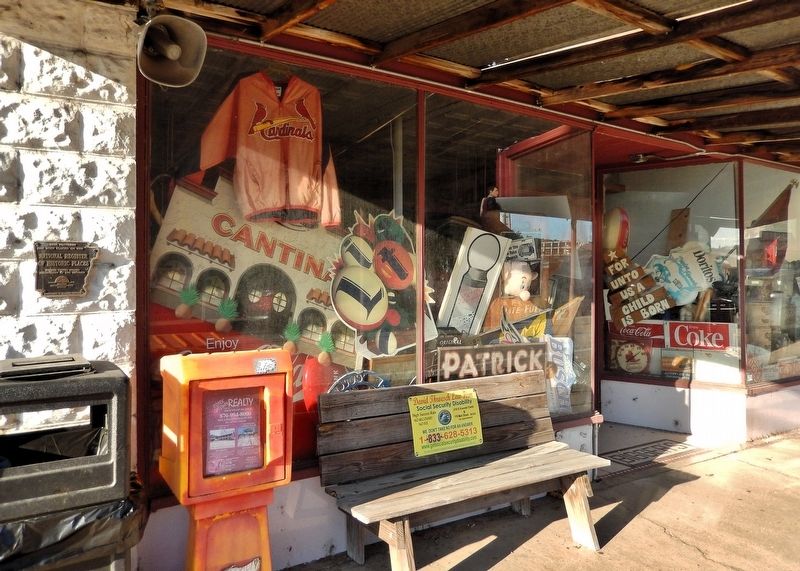
Theintact historic fabric of downtown Hardy includes storefront buildings, separate commercial structures of various types and vintages, and a small number of significant residential buildings that are included because of their role in the unique character of Hardy's historic commercial district. The historic buildings range from one to three stories in height. Most of the buildings are of masonry construction, with brick and native stone being the materials of choice. A few wood frame buildings survive, as do some historic formed concrete block structures. The stone buildings frequently display grapevine mortaring and are built of fieldstone. The brick buildings are usually of red brick, though some buff brick buildings are found also, and their parapets often contain a simple, recessed signage panel.Photographed by Cosmos Mariner, September 26, 20252. Biggers Mercantile Building MarkerThe marker is mounted near the left [west] edge of the storefront.The historic core of Hardy, Arkansas is located on the north bank of the Spring River, with its commercial axis formed by the railroad tracks (first the Kansas City, Ft. Scott and Memphis Railroad, then the St. Louis and San Francisco (“Frisco”) and now the Burlington and Northern) and Main Street, both of which run parallel to the river.
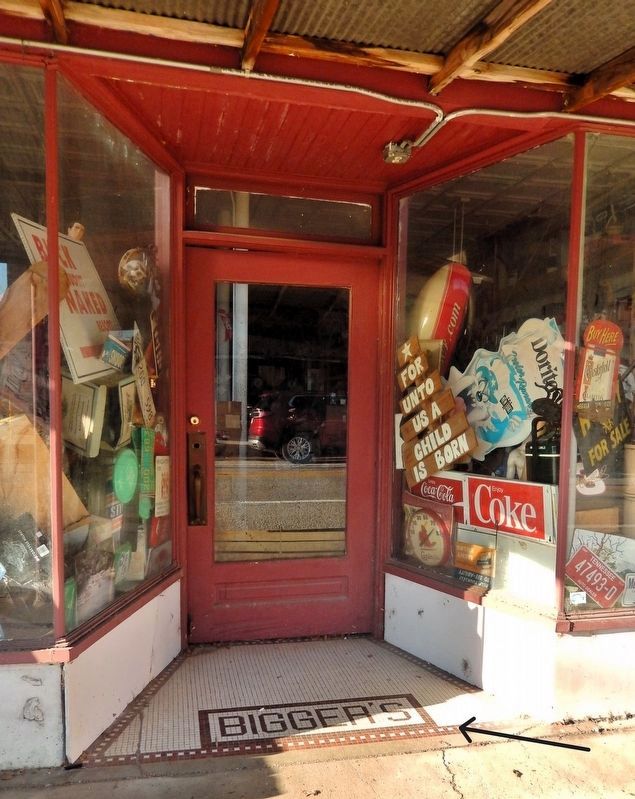
The community of Hardy was founded in the early 1880s, after the arrival of the railroad, and grew to become the county seat of the northern district of Sharp County in 1891, with the new courthouse being completed by 1894. By the turn of the century Hardy became a rather busy resort town, largely due to the popularity of the recreational and fishing opportunities afforded by the Spring River.Photographed by Cosmos Mariner, September 26, 20253. Biggers Mercantile EntranceVingage terrazzo tile is still in place.A side-effect of the early twentieth century development of Hardy as a resort community was the construction of various types of buildings designed to shelter the resulting service industries. Such construction included general mercantile buildings, hotels, gas stations and tourist courts. This was particularly true during the period after World War I, with the dramatic growth in popularity of the automobile. The growth and expansion of downtown Hardy continued throughout the 1920’s but slowed during the Depression and World War II.
The Hardy Historic Commercial District remains one of the last examples of the small resort community in Arkansas and how it developed. Historical accounts of other resort communities throughout the state — most of
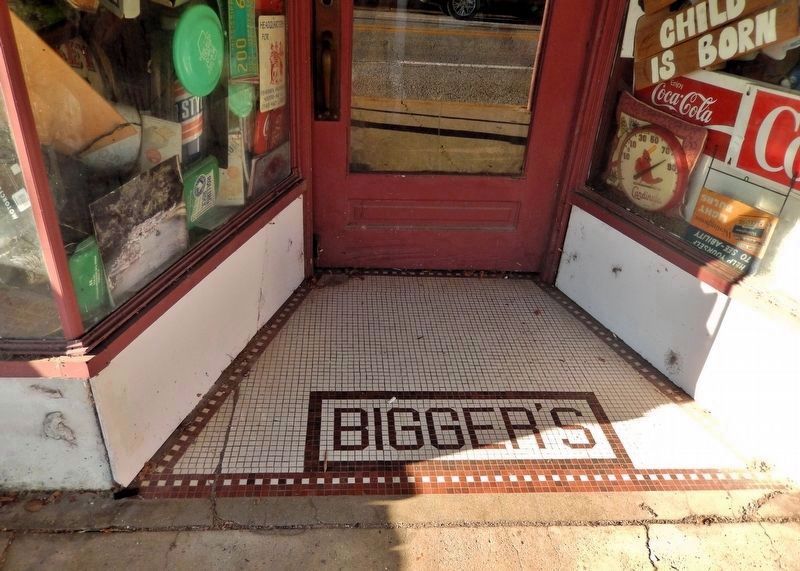
which have long since disappeared — relate how many resort communities began simply as settlements organized around a spring or river and composed largely of private farmsteads. These communities took on a resort character only after the dramatic growth nationally of the spa "craze" and the widely held belief that waters — particularly mineral waters — held medicinal qualities that could heal any number of maladies and afflictions.Photographed by Cosmos Mariner, September 26, 20254. Biggers Mercantile Terrazzo Tile EntrywayVintage terrazzo tile design forms the name “Bigger’s”.
Also see . . .
1. Hardy Downtown Historic District Walking Tour (arkansasheritage.com).
(By Rachel Silva, 6/11/2016) Excerpt:(Submitted on April 10, 2026, by Cosmos Mariner of Cape Canaveral, Florida.)
Biggers Mercantile Building (c. 1920), 108 East Main Street (today: storage?)
According to The Hardy History (p. 38) as well as Sanborn Fire Insurance maps, Robert S. “Bob” Biggers established the Biggers Mercantile Store in a wood-frame building on this site in 1908. He built the present structure in the 1920s to replace his wood frame building. The present Biggers Building was constructed with ornamental concrete block, a popular building material during the early 20th century because it was durable and fireproof. After her father’s death in the early 1950s, Dolly Biggersoperated the store, which was then called The R. S. Biggers Company. The Biggers Store sold groceries, dry goods, and shoes. Locals remember the big stove in the back corner of the building, where the women of Hardy gathered on Saturdays. Notice the Biggers name in the front tile by door and pressed tin ceilings.Photographed by Cosmos Mariner, September 26, 20255. Biggers Mercantile Building (front/south elevation)Looking north across East Main Street. North Spring Street is on the left.
2. Hardy Downtown Historic District (Wikipedia).
Excerpt: The Hardy Downtown Historic District encompasses most of the central business district of the resort community of Hardy, Arkansas. It extends along Main Street, between Church and Cope Streets, and includes a few buildings on adjacent streets. Hardy was founded as a railroad town in the 1880s but grew by the end of the 19th century into a resort community, serving as commercial center for vacationers from Memphis, Tennessee. The district was listed on the National Register of Historic Places in 1995.(Submitted on April 10, 2026, by Cosmos Mariner of Cape Canaveral, Florida.)
Credits. This page was last revised on April 11, 2026. It was originally submitted on April 8, 2026, by Cosmos Mariner of Cape Canaveral, Florida. This page has been viewed 14 times since then. Photos: 1, 2, 3, 4, 5. submitted on April 10, 2026, by Cosmos Mariner of Cape Canaveral, Florida.
