Edgard in St. John the Baptist Parish, Louisiana — The American South (West South Central)
Robin's Blacksmith Shop
Whitney Plantation — The Story of Slavery
| — | Louisiana African American Heritage Trail | — |
Photographed by Cosmos Mariner, May 12, 2018
1. Robin's Blacksmith Shop Marker
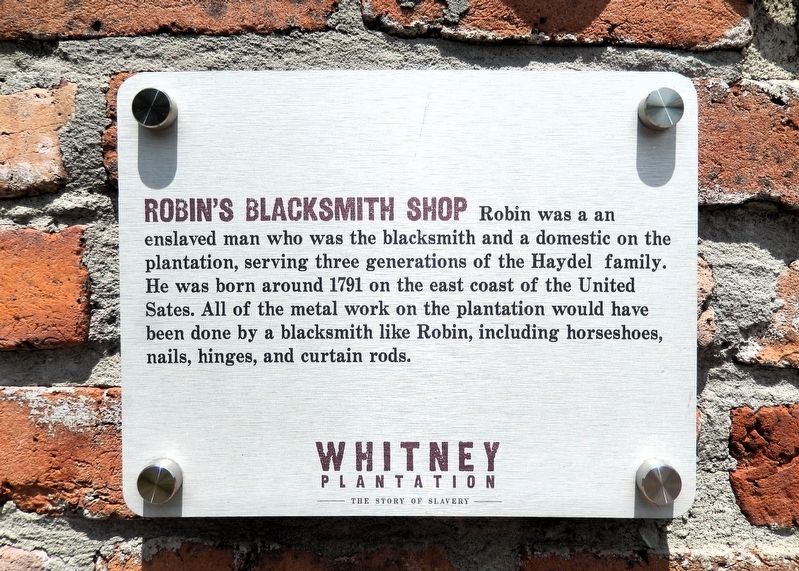
Robin was an enslaved man who was the blacksmith and a domestic on the plantation, serving three generations of the Haydel family. He was born around 1791 on the east coast of the United States. All of the metal work on the plantation would have been done by a blacksmith like Robin, including horseshoes, nails, hinges, and curtain rods.
Erected by Whitney Plantation Museum.
Topics. This historical marker is listed in these topic lists: African Americans • Architecture • Industry & Commerce. A significant historical year for this entry is 1791.
Location. 30° 2.337′ N, 90° 39.054′ W. Marker is in Edgard, Louisiana, in St. John the Baptist Parish. It can be reached from State Highway 18 1½ miles east of St. John Parish Street (State Highway 3213). The marker and blacksmith shop are on the Whitney Plantation grounds. Touch for map. Marker is at or near this postal address: 5099 Louisiana Highway 18, Edgard LA 70049, United States of America. Touch for directions.

Regionally, this marker is in one of the River Parishes and in Greater New Orleans. It is also in the American South, specifically in the Deep South,
this page online
Other nearby markers. At least 8 other markers are within 3 miles of this marker, measured as the crow flies: The Slave Quarters (within shouting distance of this marker); Jail (within shouting distance of this marker); Allées Gwendolyn Midlo Hall (within shouting distance of this marker); The Kitchen (about 300 feet away, measured in a direct line); The Big House (about 500 feet away); Golden Grove Plantation (approx. 1.7 miles away); Colonial Sugars Refinery (approx. 1.8 miles away); a different marker also named Colonial Sugars Refinery (approx. 2.2 miles away). Touch for a list and map of all markers in Edgard.
Also see . . . Whitney Plantation History (Whitney Plantation Museum).
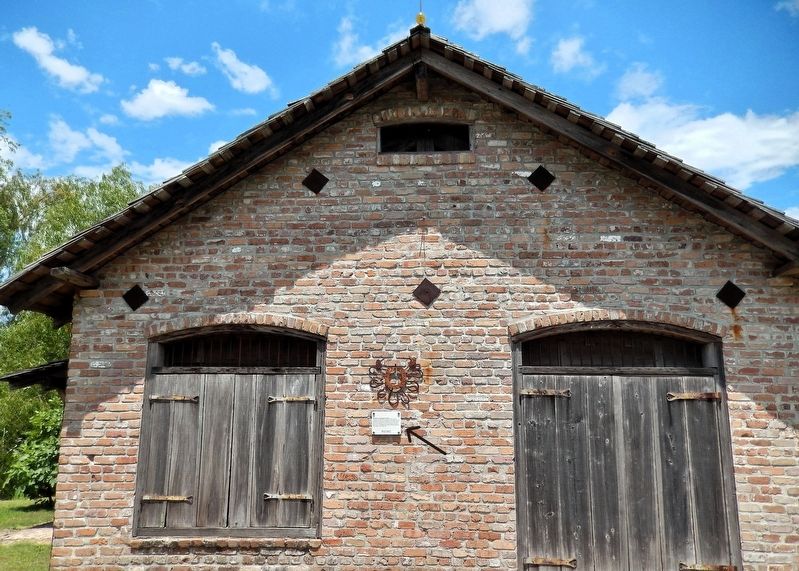
Excerpt: Originally known as Habitation Heidel, or the Heidel(Submitted on April 20, 2026, by Cosmos Mariner of Cape Canaveral, Florida.)Plantation, what we now know as Whitney Plantation has undergone many changes in its 250-year history. Ambroise Heidel, a German immigrant from the Rhineland area, purchased this property in 1752 and established a small indigo plantation. During these early years, Ambroise Heidel owned approximately 20 enslaved Africans whose expertise in indigo production he relied upon for successful crops. In 18th century Louisiana, many captive Africans who were sold into slavery had originated in areas of West Africa known for rice and indigo production, two major cash crops in the early colony.Photographed by Cosmos Mariner, May 12, 20182. Robin's Blacksmith Shop MarkerThe marker is mounted between the window and doorway on the east façade of the building.The majority of enslaved people who worked on the plantation were engaged in the cultivation of sugar. Many worked as field hands, carters, and ploughmen. Both men and women worked as field hands growing sugar, rice and other staple crops. Others were skilled artisans such as distillers, blacksmiths, coopers, and engineers. Some with specialized skills as sugar makers worked inside the sugar mill leading crews of people who boiled cane juice to make crystallized sugar. Herdsmen tended hundreds of animals on the plantation including oxen, mules, horses,
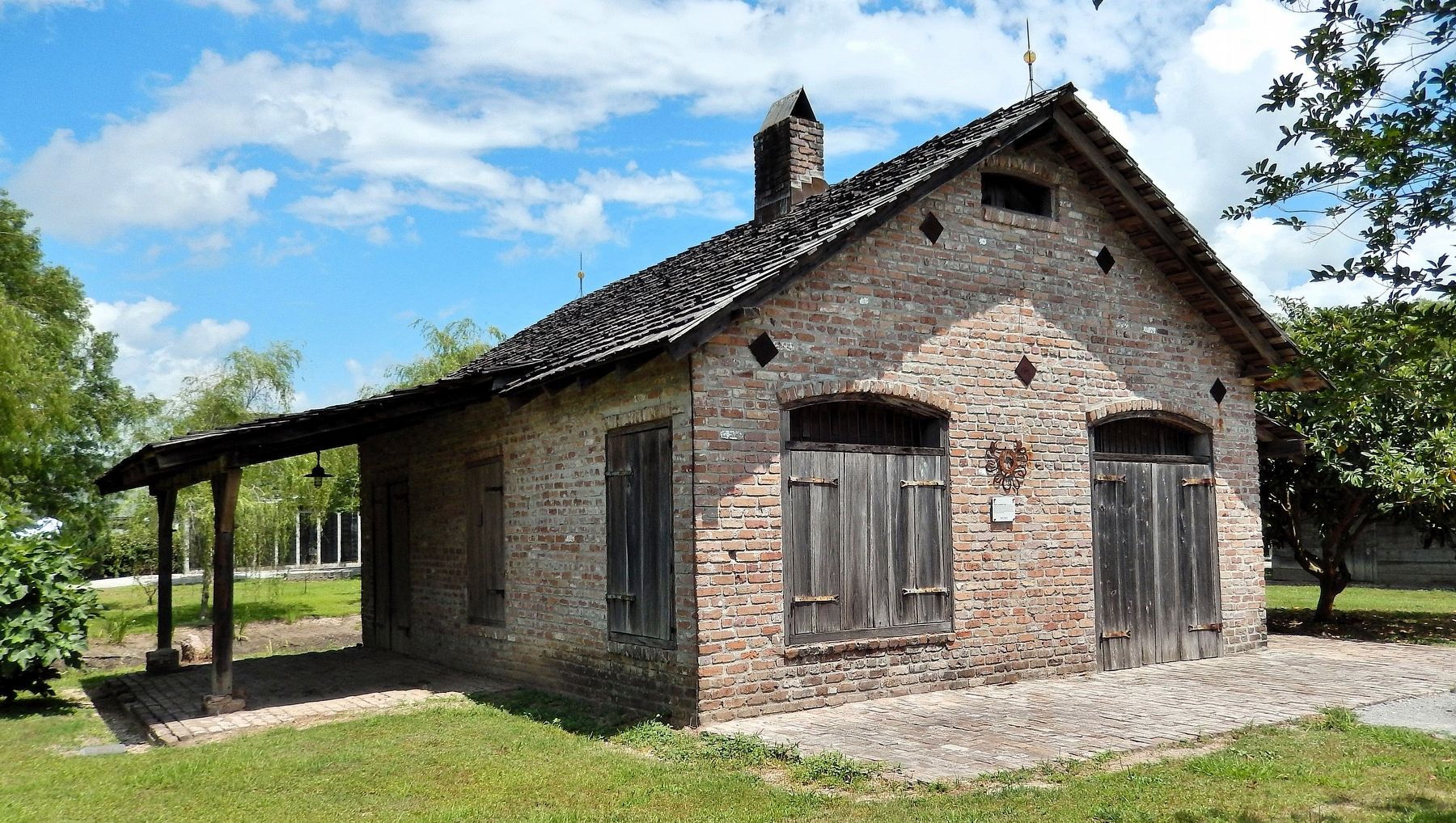
sheep, pigs, cows and chickens. Enslaved domestic workers, most of whom were women, worked inside the Haydel family home cleaning, cooking, and caring for children.Photographed by Cosmos Mariner, May 12, 20183. Robin's Blacksmith Shop (southwest elevation)
Credits. This page was last revised on April 20, 2026. It was originally submitted on April 19, 2026, by Cosmos Mariner of Cape Canaveral, Florida. This page has been viewed 19 times since then. Photos: 1, 2, 3. submitted on April 20, 2026, by Cosmos Mariner of Cape Canaveral, Florida.
