The Big House
Whitney Plantation — The Story of Slavery
| — | Louisiana African American Heritage Trail | — |
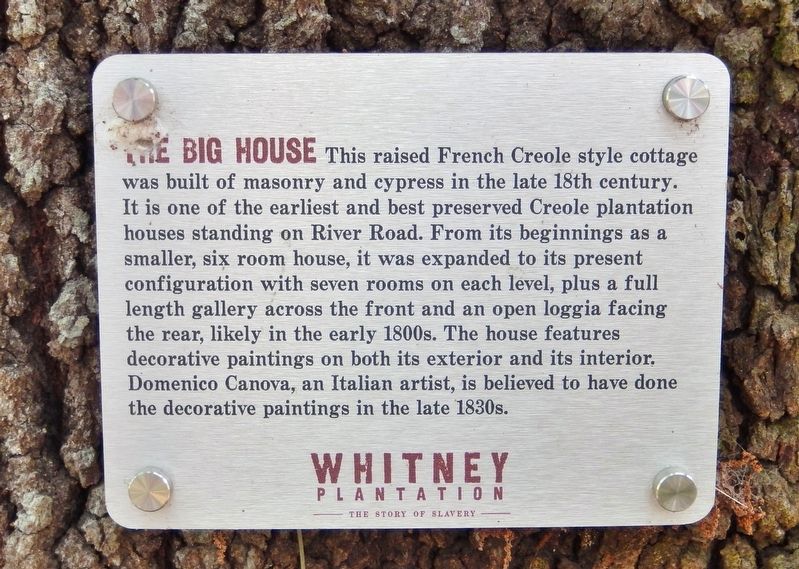
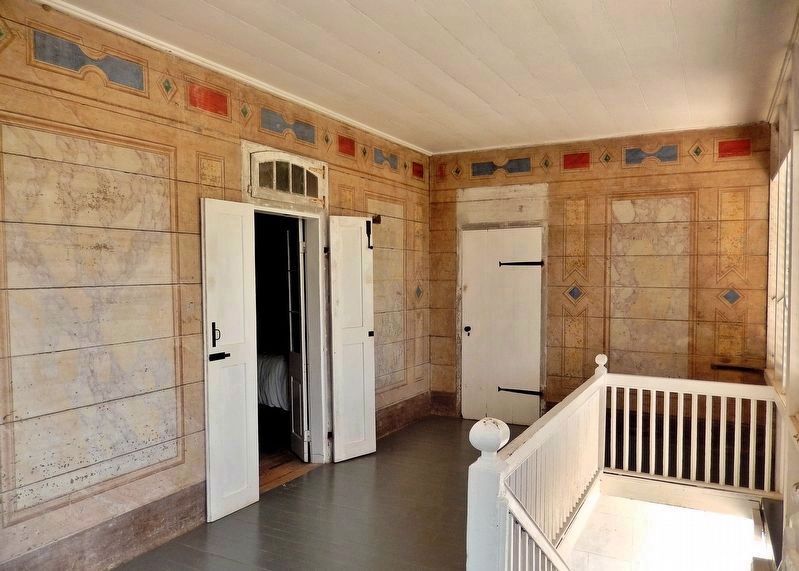
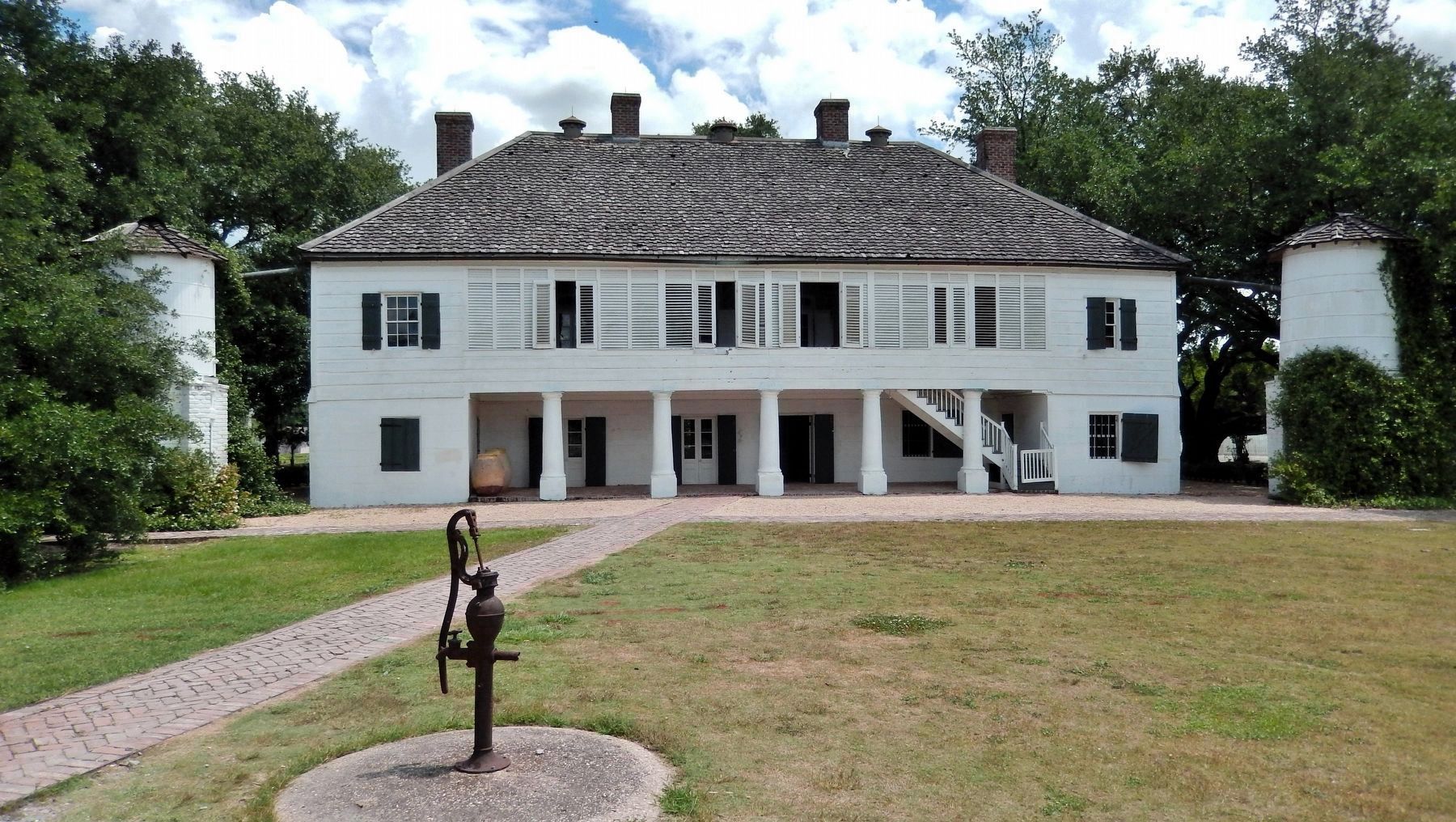
This raised French Creole style cottage was built of masonry and cypress in the late 18th century. It is one of the earliest and best preserved Creole plantation houses standing on River Road. From its beginnings as a smaller, six room house, it was expanded to its present configuration with seven rooms on each level, plus a full length gallery across the front and an open loggia facing the rear, likely in the early 1800s. The house features decorative paintings on both its exterior and its interior. Domenico Canova, an Italian artist, is believed to have done the decorative paintings in the late 1830s.
Erected by Whitney Plantation Museum.
Topics and series. This historical marker is listed in these topic lists: African Americans • Architecture • Arts, Letters, Music. In addition, it is included in the National Register of Historic Places (NRHP) series list. A significant historical year for this entry is 1790.
Location. 30° 2.379′ N, 90° 38.977′ W. Marker is in Edgard, Louisiana, in St. John the Baptist Parish. It can be reached from State Highway 18 1½ miles east of St. John Parish Street (State Highway
this page online

Regionally, this marker is in one of the River Parishes and in Greater New Orleans. It is also in the American South, specifically in the Deep South, on the Gulf Coast, and in the Great River Road Region. Globally, it is in North America, a Gulf of Mexico state, the Western Hemisphere, the Western World, and the Anglosphere. Historically, it finds itself in what was once New Spain, the territory of the Mississippian Culture, the Louisiana Purchase, one of the Confederate States of America, and the Antebellum South.
Other nearby markers. At least 8 other markers are within 3 miles of this marker, measured as the crow flies: The Kitchen (within shouting distance of this marker); Robin's Blacksmith Shop (about 500 feet away, measured in a direct line); Jail (about 500 feet away); The Slave Quarters (about 600 feet away); Allées Gwendolyn Midlo Hall (about 600 feet away); Golden Grove Plantation

Regarding The Big House. Contributing property, Whitney Plantation Historic District, National Register of Historic Places № 92001566.
From the National Register Nomination prepared by National Register Staff, Louisiana District of Historic Preservation, 6/1992:
The main house at Whitney Plantation was created c. 1803 when a smaller c. 1790 dwelling was significantly expanded. Between 1836 and 1839, the house underwent a remodeling which added several important features, including a series of decoratively painted wall, door, and ceiling murals which contribute greatly to its significance. The expansion was so extensive, and the decorative paintings so important, that the present house should be dated primarily to c. 1803 and 1836-1839.Surviving architectural evidence shows that the original late eighteenth century house was a symmetrical structure consisting of a large central salle flanked by two smaller chambers of equal size. The wall plates of these
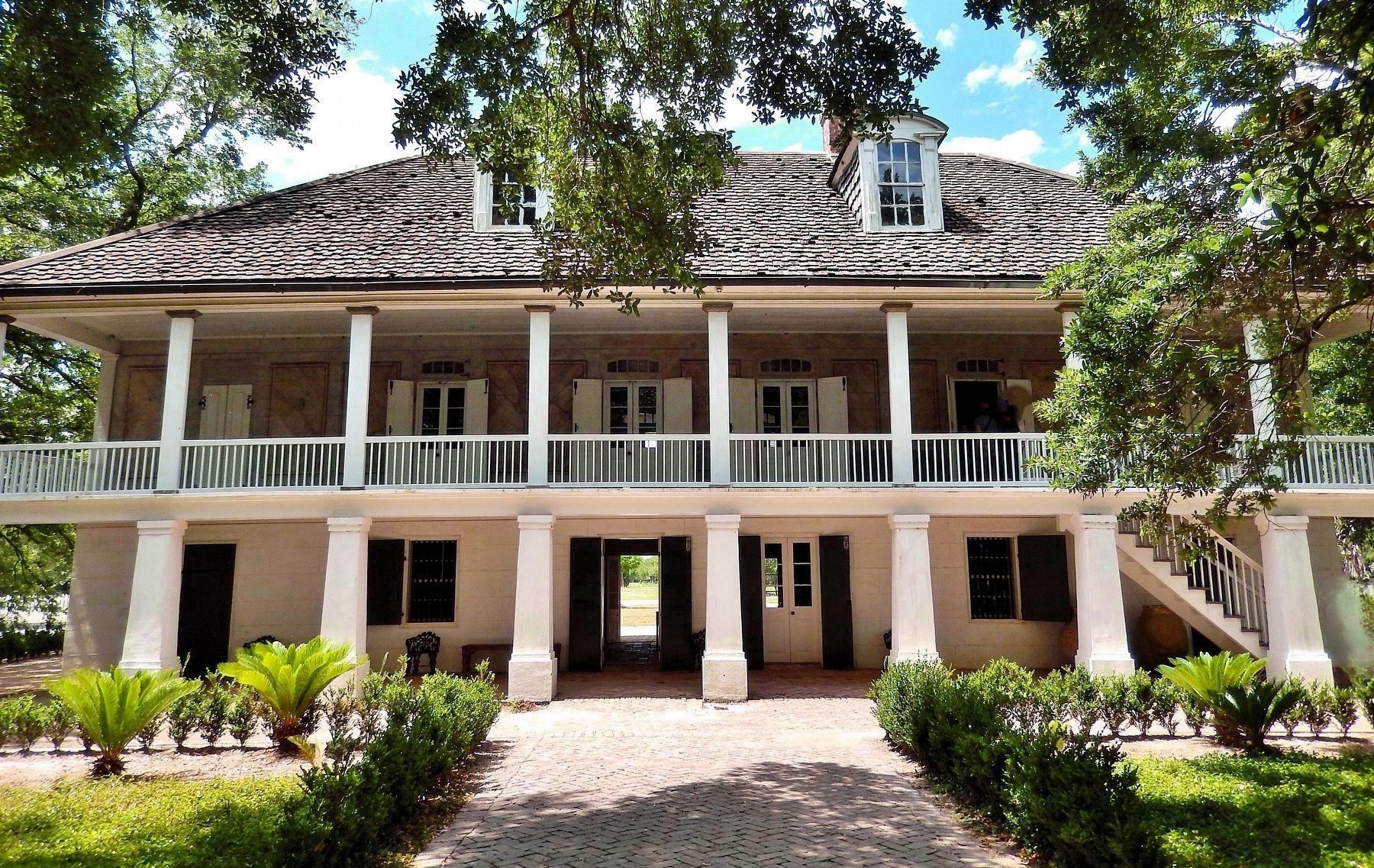
three rooms show evidence that rafters were once framed into them, and the floor joists extend to the edges of the gallery and loggia. This framing indicates that the original rooms were surrounded by a gallery and surmounted by a double pitched roof. Doors opening to the gallery were surmounted by four light, segmentally arched transoms.Photographed by Cosmos Mariner, May 12, 20183. The Big House (front)Home to the Haydel family between 1790 and 1867.The c. 1803 Whitney home is 70 feet wide and 42 feet deep. It is a fully raised Creole plantation house with a plastered brick lower story. Its briquette-entre-poteaux upper floor still has its original interior plaster walls and its early exterior one foot wide, beaded siding. The upper floor serves as the premier etage, or primary living space, and reflects Creole geometry in its floorplan. It is five rooms wide and one room deep with a full-length gallery across the front and a cabinet/loggia range on the rear. The cabinets are somewhat deeper than the accompanying loggia, extending slightly into the space which normally would have been allocated to the rooms directly in front of them. The plan of the lower story basically repeats this layout. However, one of the central spaces is subdivided into
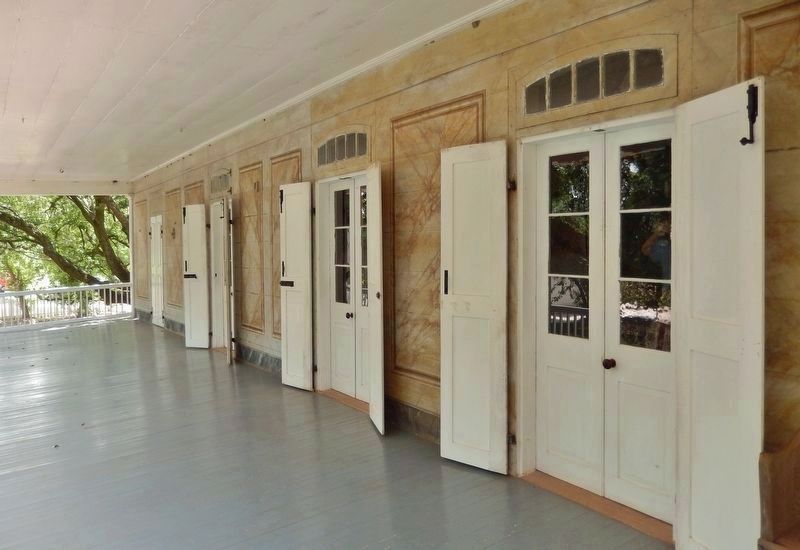
two rooms. As happened occasionally in large Creole houses, the dining room is located within the lower story beneath the salle. The absence of hallways and use of external stairways are characteristic traits of the Creole building tradition.Photographed by Cosmos Mariner, May 12, 20184. The Big House (front balcony)The Whitney Plantation House is significant in the area of architecture because it is a rare and landmark example of a raised Creole plantation house — the ultimate expression of French architecture in Louisiana. The house exhibits superior examples of rare Creole and Federal woodwork and a rare Creole construction technique. The home's age places it among the oldest known surviving Creole houses in Louisiana.
Also see . . . Whitney Plantation Historic District (Wikipedia).
Excerpt: The Whitney Plantation Historic District is preserved by the Whitney Institute, a non-profit whose mission is to educate the public about the history and legacies of slavery in the Southern United States. What was originally known as Habitation Haydel was founded in 1752 by Ambroise Heidal, one of the many German immigrants who colonized the river parishes in the 18th century. His descendants owned(Submitted on April 20, 2026, by Cosmos Mariner of Cape Canaveral, Florida.)it until 1860. In 1866, after the American Civil War, it was sold to businessman Bradish Johnson. He renamed it Whitney Plantation in honor of his daughter, who had married into the Whitney family.Photographed by Cosmos Mariner, May 12, 20185. The Big House (rear gallery)The grounds contain several memorial sites dedicated to the more than 100,000 men, women, and children who were enslaved in Louisiana. Original art commissioned by Cummings, including life-size sculptures of children, was added to help tell the history of slavery. The sculptures are representative of people born into slavery before the Civil War. According to a writer for The Guardian, the Whitney plantation is known for "memorializing slavery and honoring enslaved people", in contrast to other plantations that are "used as sites for weddings or other lighthearted forms of tourism". The Whitney Plantation historic district was listed on the U.S. National Register of Historic Places in 1992. It is one of 26 sites featured on the Louisiana African American Heritage Trail.
Credits. This page was last revised on April 20, 2026. It was originally submitted on April 19, 2026, by Cosmos Mariner of Cape Canaveral, Florida. This page has been viewed 21 times since then. Photos: 1, 2, 3, 4, 5, 6. submitted on April 20, 2026, by Cosmos Mariner of Cape Canaveral, Florida.
