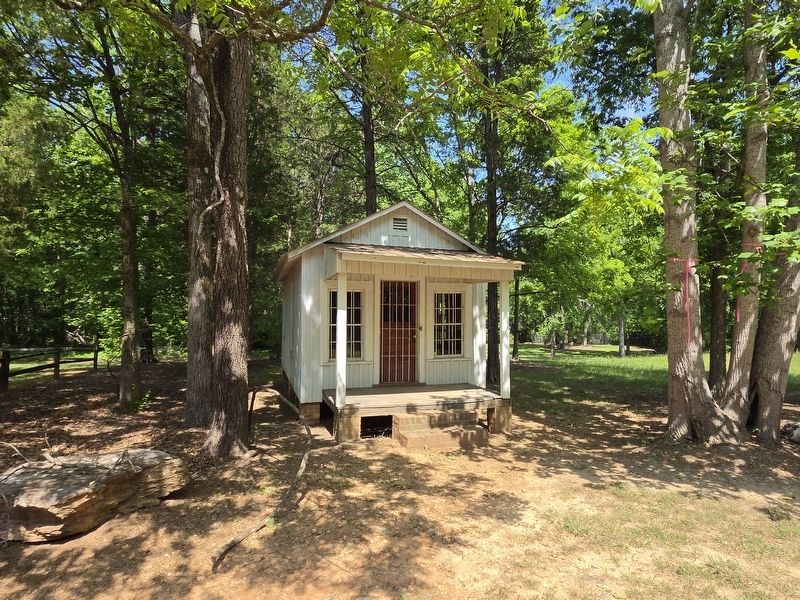
Gold Hill in Rowan County, North Carolina — The American South (South Atlantic)
Gold Hill, North Carolina Est. 1843
First Gold Discovery 1824
Exploration and Education
Photographed by Mark Parker, April 25, 2026
1. Gold Hill, North Carolina Est. 1843 Marker
Inscription.
Gold Hill, North Carolina Est. 1843. First Gold Discovery 1824.
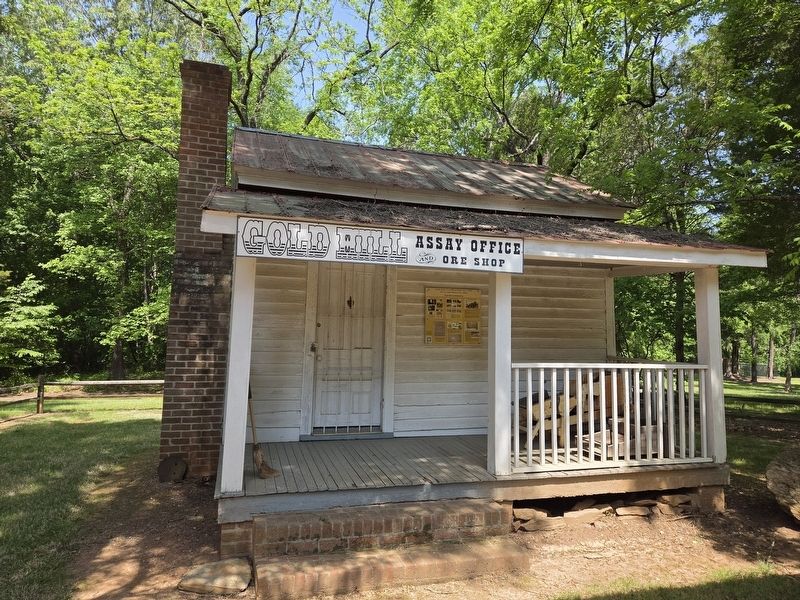
Assay Office Museum. (Photo captions) Original 19th Century Gold Hill Mining Company Safe Gold Hill, NC Ore Specimen High Banker and Rocker Box Tools used for grading and separating gold ore were donated by Bily Tucker, Mountain Creek Gold Mine, New London, NC Cornish Kibble (Ore Bucket) Original form Cornwall, England, The Assay Office Building was donated by Paul and Naomi Bernhart of Salisbury, NC. It was the original office on the Bernhart Farm located near Gold Hill., The Edison Ore-Milling Company was a venture by Thomas Edison that began in 1881. Oddly enough his interest at Gold Hill was Iron Ore with the gold refining being secondary in his research.,
Post Office Museum. (Photo captions) Gold Hill Post Office Museum The Post Office was located in the Old Burt Shoe Company Store. The Store was rebuilt on the original site in Gold Hill Village. Mail Carriers waiting for the mail delivery in front of the Three Corner Store. The store was located beside Mauney's Store. The man in the right is William Vance Eller. Rual Carriers 1907 . J.G. Moosa, W. Vanaca Eller, J.D. Misenheimer JD Manheimer, Mail Carrier William Vance Eller, Mail Carrier Mail Delivery during a flood c. 1900 Neither snow nor rain nor heat nor gloom of night stays these couriers from the swift completion of their appointed rounds., By 1843 the bustling mining village had established a town government and the first Post Office is thought to have been located in a corner of Burt Shoe Company. As the town grew, so did the need for larger Post Office facility. Through the 19th and 20th centuries the Post Office moved numerous times occupying a corner in larger stores around the town. These are just a few of those locations.,
Gold Mining Office. Office and Hoist of the Gold Hill Mining Co. The first labor producing gold mine in the United States Gold Hill, North Carolina, By the late 1870's and early 1880's North Carolina was seeing a resurgence of economy and once the gold mining industry. This time with a greater influx of Cornish miners due to the interest English mining company. By 1892 a new company was establlshed with headquarters in London, England., The New Gold Hill Ltd. Mining Company invested heavily in the gold production. The company built numerous new structures and brought in revolutionary new equlpment to process the ore. The gold bullion was then shipped to London., By 1900 the Gold Hill Mines and several properties were leased to Walter George Newman, a Wall Street Tycoon and con artist who tried unsuccessfully to operate the mines until bankruptcy in 1910., The London company once again in 1950 tried to reopen the mines, but again without much success. The new manager, Col. Claude R. Hayes, was sent to manage the holdings and stayed on as caretaker lived in the mining office until it was destroyed by fire in February 1969. Col. Hayes perished in the fire. The massive safe was all that was left standing after the fire. The safe can currently be seen in the museum at Reed Gold Mine NC State Historic Site near Concord, NC.,
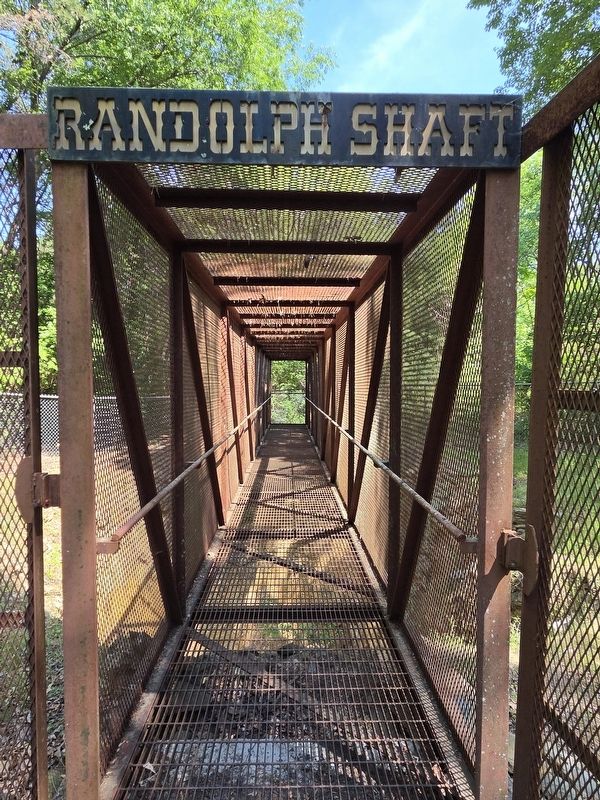
Randolph Mine. Peter Earnhardt dug the first gold out of the Earnhardt Shaft in 1843. Many of Earnhardt's descendants still live in the area. By 1855 under new ownership the main shaft was extended to a depth of 800 ft with the pump shaft at 850 ft. The Randolph Smelter building is to the left of the main building. While facing the fence with the main road behind you, look to the left and you will see the railroad spur thet backed railcars to the Smelter to load and unload supplies and load gold bullion for transport to the Charlotte Mint Assay Office.,
Stationary Steam Engine. (Photo captions) Located on the Gold Hill Rail Trail beside the Randolph Mine Shaft behind the Assay Office Cornish Pump-Randolph Shaft Gold Hill Mine , The Stationary steam engines are fixed steam engines used for pumping or driving mills and factories, and for power generation. The engines were introduced in the 18th century and were widely used in the mining industry. The above engine was built in Chicago around 1880 and was capable of powering several operations at the Gold Hill Mines including turning the gears that raised and lowered the Cornish Kibble (Ore Bucket) to bring ore to the surface from the depths of the mine and to power the wheels that operated the stamp mill. A second pumped 200 gallons of water per minute to keep the mine shaft free of water. If the pump failed it could be a critical situation. One occurrence of the pump failing is recorded in Gold Hill's history when the pump at the Barringer Mine in nearby Misenheimer community failed during three days of torrential rains. Eight miners lost their lives as the tunnels filled with water too fast for them to make safe escape. Only two miners survived the flooding.
Assay Office Museum
(Photo captions)
Original 19th Century Gold Hill Mining Company Safe
Gold Hill, NC Ore Specimen
High Banker and Rocker Box
Tools used for grading and separating gold ore were donated by Bily Tucker, Mountain Creek Gold Mine, New London, NC
Cornish Kibble (Ore Bucket) Original form Cornwall, England
The Assay Office Building was donated by Paul and Naomi Bernhart of Salisbury, NC. It was the original office on the Bernhart Farm located near Gold Hill.
The Edison Ore-Milling Company was a venture by Thomas Edison that began in 1881. Oddly enough his interest at Gold Hill was Iron Ore with the gold refining being secondary in his research.
Post Office Museum
(Photo captions)
Gold Hill Post Office Museum
The Post Office was located in the Old Burt Shoe Company Store. The Store was rebuilt on the original site in Gold Hill Village.
Mail Carriers waiting for the mail delivery in front of the Three Corner Store. The store was located beside Mauney's Store. The man in the right is William Vance Eller.
Rual Carriers 1907 J.G. Moosa, W. Vanaca Eller, J.D. Misenheimer
JD Manheimer, Mail Carrier
William Vance Eller, Mail Carrier
Mail Delivery during a flood c. 1900
Neither snow nor rain nor heat nor gloom of night stays these couriers from the swift completion of their appointed rounds.
By
Click or scan to see this page online
1843 the bustling mining village had established a town government and the first Post Office is thought to have been located in a corner of Burt Shoe Company. As the town grew, so did the need for larger Post Office facility. Through the 19th and 20th centuries the Post Office moved numerous times occupying a corner in larger stores around the town. These are just a few of those locations.
Gold Mining Office
Office and Hoist of the Gold Hill Mining Co. The first labor producing gold mine in the United States Gold Hill, North Carolina
By the late 1870's and early 1880's North Carolina was seeing a resurgence of economy and once the gold mining industry. This time with a greater influx of Cornish miners due to the interest English mining company. By 1892 a new company was establlshed with headquarters in London, England.
The New Gold Hill Ltd. Mining Company invested heavily in the gold production. The company built numerous new structures and brought in revolutionary new equlpment to process the ore. The gold bullion was then shipped to London.
By 1900 the Gold Hill Mines and several properties were leased to Walter George
Photographed by Mark Parker, April 25, 2026
2. Gold Hill, North Carolina Est. 1843 Marker
Located on the porch of the Gold Hill Assay Office and Ore Shop
Newman, a Wall Street Tycoon and con artist who tried unsuccessfully to operate the mines until bankruptcy in 1910.
The London company once again in 1950 tried to reopen the mines, but again without much success. The new manager, Col. Claude R. Hayes, was sent to manage the holdings and stayed on as caretaker lived in the mining office until it was destroyed by fire in February 1969. Col. Hayes perished in the fire. The massive safe was all that was left standing after the fire. The safe can currently be seen in the museum at Reed Gold Mine NC State Historic Site near Concord, NC.
Randolph Mine
Peter Earnhardt dug the first gold out of the Earnhardt Shaft in 1843. Many of Earnhardt's descendants still live in the area. By 1855 under new ownership the main shaft was extended to a depth of 800 ft with the pump shaft at 850 ft. The Randolph Smelter building is to the left of the main building. While facing the fence with the main road behind you, look to the left and you will see the railroad spur thet backed railcars to the Smelter to load and unload supplies and load gold bullion for transport to the Charlotte Mint Assay Office.
Stationary Steam Engine
(Photo captions)
Located on the Gold Hill Rail Trail beside the Randolph Mine Shaft behind the Assay Office
Cornish Pump-Randolph Shaft Gold Hill Mine
The
Photographed by Mark Parker, April 25, 2026
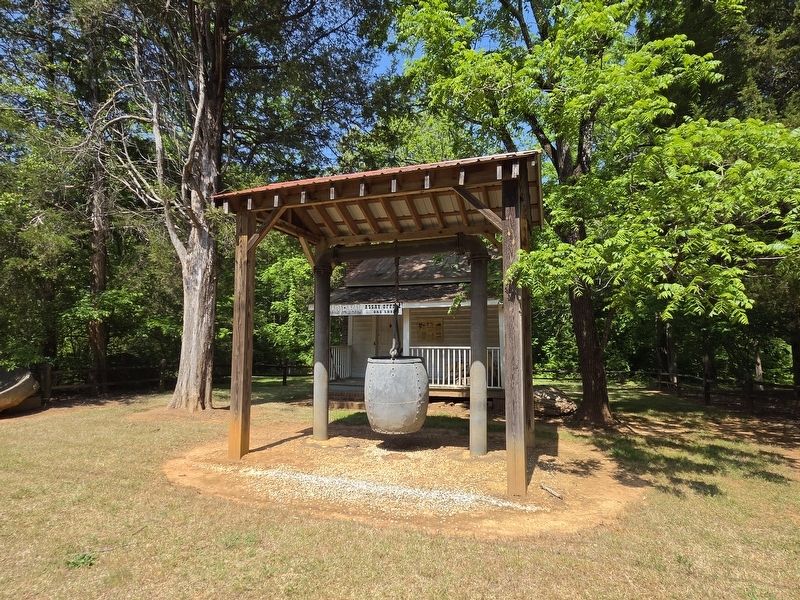
3. Cornish Kibble (Ore Bucket) in front of the Assay and Ore Shop
Stationary steam engines are fixed steam engines used for pumping or driving mills and factories, and for power generation. The engines were introduced in the 18th century and were widely used in the mining industry. The above engine was built in Chicago around 1880 and was capable of powering several operations at the Gold Hill Mines including turning the gears that raised and lowered the Cornish Kibble (Ore Bucket) to bring ore to the surface from the depths of the mine and to power the wheels that operated the stamp mill. A second pumped 200 gallons of water per minute to keep the mine shaft free of water. If the pump failed it could be a critical situation. One occurrence of the pump failing is recorded in Gold Hill's history when the pump at the Barringer Mine in nearby Misenheimer community failed during three days of torrential rains. Eight miners lost their lives as the tunnels filled with water too fast for them to make safe escape. Only two miners survived the flooding.
80° 20.721′ W. Marker is in Gold Hill, North Carolina, in Rowan County. It is on Saint Stephens Church Road 0.3 miles south of Baptist Church Road, on the right when traveling south. Touch for map. Marker is at or near this postal address: 530 St Stephens Church Rd, Gold Hill NC 28071, United States of America. Touch for directions.
Regionally, this marker is in North Carolina’s Piedmont. It is also in the American South and specifically in the Upper South. Globally, it is in North America, the Western Hemisphere, the Western World, and the Anglosphere. Historically, it finds itself in what was once the territory of the Mississippian Culture, one of the original Thirteen Colonies, one of the Confederate States of America, and the Antebellum South.
Credits. This page was last revised on May 6, 2026. It was originally submitted on May 2, 2026, by Mark Parker of Hickory, North Carolina. This page has been viewed 14 times since then. Photos:1, 2, 3, 4, 5, 6. submitted on May 2, 2026, by Mark Parker of Hickory, North Carolina. • Bernard Fisher was the editor who published this page.