Ocala in Marion County, Florida — The American South (South Atlantic)
Scott House
Circa 1888
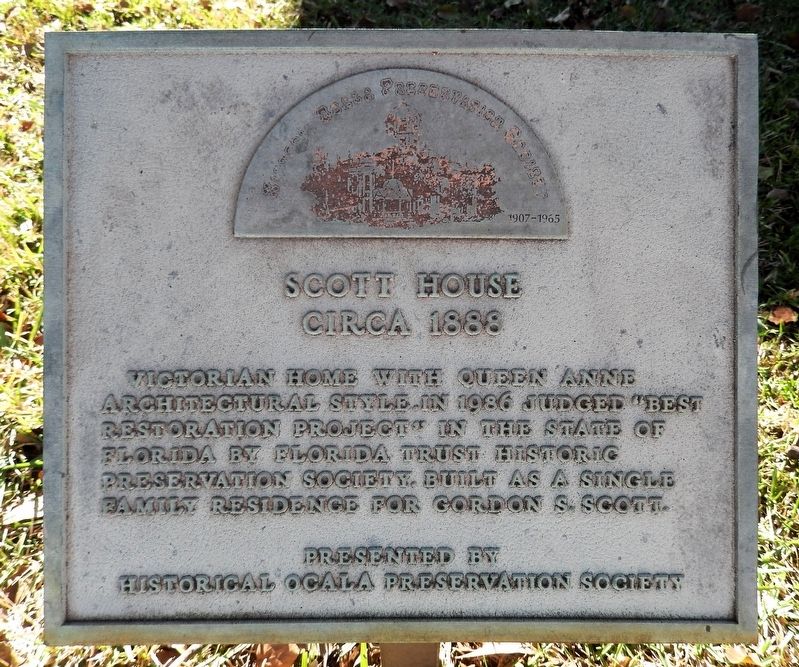
Photographed by Cosmos Mariner, December 23, 2021
1. Scott House Marker
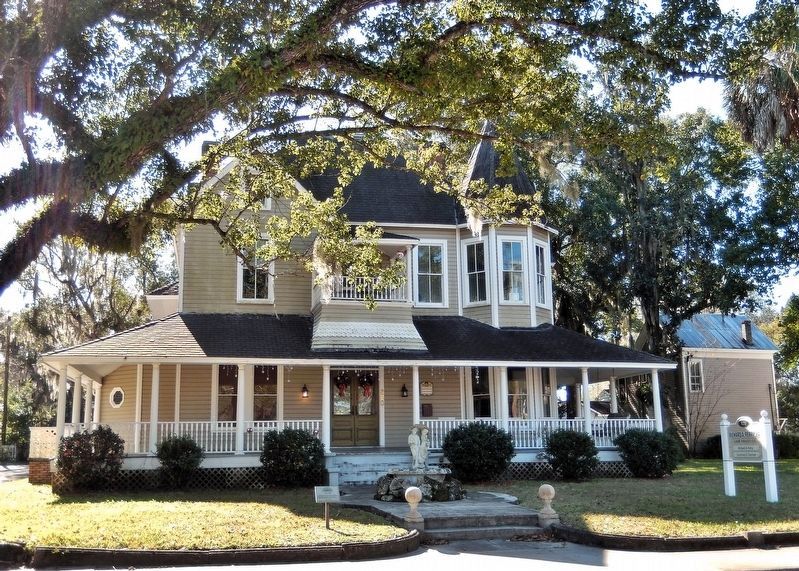
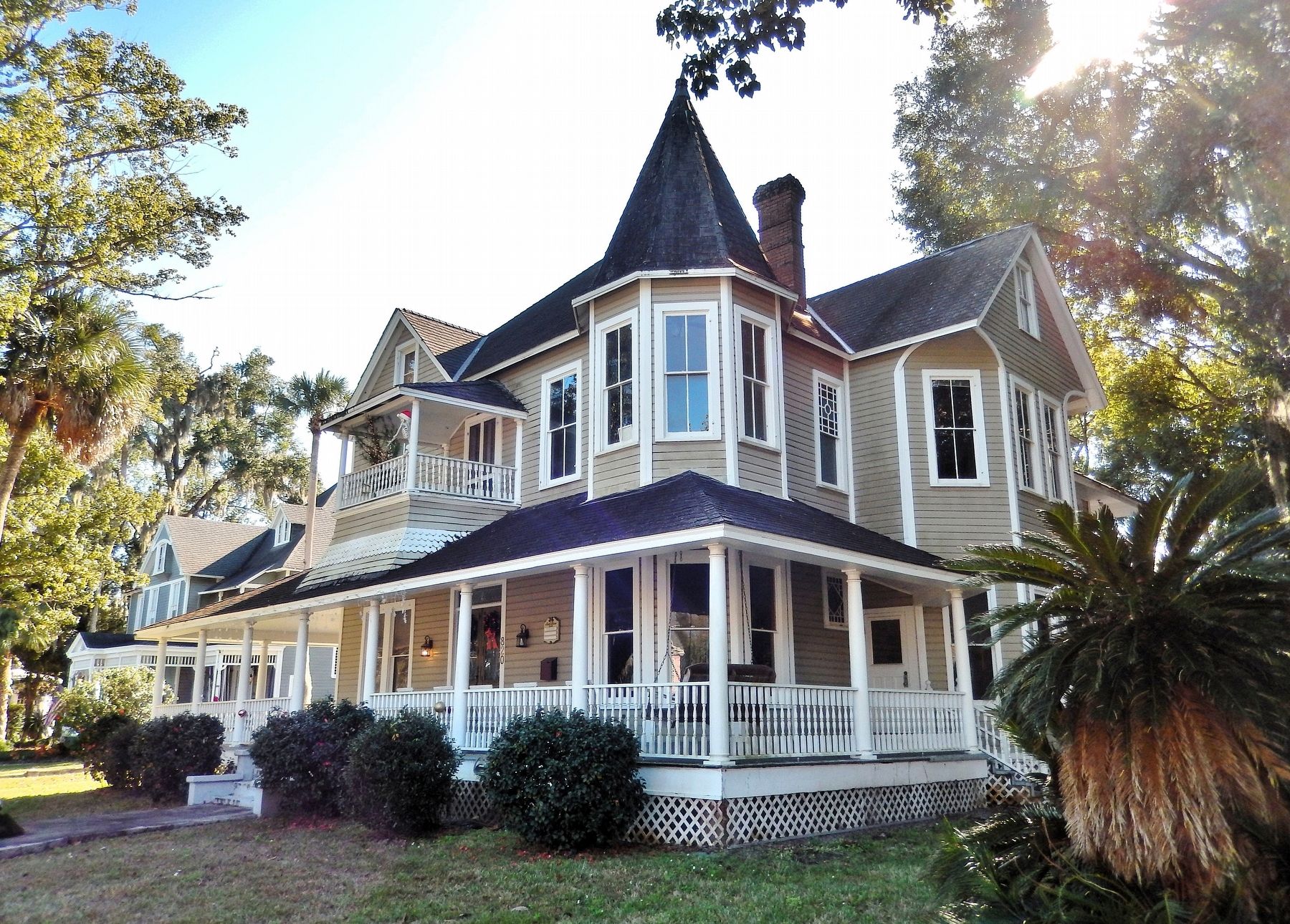
Victorian home with Queen Anne architectural style. In 1986 judged “Best Restoration Project” in the State of Florida by Florida Trust Historic Preservation Society. Built as a single family residence for Gordon S. Scott.
Erected by Historical Ocala Preservation Society.
Topics and series. This historical marker is listed in this topic list: Architecture. In addition, it is included in the National Register of Historic Places (NRHP) series list. A significant historical year for this entry is 1888.
Location. 29° 11.122′ N, 82° 7.747′ W. Marker is in Ocala, Florida, in Marion County. It is on East Fort King Street just east of Southeast 8th Avenue, on the right when traveling east. The marker is beside the sidewalk, directly in front of the Scott House. Touch for map. Marker is at or near this postal address: 820 East Fort King Street, Ocala FL 34471, United States of America. Touch for directions.

Regionally, this marker is in the American South. Globally, it is in the North Atlantic Region, North America, a Gulf of Mexico state, the Western Hemisphere, the Western World, and the Anglosphere. Historically,
this page online
Other nearby markers. At least 8 other markers are within walking distance of this marker: The Rheinauer House (a few steps from this marker); The Osborne House (within shouting distance of this marker); Bullock House (within shouting distance of this marker); The Chambliss House (within shouting distance of this marker); The William G. Marshall House (about 300 feet away, measured in a direct line); Anderson-Frank House (about 400 feet away); The Gamsby House (about 500 feet away); Fort King Manor (about 500 feet away). Touch for a list and map of all markers in Ocala.
Regarding Scott House. Contributing property, Ocala Historic District, National Register of Historic Places № 84000912.
From the National Register Nomination prepared by Mrs. W.R. Jaycox and Paul L. Weaver, III, 12/6/1983:
820 East Fort King Street, Queen Anne residence, circa 1895, Contributing
The Ocala Historic District developed as a residential neighborhood in Ocala between c. 1880 and 1930. Theearliest development, which began along Fort King Street, is dominated by Queen Anne Revival residences built prior to 1910. Of particular significance is the extensive coverage of Live Oak trees, which canopy many streets and sites. Small neighborhood green spaces, natural local flora around low areas, and landscaping contribute to the quality of life exhibited by this district. Adaptive use and rehabilitations have been compatible and intrusive elements are minimal. Since its origin, the Ocala Historic District has retained its character, ambiance, and significance to the history of the area.Photographed by Cosmos Mariner, December 23, 20212. Scott House MarkerLooking south from East Fort King Street. The marker is beside the sidewalk, on the left side of the walkway.The district's boundary encloses a concentration of well-preserved buildings constructed from the 1880s through 1930, which are associated with the lives of persons significant in Ocala's past. The structures and lots, growing larger and more generous through the years, reflect the lifestyle and values of the wealthy and socially and politically prominent citizens for whom they were built, and catalogue the development of Ocala's finest residential area from the opening of the Florida railroad era through the 1920's boom period. During this time,
Ocala became an important center for agriculture, ranching, citrus, phosphate, and tourism. The people who lived here and controlled these industries also supported the construction of churches and schools, which helped to form and define the neighborhood. The integrity of the neighborhood is preserved in large measure.Photographed by Cosmos Mariner, December 23, 20213. Scott House (northwest elevation)
Credits. This page was last revised on May 6, 2026. It was originally submitted on May 2, 2026, by Cosmos Mariner of Cape Canaveral, Florida. This page has been viewed 18 times since then. Photos: 1, 2, 3. submitted on May 6, 2026, by Cosmos Mariner of Cape Canaveral, Florida.
