City of Westminster in Greater London, England, United Kingdom — Northwestern Europe (the British Isles)
Robert Browning
Photographed by Andrew Ruppenstein, April 23, 2026
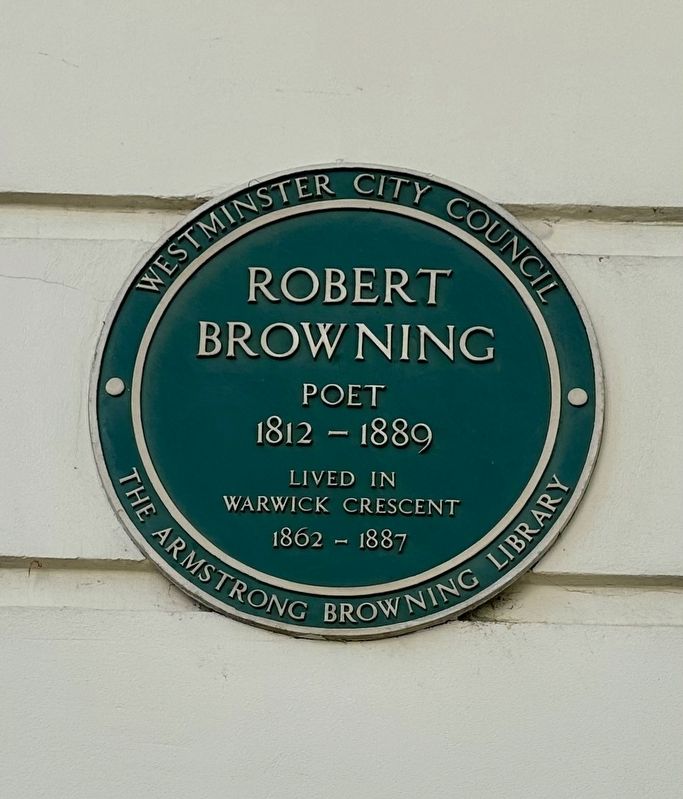
1. Robert Browning Marker
Robert Browning
Poet
1812-1889
Lived in Warwick Crescent 1862-1887
Erected by Westminster City Council, The Armstrong Browning Library.
Topics and series. This historical marker is listed in this topic list: Arts, Letters, Music. In addition, it is included in the City of Westminster Green Plaques series list.
Location. 51° 31.251′ N, 0° 11.02′ W. Marker is in City of Westminster, England, in Greater London. It is on Warwick Crescent, on the left when traveling west. Touch for map. Marker is at or near this postal address: 122 Warwick Crescent, City of Westminster, England W2 6NE, United Kingdom. Touch for directions.

Regionally, this marker is in London and in the Greater South East. Globally, it is on the Atlantic Ocean, in the North Atlantic Region, in Europe, in Atlantic Europe, on one of the British Isles, in the Western World, and in the Anglosphere. Historically, it finds itself in what was once the Roman Empire.
Other nearby markers. At least 8 other markers are within walking distance of this marker: Little Venice: a place to be
this page online
Related marker. Click here for another marker that is related to this marker.
Also see . . . Robert Browning (Wikipedia). Overview:
Robert Browning (7 May 1812 – 12 December 1889) was an English poet and playwright whose dramatic monologues put him high among the Victorian poets. He was noted for irony, characterisation, dark humour, social commentary, historical settings and challenging vocabulary and syntax.(Submitted on May 6, 2026.)
His early long poems Pauline (1833) and Paracelsus (1835) were acclaimed, but his reputation dwindled for a time – his 1840 poem Sordello was seen as wilfully obscure – and took over a decade to recover, by which time he had moved from Shelleyan formsto a more personal style. In 1846, he married fellow poet Elizabeth Barrett and moved to Italy. By her death in 1861, he had published the collection Men and Women (1855). His Dramatis Personae (1864) and book-length epic poem The Ring and the Book (1868–1869) made him a leading poet. By his death in 1889, he was seen as a sage and philosopher-poet who had fed into Victorian social and political discourse. Societies for studying his work survived in Britain and the US into the 20th century.Photographed by Andrew Ruppenstein, April 23, 20262. Robert Browning Marker - wide view
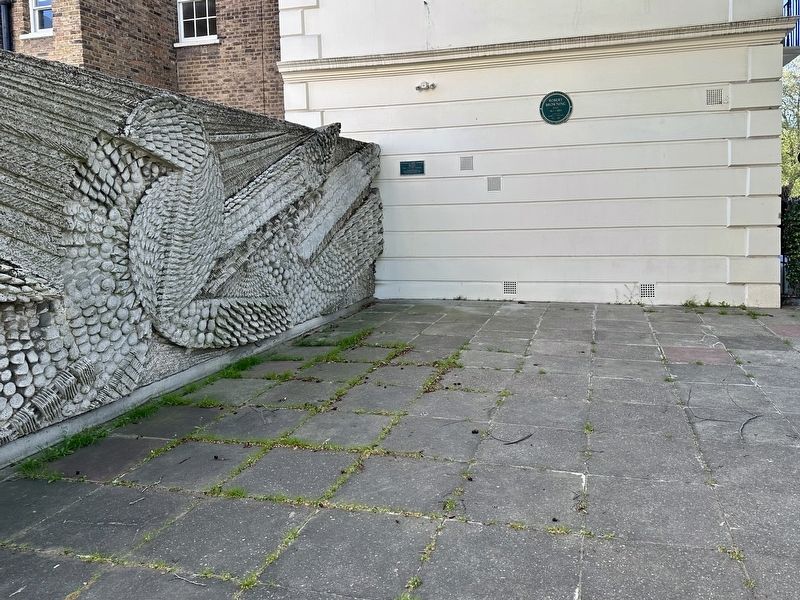
Additional keywords. green plaque
Photographed by Andrew Ruppenstein, April 23, 2026
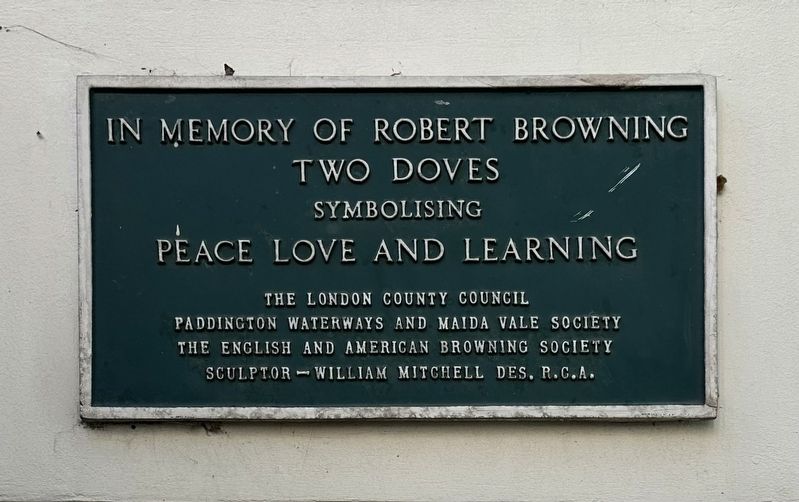
3. Robert Browning - memorial plaque and artwork
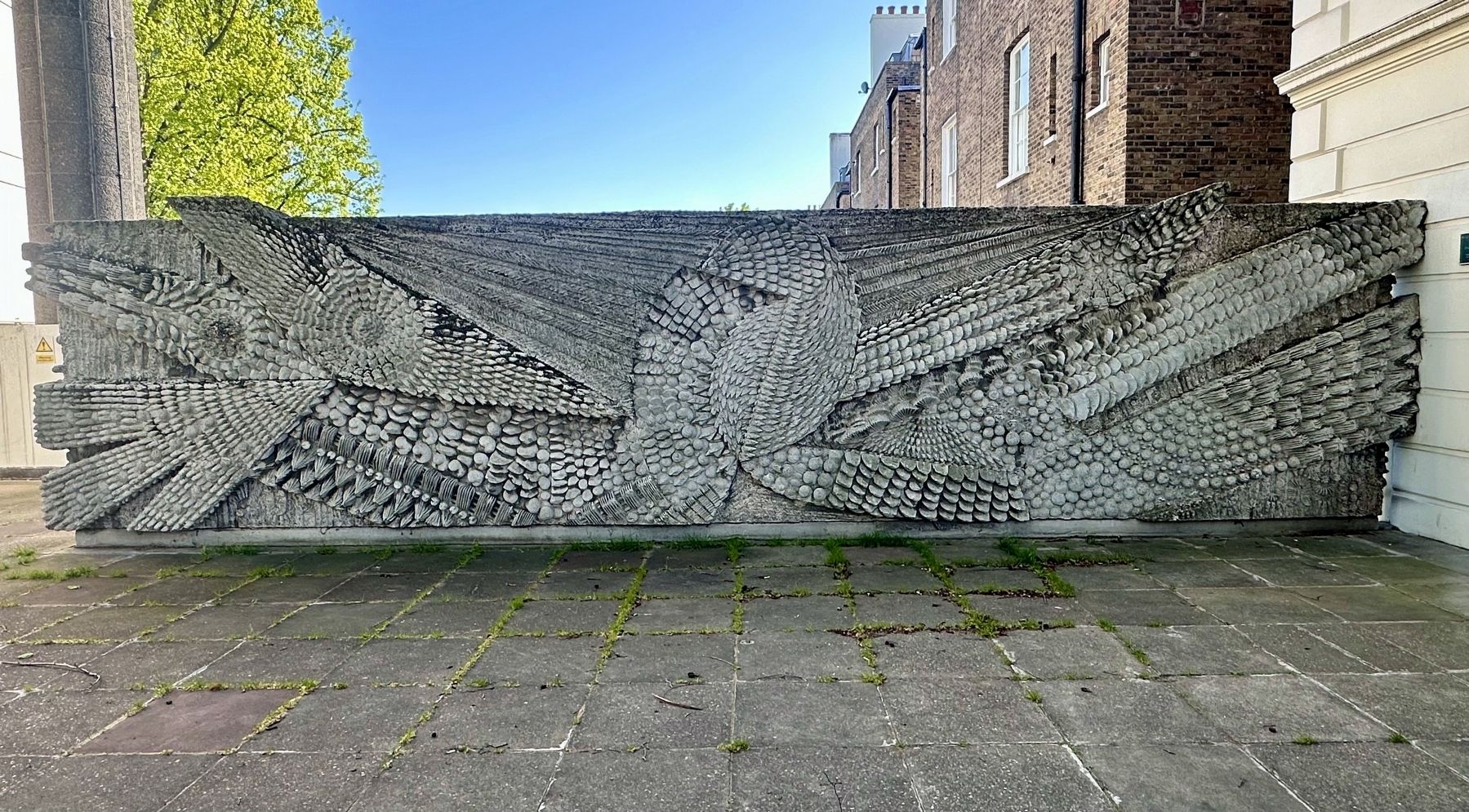
To the left of the marker is a memorial plaque and artwork, Two Doves.
Photographed by Andrew Ruppenstein, April 23, 2026
4. Two Doves (William Mitchell, 1965)
Credits. This page was last revised on May 6, 2026. It was originally submitted on May 6, 2026, by Andrew Ruppenstein of Lamorinda, California. This page has been viewed 24 times since then. Photos: 1, 2, 3, 4. submitted on May 6, 2026, by Andrew Ruppenstein of Lamorinda, California.
