Douglas (Bronzeville) in Chicago in Cook County, Illinois — The American Midwest (Great Lakes)
Welcome to Bronzeville
Photographed by Sean P. Flynn, May 13, 2026
1. Welcome to Bronzeville Marker
Inscription.
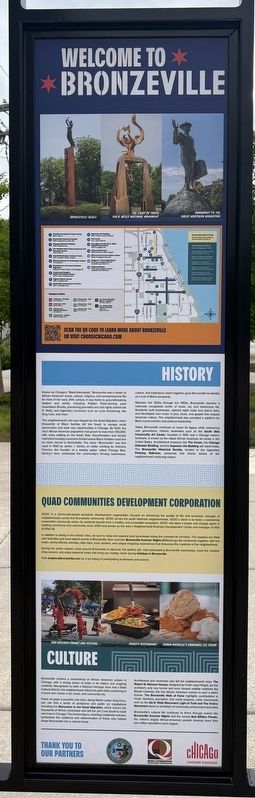
Welcome to Bronzeville. .
History. Known as Chicago's "Black Metropolis," Bronzeville was a center of African American social, cultural, religious, and entrepreneurial life for most of the early 20th century. It was home to groundbreaking leaders and artists, including Pulitzer Prize-winning poet Gwendolyn Brooks, pioneering journalist and civil rights activist Ida B. Wells, and legendary musicians such as Louis Armstrong, Nat King Cole, and more. The neighborhood's rise was shaped by the Great Migration, when thousands of Black families left the South to escape racial persecution and seek new opportunities in Chicago. By 1920, the city's African American population had grown to more than 100,000, with many settling on the South Side. Discrimination and racially restrictive housing covenants limited where Black families could live so many moved to Bronzeville. The name "Bronzeville" was first used in 1930 by James J. Gentry, an editor working for Anthony Overton, the founder of a weekly paper called Chicago Bee. Gentry's term celebrated the community's thriving businesses, culture, and institutions which together gave Bronzeville its identity as a hub of Black prosperity. Between the 1920s through the 1950s, Bronzeville became a nationally recognized center of music, art, and intellectual life. Residents built businesses, opened night clubs and dance halls, and developed new music in jazz, blues, and gospel that shaped American culture. The neighborhood also provided a platform for Black social activism and political leadership. Today, Bronzeville continues to honor its legacy while welcoming new generations. Historic landmarks such as the South Side Community Art Center, founded in 1940 and a Chicago historic landmark, is known as the oldest African American art center in the United States. Architectural treasures like The Forum, the Chicago Defender Building, and the Supreme Life Building still stand today. The Bronzeville Historical Society, located in the legendary Parkway Ballroom, preserves and shares stories of the neighborhood's enduring impact.
Quad Communities Development Corporation. QCDC is a community-based economic development organization focused on enhancing the quality of life and economic strength of neighborhoods across the Bronzeville community. QCDC serves the south lakefront neighborhoods. QCDC's vision is to foster a welcoming sustainable community where its residents benefit from a healthy and accessible ecosystem. QCDC has been a leader and change agent in building commerce and community since 2003 and serves as the area's Neighborhood Business Development Center and manager of SSA 47/SSA 56. In addition to taking in the historic sites, be sure to shop and explore local businesses along the commercial corridors. The seasons are filled with festivities and must attend events in Bronzeville. Each summer, Bronzeville Summer Nights (BSN) brings the community together with live music, family-friendly activities, bike rides, local vendors, and unique shopping experiences that showcase the creativity of the neighborhood. During the winter season, shop around Bronzeville to discover the perfect gift. Visit participating Bronzeville businesses, meet the creative shop owners, and enjoy seasonal treats that bring you holiday cheer during Holidays in Bronzeville. Visit shoplocalbronzeville.com for a full listing of participating businesses and events. Bronzeville remains a cornerstone of African American culture in Chicago, with a strong sense of pride in its history and ongoing creativity. Recognized as both a National Heritage Area and a State Cultural District, the neighborhood reflects its past while continuing to nurture new voices in art, music, and community life. Public art plays a powerful role here. Along Martin Luther King Drive, you can find a series of sculptures and public art installations including the Monument to the Great Migration, which honors the thousands of African Americans who left the Jim Crow South to build new lives in Chicago. The bronze figure, clutching a battered suitcase, symbolizes the resilience and determination of those who helped shape Bronzeville into a cultural home. Architecture and landmarks also tell the neighborhood's story. The Robert W. Roloson Houses, designed by Frank Lloyd Wright, are the architect's only row homes and once housed notable residents like Bessie Coleman, the first African American woman to earn a pilot's license. The Bronzeville Walk of Fame highlights contributions in music, literature, journalism, and social progress, while monuments such as the Ida B. Wells Monument: Light of Truth and The Victory Monument stand as reminders of community achievement and pride. Bronzeville's cultural life continues to thrive through events like Bronzeville Summer Nights and the annual Bud Billiken Parade, the nation's largest African-American parade drawing more than one million spectators each August.
History
Known as Chicago's "Black Metropolis," Bronzeville was a center of African American social, cultural, religious, and entrepreneurial life for most of the early 20th century. It was home to groundbreaking leaders and artists, including Pulitzer Prize-winning poet Gwendolyn Brooks, pioneering journalist and civil rights activist Ida B. Wells, and legendary musicians such as Louis Armstrong, Nat King Cole, and more.
The neighborhood's rise was shaped by the Great Migration, when thousands of Black families left the South to escape racial persecution and seek new opportunities in Chicago. By 1920, the city's African American population had grown to more than 100,000, with many settling on the South Side. Discrimination and racially restrictive housing covenants limited where Black families could live so many moved to Bronzeville. The name "Bronzeville" was first used in 1930 by James J. Gentry, an editor working for Anthony Overton, the founder of a weekly paper called Chicago Bee. Gentry's term celebrated the community's thriving businesses, culture, and institutions which together gave Bronzeville its identity as a hub of Black prosperity. Between the 1920s through the 1950s, Bronzeville became a nationally recognized center of music, art, and intellectual life. Residents built businesses, opened night clubs and dance halls, and developed
Click or scan to see this page online
new music in jazz, blues, and gospel that shaped American culture. The neighborhood also provided a platform for Black social activism and political leadership.
Today, Bronzeville continues to honor its legacy while welcoming new generations. Historic landmarks such as the South Side Community Art Center, founded in 1940 and a Chicago historic landmark, is known as the oldest African American art center in the United States. Architectural treasures like The Forum, the Chicago Defender Building, and the Supreme Life Building still stand today. The Bronzeville Historical Society, located in the legendary Parkway Ballroom, preserves and shares stories of the neighborhood's enduring impact.
Quad Communities Development Corporation
QCDC is a community-based economic development organization focused on enhancing the quality of life and economic strength of neighborhoods across the Bronzeville community. QCDC serves the south lakefront neighborhoods. QCDC's vision is to foster a welcoming sustainable community where its residents benefit from a healthy and accessible ecosystem. QCDC has been a leader and change agent in building commerce and community since 2003 and serves as the area's Neighborhood Business Development Center and manager of SSA 47/SSA 56.
In addition to taking in the historic sites, be sure to shop and explore local businesses along the commercial
Photographed by Sean P. Flynn, May 13, 2026
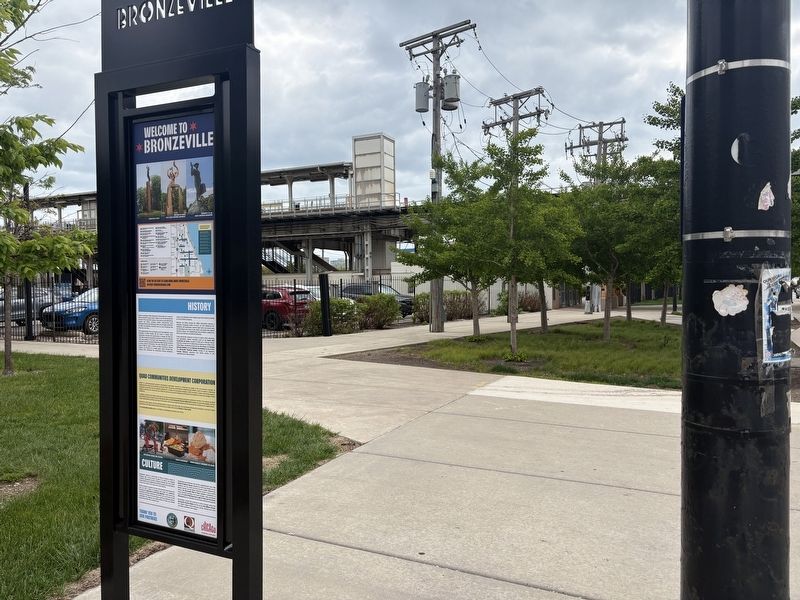
2. Welcome to Bronzeville Marker near the 35th-Bronzeville-IIT CTA train station
corridors. The seasons are filled with festivities and must attend events in Bronzeville. Each summer, Bronzeville Summer Nights (BSN) brings the community together with live music, family-friendly activities, bike rides, local vendors, and unique shopping experiences that showcase the creativity of the neighborhood.
During the winter season, shop around Bronzeville to discover the perfect gift. Visit participating Bronzeville businesses, meet the creative shop owners, and enjoy seasonal treats that bring you holiday cheer during Holidays in Bronzeville.
Visit shoplocalbronzeville.com for a full listing of participating businesses and events.
Bronzeville remains a cornerstone of African American culture in Chicago, with a strong sense of pride in its history and ongoing creativity. Recognized as both a National Heritage Area and a State Cultural District, the neighborhood reflects its past while continuing to nurture new voices in art, music, and community life.
Public art plays a powerful role here. Along Martin Luther King Drive, you can find a series of sculptures and public art installations including the Monument to the Great Migration, which honors the thousands of African Americans who left the Jim Crow South to build new lives in Chicago. The bronze figure, clutching a battered suitcase, symbolizes the resilience and determination of those who
Photographed by Sean P. Flynn, May 13, 2026
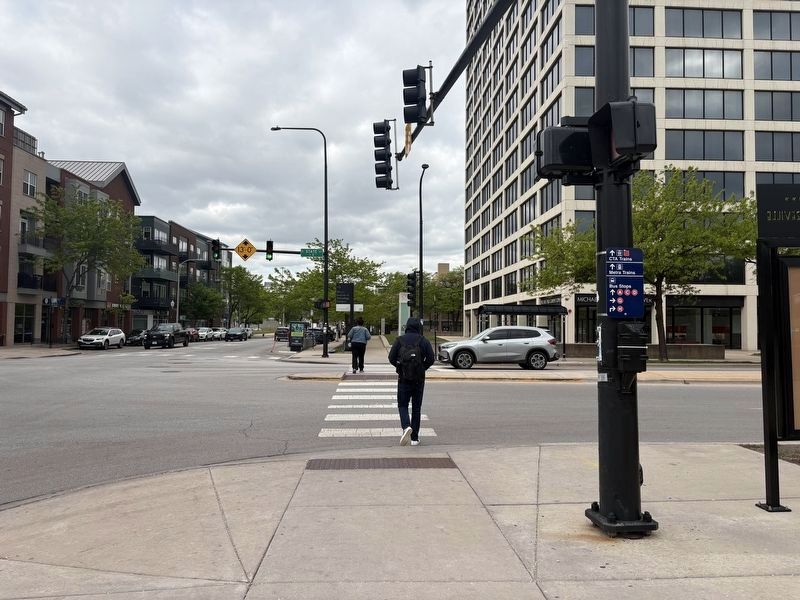
3. Welcome to Bronzeville Marker, rear view
Facing west down 35th Street, Rate Field, home of the Chicago White Sox baseball team, is behind the trees in the distance.
helped shape Bronzeville into a cultural home.
Architecture and landmarks also tell the neighborhood's story. The Robert W. Roloson Houses, designed by Frank Lloyd Wright, are the architect's only row homes and once housed notable residents like Bessie Coleman, the first African American woman to earn a pilot's license. The Bronzeville Walk of Fame highlights contributions in music, literature, journalism, and social progress, while monuments such as the Ida B. Wells Monument: Light of Truth and The Victory Monument stand as reminders of community achievement and pride.
Bronzeville's cultural life continues to thrive through events like Bronzeville Summer Nights and the annual Bud Billiken Parade, the nation's largest African-American parade drawing more than one million spectators each August.
Erected 2026 by City of Chicago; Quad Communities Development Corporation; Choose Chicago.
Location. 41° 49.87′ N, 87° 37.584′ W. Marker is in Chicago, Illinois, in Cook County. It is in Douglas (Bronzeville). It is at the intersection of South State Street and 35th Street, on the right when traveling north on South State Street. The marker is a short walk south of the 35th-Bronzeville-IIT station on the CTA Green Line train. Touch for map. Marker is in this post office area: Chicago IL 60609, United States of America. Touch for directions.

Regionally, this marker is in the American Midwest and on the Great Lakes. Globally, it is in North America, the Western Hemisphere, the Western World, and the Anglosphere. Historically, it finds itself in what was once the Viceroyalty of New France, the territory of the Mississippian Culture, and the Northwest Territory.
Other nearby markers. At least 8 other markers are within walking distance of this marker: Joseph Sanford (a few steps from this marker); Hymes Taylor (within shouting distance of this marker); Edward Lee (within shouting distance of this marker); Chicago Race Riot of 1919 (within shouting distance of this marker); John Walter Humphrey (within shouting distance of this marker); a different marker also named Welcome to Bronzeville (within shouting distance of this marker); William J. Otterson (within shouting distance of this marker); State Street (within shouting distance of this marker). Touch for a list and map of all markers in Chicago.
Also see . . . Neighborhood Wayfinding Initiative. A 2026 news release from Choose Chicago about the new wayfinding signs erected in Chicago neighborhoods. (Submitted on May 14, 2026, by Sean P. Flynn of Oak Park, Illinois.)
Credits. This page was last revised on May 14, 2026. It was originally submitted on May 13, 2026, by Sean P. Flynn of Oak Park, Illinois. This page has been viewed 19 times since then. Photos:1, 2, 3. submitted on May 13, 2026, by Sean P. Flynn of Oak Park, Illinois.
