Thurmont in Frederick County, Maryland — The American Northeast (Mid-Atlantic)
Australian Wetland Birds
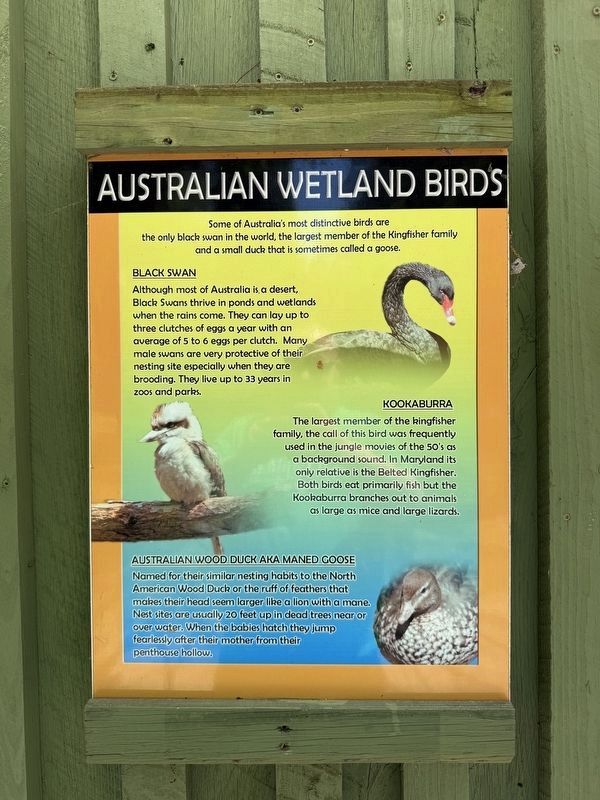
Black Swan
Although most of Australia is a desert, Black Swans thrive in ponds and wetlands when the rains come. They can lay up to three clutches of eggs a year with an average of 5 to 6 eggs per clutch. Many male swans are very protective of their nesting sites especially when they are brooding. They live up to 33 years in zoos and parks.
Kookaburra
The largest member of the kingfisher family, the call of this bird was frequently used in the jungle movies of the 50's as a background sound. In Maryland its only relative is the Belted Kingfisher. Both birds eat primarily fish but the Kookaburra branches out to animals as large as mice and large lizards.
Australian Wood Duck AKA Maned Goose
Named for their similar nesting habits to the North American Wood Duck or the ruff of feathers that makes their head seem larger like a lion with a mane. Nest sites are usually 20 feet up in dead trees near or over water. When the babies hatch they
this page online
Erected by Catoctin Wildlife Preserve.
Topics. This historical marker is listed in these topic lists: Animals • Arts, Letters, Music • Entertainment.
Location. 39° 35.434′ N, 77° 25.883′ W. Marker is in Thurmont, Maryland, in Frederick County. It can be reached from Catoctin Furnace Road 0.6 miles north of Kellys Store Road, on the right when traveling north. Touch for map. Marker is at or near this postal address: 13019C Catoctin Furnace Rd, Thurmont MD 21788, United States of America. Touch for directions.

Regionally, this marker is in the Washington Metropolitan Area and in Central Maryland. It is also in the American Mid-Atlantic. Globally, it is in North America, the Western Hemisphere, the Western World, and the Anglosphere. Historically, it finds itself in what was once one of the original Thirteen Colonies and also the Antebellum South.
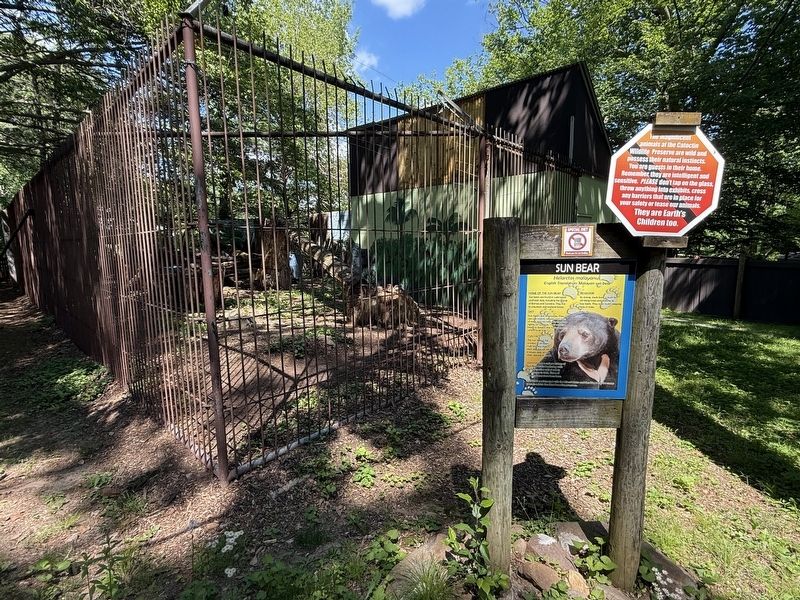
Other nearby markers. At least 8 other markers are within walking distance of this marker: Dingo (a few steps from this marker); Ruffed Lemur (a few
Additional commentary.
1. About the marker
This sign serves as a historical marker because it shares the historical significance of the use of the kookaburra's call in the films of the 1950s.
— Submitted May 17, 2026, by Devry Becker Jones of Washington, District of Columbia.
Credits. This page was last revised on May 17, 2026. It was originally submitted on May 17, 2026, by Devry Becker Jones of Washington, District of Columbia. This page has been viewed 8 times since then. Photos: 1, 2. submitted on May 17, 2026, by Devry Becker Jones of Washington, District of Columbia.
