Une histoire marquée par les flammes


1808 La colonie naissante perd ses installations et sa production de bois dans un incendie.
1865 L'église anglicane St. James est détruite par les flammes.
1875 Un incendie entre les rues Montcalm et Eddy détruit seize maisons.
1880 Le « feu Sabourin » fait rage sur la rue Eddy : la moitié de la population de Hull se retrouve sans foyer.
1882 L'usine Eddy est détruite par les flammes.
1886 Le « feu Landry » touche près de 150 familles aux environs des rues Laval, Kent et Wright.
1888 Le « feu du marché » détruit l'hôtel de ville et le quartier avoisinant.
1900 Le « Grand Feu » de Hull : en quelques heures seulement, le 26 avril 1900, plus de 40 % de Hull et 20 % d'Ottawa ne sont plus que des débris fumants.
Le service d’incendie de hull
En 1869, la ville installe sa première pompe à incendie sur la
this page online
L’édifice Laflèche
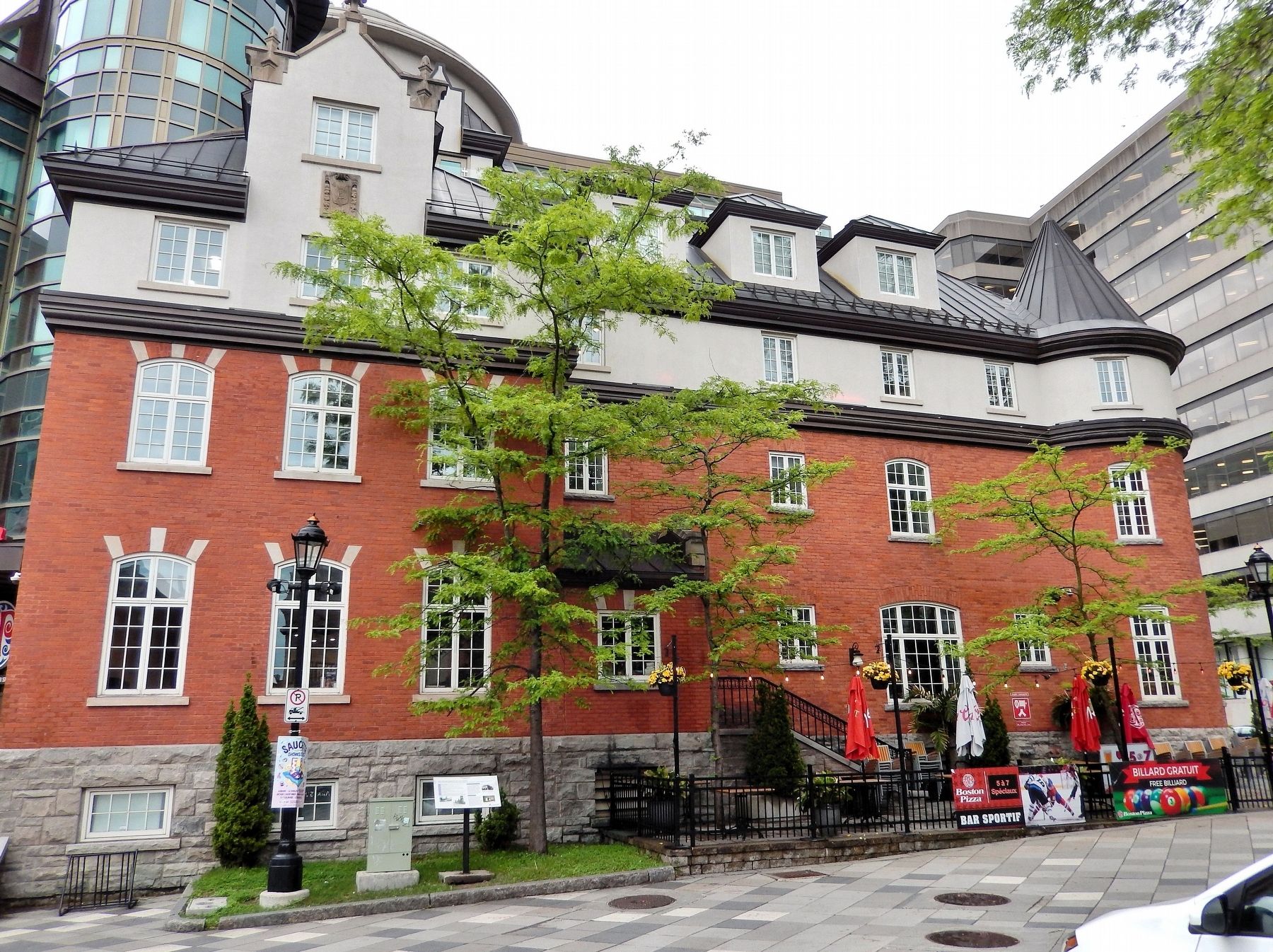
En 1877, Isaïe Laflèche ouvre une épicerie au 42, rue Laval, à Hull. Détruit par le feu à trois reprises, le bâtiment est reconstruit en 1900 dans un style à l'italienne. Haut de trois étages, il abrite l'épicerie et la résidence familiale ainsi qu'une salle ouverte à la communauté. De 1912 à 1920, le premier syndicat catholique, l'Association ouvrière de Hull (ancêtre de la CSN, soit la Confédération des syndicats nationaux), rassemble. La famille Laflèche reste propriétaire du bâtiment jusqu'en 1976. En 1978, le café Aux 4 Jeudis ouvre ses portes et l'établissement devient
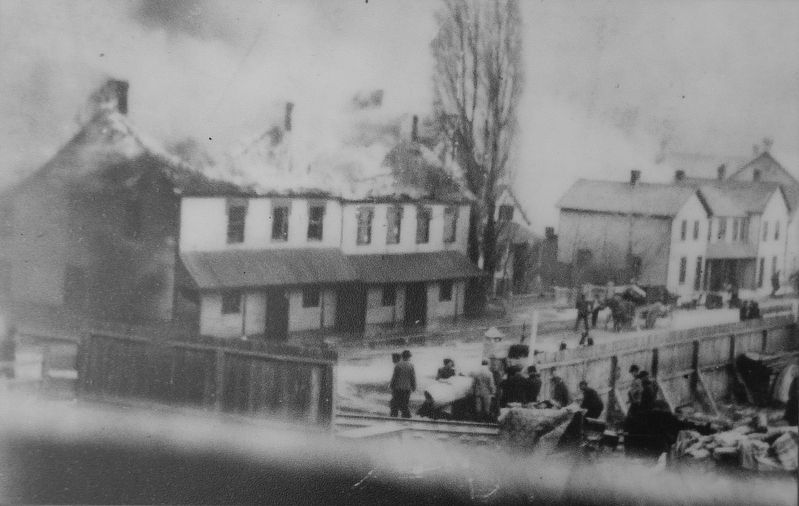
A History Marked by Flames
Like many municipalities, the history of the city of Hull is marked by numerous destructive fires. The proximity of the buildings, the omnipresence of wood as a construction material, as well as a fire service ill-suited to rapid urbanization are factors that contributed to their outbreaks.
1808 The nascent colony loses its facilities and timber production in a fire.
1865 St. James Anglican Church is destroyed by flames.
1875 A fire between Montcalm and Eddy streets destroys sixteen houses.
1880 The "Sabourin Fire" rages on Eddy Street: half of Hull's population is left homeless.
1882 The Eddy factory is destroyed by flames.
1886 The "Landry Fire" affects nearly 150 families around Laval, Kent, and Wright streets.
1888 The "Market Fire" destroys the town hall and the surrounding neighborhood.
1900 The "Great Fire" of Hull: in just a few hours on April 26, 1900, more than 40% of Hull and 20% of Ottawa are reduced to smoldering debris.
The Hull Fire Department
In 1869, the city installed its first fire pump on Main

The Laflèche Building
In 1877, Isaïe Laflèche opened a grocery store at 42 Laval Street, in Hull. Destroyed by fire three times, the building was rebuilt in 1900 in an Italian style. Three stories high, it housed the grocery store and the family residence as well as a hall open to the community. From 1912 to 1920, the first Catholic union, the Hull Workers' Association (ancestor of the CSN, or the Confederation of National Trade Unions), gathered there. The Laflèche family remained the owner of the building until 1976. In 1978, the café Aux 4 Jeudis opened its doors, and the establishment quickly became a staple of the city's cultural

Erected by Ville de Gatineau, Québec, Entente de développement culturel.
Topics. This historical marker is listed in these topic lists: Architecture • Charity & Public Work • Disasters • Industry & Commerce. A significant historical date for this entry is April 26, 1900.
Location. 45° 25.614′ N, 75° 42.926′ W. Marker is in Gatineau, Québec, in Outaouais. It is in District de Hull. It is on Rue Aubry just north of Promenade du Portage, on the right when traveling north. The marker is on the west side of the historic Chez Henri Hotel building. Touch for map. Marker is at or near this postal address: 179 Promenade du Portage, Gatineau QC J8X 2K5, Canada. Touch for directions.

Regionally, this marker is in the Ottawa Metropolitan Area and in the Outaouais & Eastern Townships. It is also in Central Canada. Globally, it is in North America, the Great North Woods, the Western Hemisphere, and the Western World. Historically, it finds itself in what was once a British colony, the Viceroyalty of New France, the Haudenosaunee (Iroquois) Confederacy, and Rupert’s Land.
Other nearby markers. At least

Related markers. Click here for a list of markers that are related to this marker.
Also see . . . 1900 Hull–Ottawa fire (Wikipedia).
Excerpt: Around 10 AM on April 26 a defective chimney on a house in Hull caught fire, which quickly spread between the wooden houses due to windy conditions. Within two hours the blaze had destroyed several surrounding blocks. At that point it began to spread along the river, where there were large lumber companies on the banks(Submitted on June 10, 2026, by Cosmos Mariner of Cape Canaveral, Florida.)and islands, and huge amounts of stacked lumber that quickly ignited. By 1 PM the fire jumped the river on embers and set the Ottawa side ablaze.Photographed by Cosmos Mariner, May 27, 20246. Une histoire marquée par les flammes MarkerThe marker is on the west side of the historic Chez Henri Hotel building.Two thirds of Hull was destroyed, including 40 per cent of its residential buildings and most of its largest employers along the waterfront. The fire also spread across the Ottawa River, carried by wind borne embers and destroyed a large swath of western Ottawa. About one fifth of Ottawa was destroyed. Much of the city's industry was destroyed, including two major ironworks, two flourmills, and both the Ottawa Electric Railway and Electric Lighting Company.
Seven people were killed in the blaze, and fifteen thousand were made homeless, including 14% of the population of Ottawa and 42% of Hull's population. Property losses amounted to $6,200,000 in Ottawa and $3,300,000 in Hull. More were killed by disease in the densely packed tent cities where the people were forced to live afterwards.
Credits. This page was last revised on June 15, 2026. It was originally submitted on June 8, 2026, by Cosmos Mariner of Cape Canaveral, Florida. This page has been viewed 20 times since then. Photos: 1, 2, 3, 4, 5, 6. submitted on June 9, 2026, by Cosmos Mariner of Cape Canaveral, Florida.
