Downtown Yonge in Toronto, Ontario — Central Canada (North America)
William Lyon Mackenzie
1795-1861
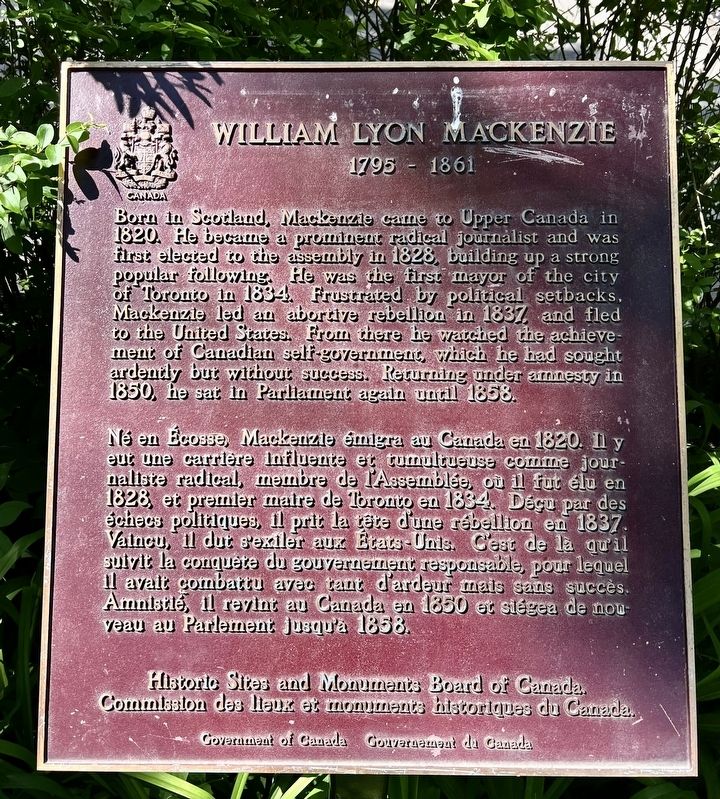
Photographed by Tim Boyd, June 1, 2026
1. William Lyon MacKenzie Marker

Erected by Historic Sites and Monuments Board
this page online
Topics and series. This historical marker is listed in this topic list: Government & Politics. In addition, it is included in the Canada, Historic Sites and Monuments Board series list. A significant historical year for this entry is 1795.
Location. 43° 39.347′ N, 79° 22.694′ W. Marker is in Toronto, Ontario. It is in Downtown Yonge. It is on Bond Street 0.1 kilometers south of Dundas Street West, on the right when traveling south. Touch for map. Marker is at or near this postal address: 82 Bond Street, Toronto ON M5B M5B, Canada. Touch for directions.

Regionally, this marker is in Greater Toronto and on the Golden Horseshoe. It is also in Central Canada. Globally, it is in North America, on the Great Lakes, in the Western Hemisphere, in the Western World, and in the Anglosphere. Historically, it finds itself in what was once a British colony, the Viceroyalty of New France, the Haudenosaunee (Iroquois) Confederacy, and Rupert’s Land.
Other nearby markers. At least 8 other markers are within walking distance of this marker: Mackenzie House (a few steps from this marker); St. Michael’s Cathedral Rectory
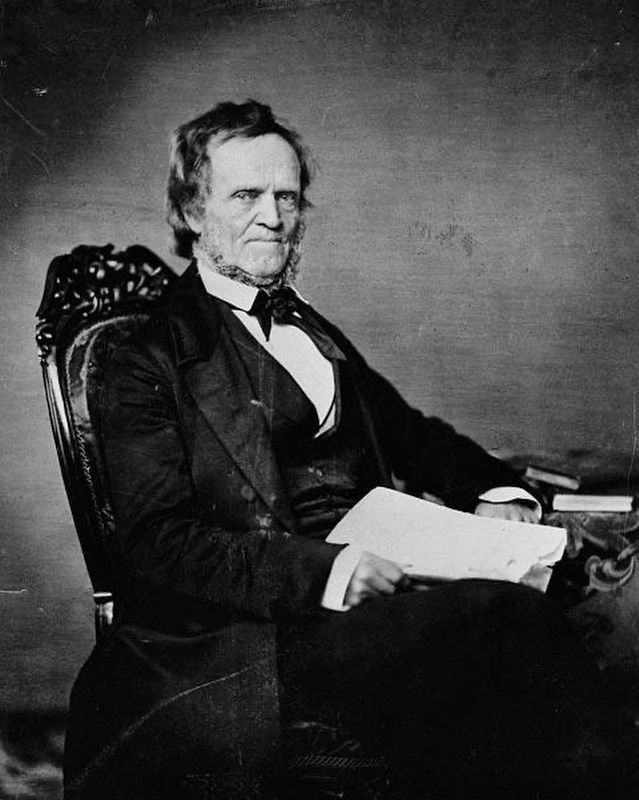
circa 1850
2. William Lyon Mackenzie, ca 1850
Wikipedia (public domain)
Also see . . . Rebellions of 1837-38 (The Canadian Encyclopedia). The Canadian Encyclopedia website entry:
The rebellion in Upper Canada was led by William Lyon Mackenzie. The Scottish-born newspaper publisher and politician was a fierce critic of the Family Compact. The Compact was an elite clique of officials and businessmen who ran the colony, largely through a system of patronage. Mackenzie and his followers also opposed a system of land grants that favoured settlers from Britain over those with ties to the United States, many of whom were also denied political rights.(Submitted on June 10, 2026, by Tim Boyd of Hamilton, Ontario.)
In 1837, after years of failed efforts at peaceful change, Mackenzie convinced his most radical followers to try and seize control ofthe government and declare the colony a republic.Photographed by Tim Boyd, June 1, 20263. William Lyon Mackenzie Marker
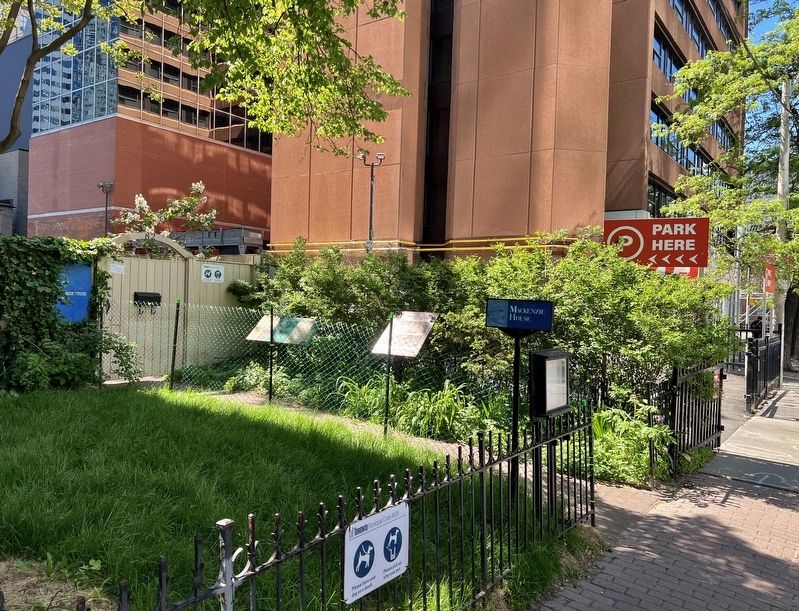
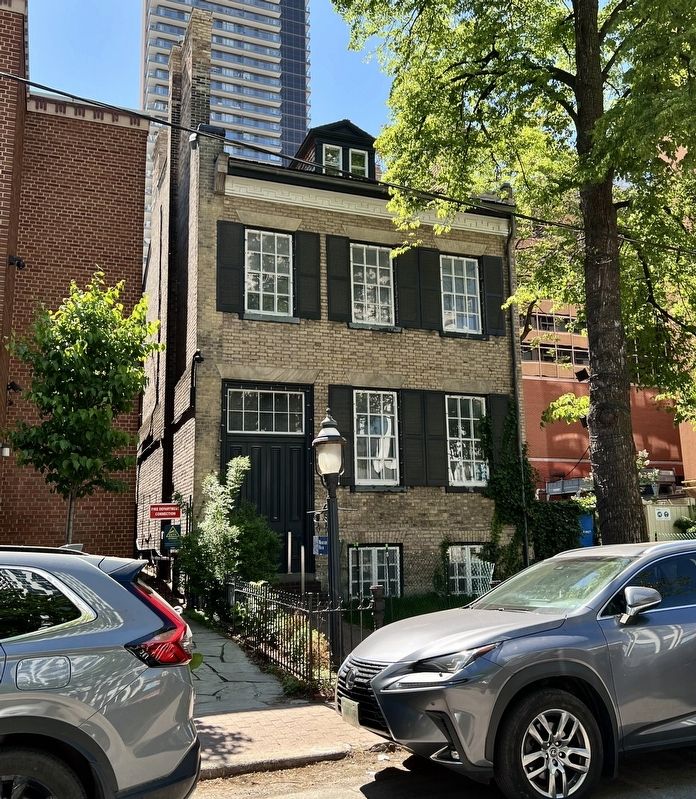
Photographed by Tim Boyd, June 1, 2026
4. William Lyon Mackenzie House Museum
Credits. This page was last revised on July 12, 2026. It was originally submitted on June 10, 2026, by Tim Boyd of Hamilton, Ontario. This page has been viewed 20 times since then. Photos: 1, 2, 3, 4. submitted on June 10, 2026, by Tim Boyd of Hamilton, Ontario. • Andrew Ruppenstein was the editor who published this page.
