Hot Springs in Garland County, Arkansas — The American South (West South Central)
Tarleton-Wall House
Photographed by Cosmos Mariner, September 13, 2024
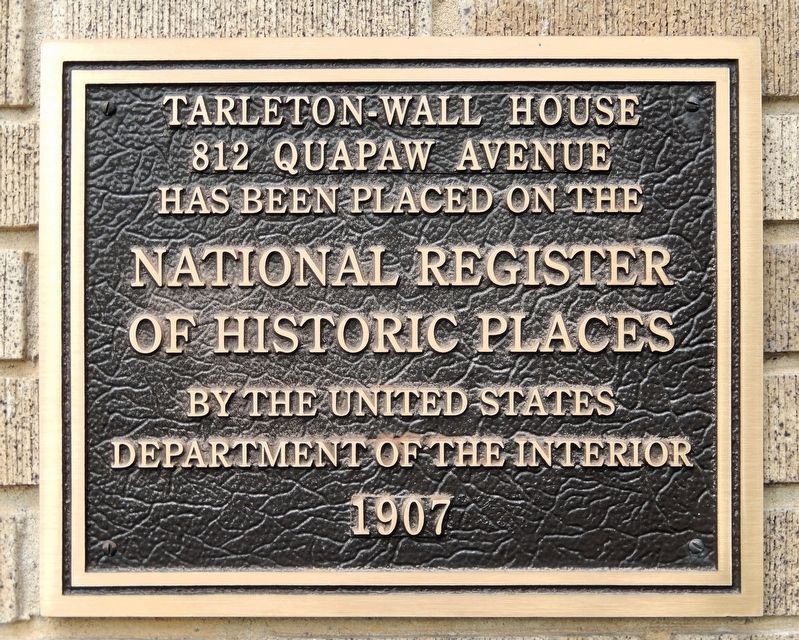
1. Tarleton-Wall House Marker
Tarleton-Wall House, 812 Quapaw Avenue, has been placed on the National Register of Historic Places by the United States Department of the Interior.
1907
Topics and series. This historical marker is listed in these topic lists: Architecture • Notable Buildings. In addition, it is included in the National Register of Historic Places (NRHP) series list. A significant historical year for this entry is 1907.
Location. 34° 30.211′ N, 93° 3.894′ W. Marker is in Hot Springs, Arkansas, in Garland County. It is at the intersection of Quapaw Avenue and Fern Street, on the right when traveling west on Quapaw Avenue. The marker is mounted at eye-level, directly on the subject house, on the left side of the front/south entrance. Touch for map. Marker is at or near this postal address: 812 Quapaw Avenue, Hot Springs National Park AR 71901, United States of America. Touch for directions.

Regionally, this marker is in Arkansas’ Ouachita Mountains. It is also in the American South and specifically in the Upper South. Globally, it is in North America, the Western Hemisphere, the Western World, and the Anglosphere. Historically,
this page online
Other nearby markers. At least 8 other markers are within walking distance of this marker: Purdum-Rainwater House (a few steps from this marker); William H. Martin House (within shouting distance of this marker); Garland County Courthouse (approx. 0.4 miles away); Walter Beauchamp House (approx. 0.4 miles away); Hot Springs Baseball Grounds (approx. 0.4 miles away); The Ed. B. Mooney Tree (approx. 0.4 miles away); Orange Street Presbyterian Church (approx. half a mile away); Central Methodist Church (approx. half a mile away). Touch for a list and map of all markers in Hot Springs.
Regarding Tarleton-Wall House. Contributing property, Quapaw-Prospect Historic District, National Register of Historic Places № 99000821.
From the National Register Nomination prepared by Marty Dalby and edited by Kara Mills Oosterhous, 6/20/1999:
The Quapaw-Prospect Historic District is a predominately residential neighborhood encompassing approximately nine blocks. The districtpossesses a strong sense of integrity as a residential neighborhood comprised of houses constructed between circa 1890 to circa 1940. The historic residential neighborhood remains remarkably intact, displaying an ensemble of late nineteenth and early twentieth-century homes — the finest of this era surviving in the city of Hot Springs. Variations of architectural styles such as Queen Anne, Classical Revival, Colonial Revival, Spanish Revival and Craftsman are well represented in the district. The importance of this neighborhood's high degree of preservation is underscored by the fact that it remains the closest historic residential area to Central Avenue, the equally historic commercial core of downtown Hot Springs. The Quapaw-Prospect Historic District is the earliest and best intact example of a residential area that was built to house many of the people who either owned downtown businesses or worked there.Photographed by Cosmos Mariner, September 13, 20242. Tarleton-Wall House MarkerThe marker is on the left side of the front entrance.Also contributing to the overall historic feeling of the district is the visual continuity that is provided by the wide, tree-lined streets, many of which still retain original curbing. Oaks, Maples, Magnolias, and Dogwood trees
are located throughout the neighborhood and were either in existence before the area was developed or they were planted as the homes were built as part of the designed landscape. The large present-day lots are evidence of the original design or layout of the neighborhood as they have retained their original dimensions throughout the years. Included within the historic district are many carriage houses and garages that are associated with the homes, as well as ancillary buildings and structures such as: servants' quarters, wells, barns and storage sheds. The integrity of design is further validated by the fact that nowhere in the area has there been a subdivision of lots. Many prominent leaders of Hot Springs have lived in or are still living in the neighborhood. Its close proximity to the Hot Springs Central Avenue Historic District (NRHP listed 06/25/85) and Bathhouse Row (NRHP listed 11/13/74 & NHL listed 05/28/87) in downtown Hot Springs contributes to the overall significance of the area.Photographed by Cosmos Mariner, September 13, 20243. Tarleton-Wall House (southeast elevation)Note: The Tarleton-Wall House is referred to as the Browne-Tarleton House within the NRHP nomination.
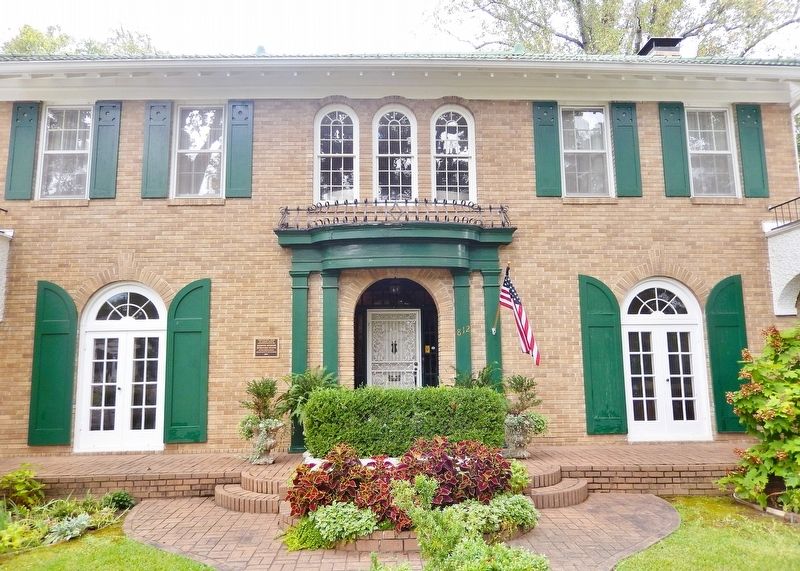
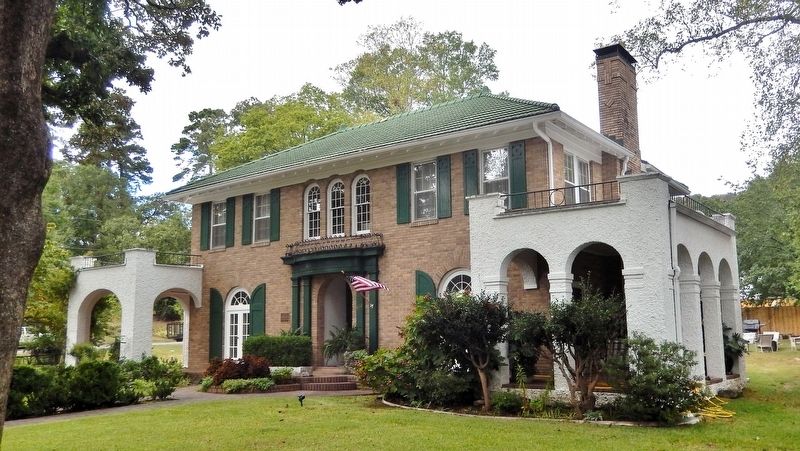
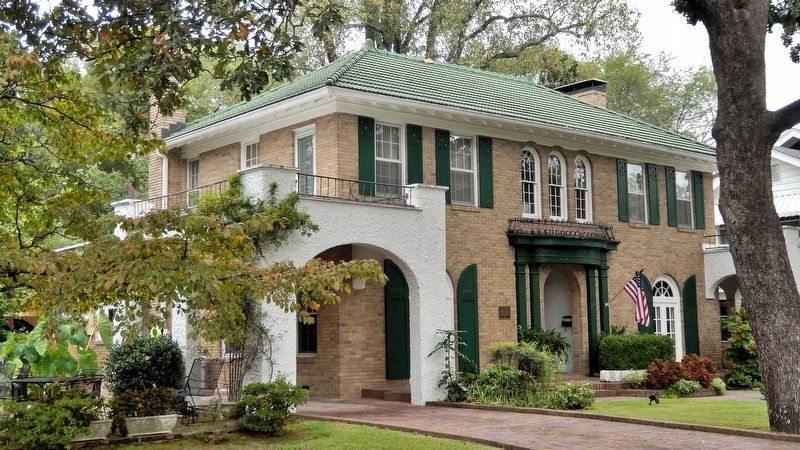
Photographed by Cosmos Mariner, September 13, 2024
4. Tarleton-Wall House (southwest elevation)
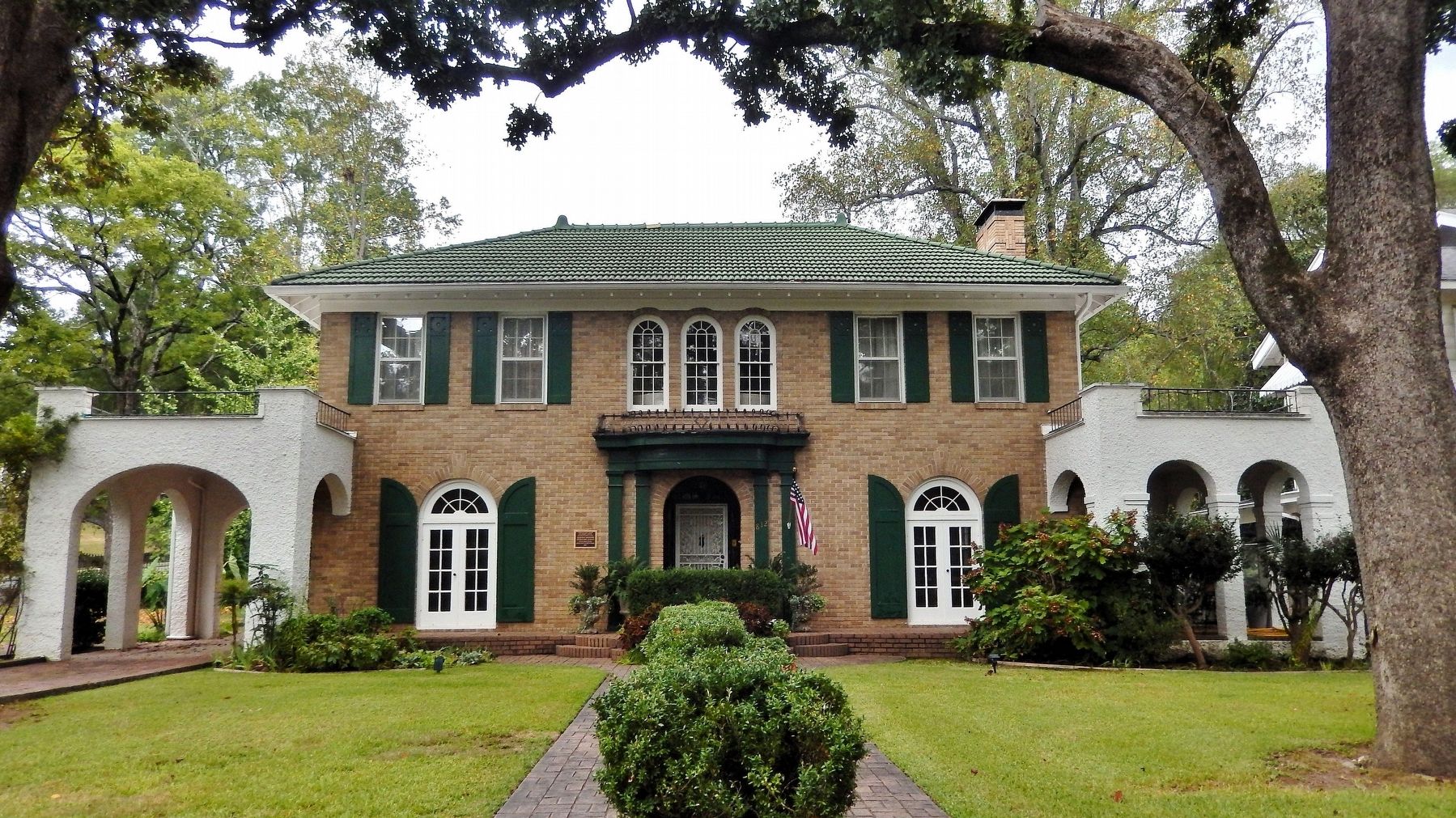
Photographed by Cosmos Mariner, September 13, 2024
5. Tarleton-Wall House (south/front elevation)
From the National Register Nomination: The use of tile roofs, stucco, and arcaded porches are typical of Mediterranean style homes. Typical features of the Italianate style include brick arches over the windows and doors, and symmetrical facade composition. The Browne-Tarleton House at 812 Quapaw is an example of both the Mediterranean and Italianate styles of architecture.
Credits. This page was last revised on June 29, 2026. It was originally submitted on June 25, 2026, by Cosmos Mariner of Cape Canaveral, Florida. This page has been viewed 11 times since then. Photos: 1, 2, 3, 4, 5. submitted on June 26, 2026, by Cosmos Mariner of Cape Canaveral, Florida.
