Mitte in Leipzig, Saxony, Germany — Central Europe
Runde Tische
Orte der Friedlichen Revolution
⎯⎯⎯
Round tables
Sites of the Peaceful Revolution
| — | '89 | — |
Photographed by James Hulse, March 11, 2026
1. Runde Tische / Round tables Marker

1. Dezember 1989
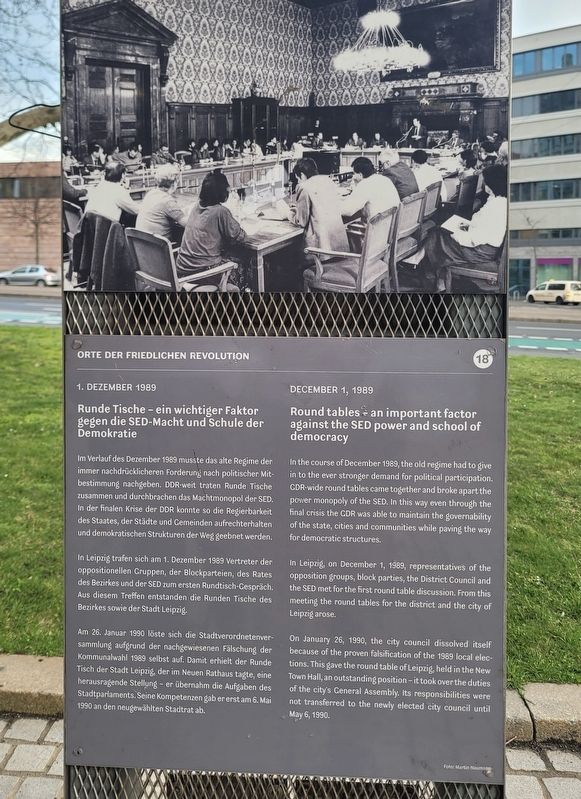
Runde Tische - ein wichtiger Faktor gegen die SED-Macht und Schule der Demokratie
Im Verlauf des Dezember 1989 musste das alte Regime der immer nachdrücklicheren Forderung nach politischer Mitbestimmung nachgeben. DDR-weit traten Runde Tische zusammen und durchbrachen das Machtmonopol der SED. In der finalen Krise der DDR konnte so die Regierbarkeit des Staates, der Städte und Gemeinden aufrechterhalten und demokratischen Strukturen der Weg geebnet werden.
In Leipzig trafen sich am 1. Dezember 1989 Vertreter der oppositionellen Gruppen, der Blockparteien, des Rates des Bezirkes und der SED zum ersten Rundtisch-Gespräch. Aus diesem Treffen entstanden die Runden Tische des Bezirkes sowie der Stadt Leipzig.
Am 26. Januar 1990 löste sich die Stadtverordnetenversammlung aufgrund der nachgewiesenen Fälschung der Kommunalwahl 1989 selbst auf. Damit erhielt der Runde Tisch der Stadt Leipzig, der im Neuen Rathaus tagte, eine herausragende Stellung - er übernahm die Aufgaben des Stadtparlaments. Seine Kompetenzen gab er erst am 6. Mai 1990 an den neugewählten Stadtrat ab.
Foto: Martin Naumang
December 1, 1989
Round tables - an important factor against the SED power and school of democracy
In
this page online
In Leipzig, on December 1, 1989, representatives of the opposition groups, block parties, the District Council and the SED met for the first round table discussion. From this meeting the round tables for the district and the city of Leipzig arose.
On January 26, 1990, the city council dissolved itself because of the proven falsification of the 1989 local elections. This gave the round table of Leipzig, held in the New Town Hall, an outstanding position - it took over the duties of the city's General Assembly. Its responsibilities were not transferred to the newly elected city council until May 6, 1990.
Photo: Martin Naumang
Erected by Stadt Leipzig and Freistaat Sachsen. (Marker Number 18.)
Topics. This historical marker is listed in this topic list:
Photographed by James Hulse, March 11, 2026
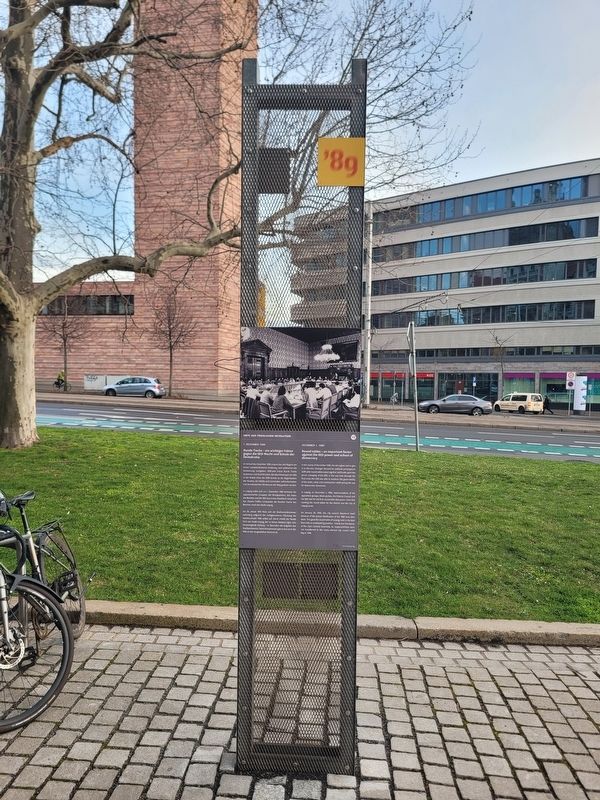
2. Runde Tische / Round tables Marker
Location. 51° 20.141′ N, 12° 22.329′ E. Marker is in Leipzig, Sachsen (Saxony). It is in Mitte. It is at the intersection of Martin-Luther-Ring and Harkortstraße, on the right when traveling west on Martin-Luther-Ring. Touch for map. Marker is at or near this postal address: Martin-Luther-Ring 4, Leipzig SN 04109, Germany. Touch for directions.

Regionally, this marker is in Central Germany. Globally, it is in Europe, the European Union, Atlantic Europe, Central Europe, the Schengen Area, Western Europe, and the Western World. Historically, it finds itself in what was once the Holy Roman Empire and also the former East Germany.
Other nearby markers. At least 8 other markers are within walking distance of this marker: Neues Rathaus / New Town Hall (within shouting distance of this marker); Leipzig Disputation (about 120 meters away, measured in a direct line); Theodor Körner (about 150 meters away); Christian Friedrich Henrici (about 180 meters away); Erste genehmigte Kundgebung des Neuen Forums / First approved rally of the New Forum (about 240 meters away);
Photographed by James Hulse, March 11, 2026
3. Runde Tische / Round tables Marker
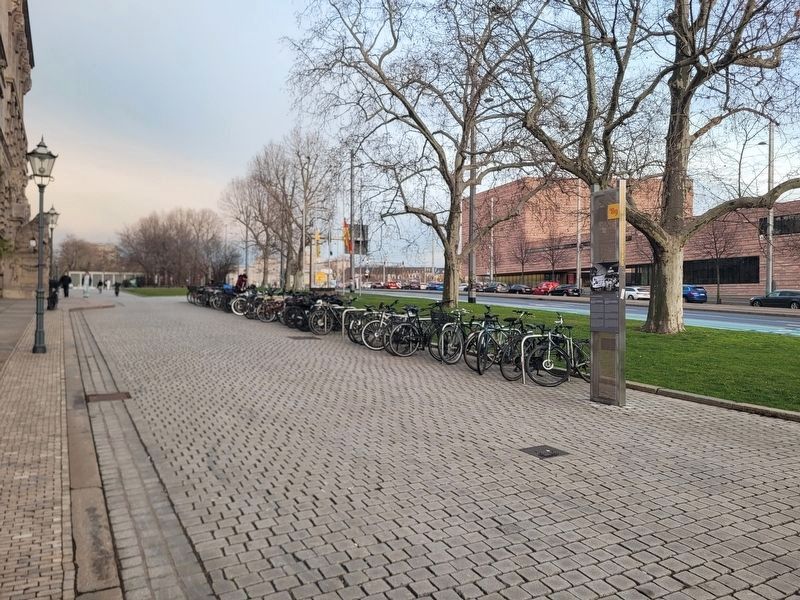
The marker is located at the southwestern corner of the New Town Hall.
Photographed by James Hulse, March 11, 2026
4. Runde Tische / Round tables Marker
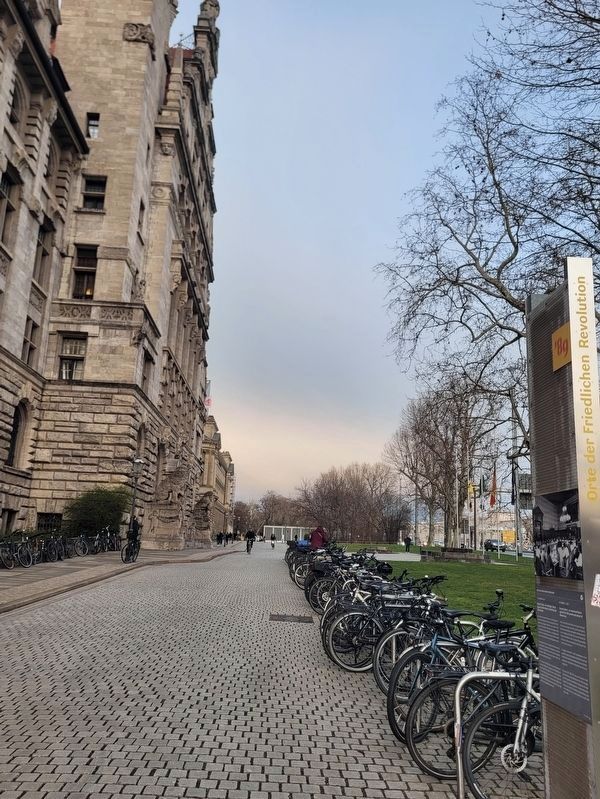
The view of the south front side of the New Town Hall.
Photographed by James Hulse, March 11, 2026
5. Runde Tische / Round tables Marker
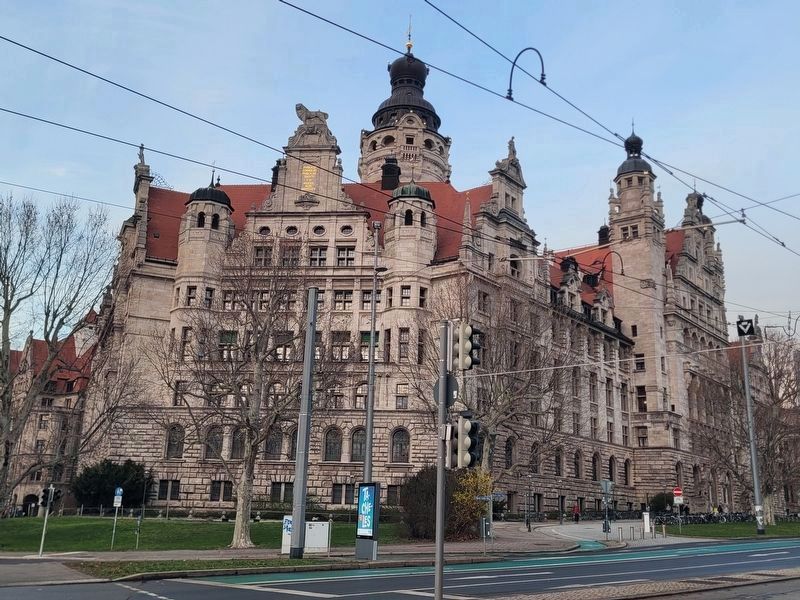
The New Town Hall as viewed from across Martin-Luther-Ring. The marker is located near the bicycles on the right side of the photo.
Credits. This page was last revised on June 29, 2026. It was originally submitted on June 27, 2026, by James Hulse of Medina, Texas. This page has been viewed 9 times since then. Photos: 1, 2, 3, 4, 5. submitted on June 29, 2026, by James Hulse of Medina, Texas.
