Brownsburg in Hendricks County, Indiana — The American Midwest (Great Lakes)
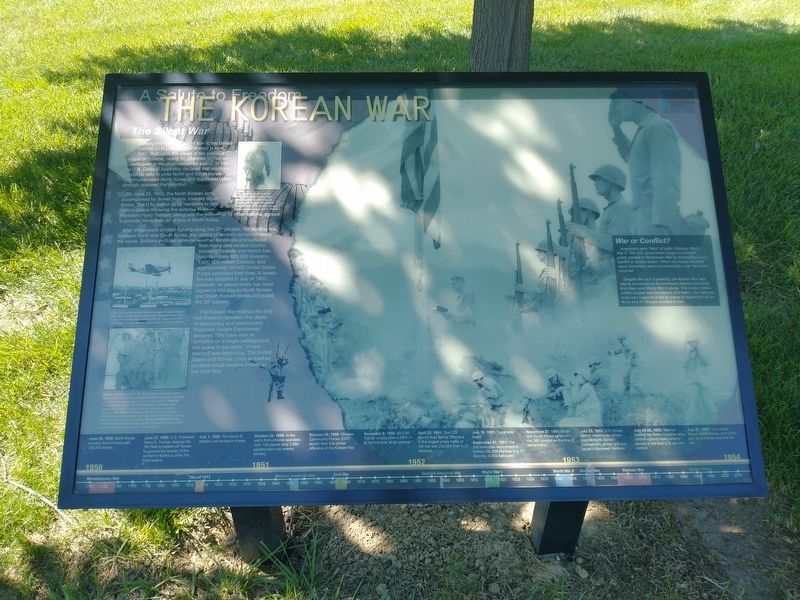
The Korean War
A Salute to Freedom
Photographed by Tom Bosse, June 16, 2026
1. A Salute to Freedom Marker
The Silent War
Following the horrors of World War II, the United Nations (U.N.) charter was drafted in April 1945. Built upon the ideals of the previous League of Nations, nearly 50 countries signed on to participate in the organization for peace. In 1947, The U.N. General Assembly declared that elections should be held to unite North and South Korea. Communist-ruled North Korea and the Soviet Union strongly opposed the direction.
On June 25, 1950, the North Korean army, accompanied by Soviet troops, invaded South Korea. The U.N. called on its members to help restore peace following the surprise invasion. President Harry Truman, along with the support of 15 other nations, agreed to provide immediate air strikes in North Korea.
After three years of bitter fighting along the 38th parallel, the dividing line between North and South Korea, the control of territory remained nearly the same. Soldiers endured extreme weather conditions and suffered from many cold related injuries, including frostbite and trench foot. Approximately 600,000 Koreans, 1,000,000 Chinese, and approximately 50,000 United States troops sacrificed
this page online
The Korean war marked the first real firestorm between the ideals of democracy and communism. President Dwight Eisenhower declared, “We have won an armistice on a single battleground, not peace in the world.” A new standoff was beginning. The United States and Soviet Union embarked on what would become known as the Cold War.
War or Conflict?
Americans were “tired” of battle following World War II. The U.S. government sought to diminish public interest in the Korean War by dismissing it as a conflict or “police action”. When our troops returned, many Americans were not aware that a war had even occurred.
Despite the lack of publicity, the Korean War was vital to re-energizing the American defense industries from their post-World War II slump. The United States military budget was boosted to $50 billion. Our defense resources began to excel to a level of superiority as the Army and Air Groups doubled in size.
[Timeline:]
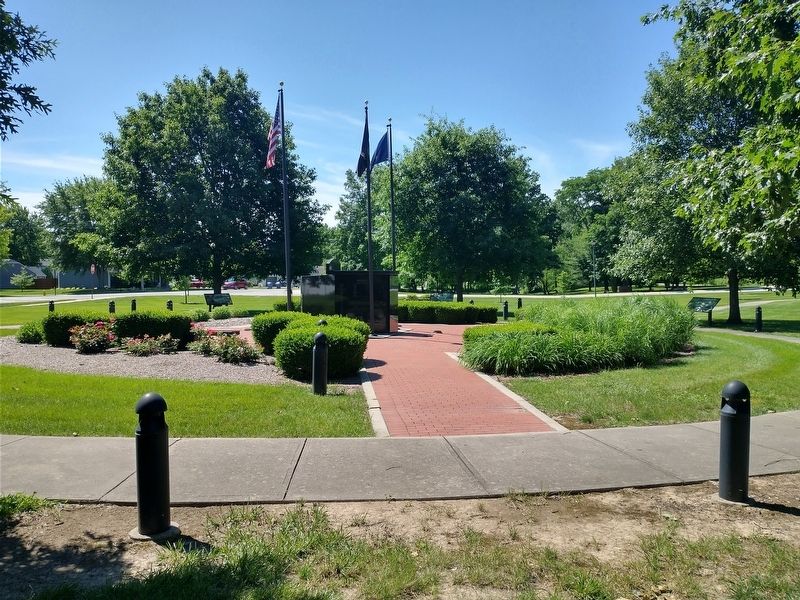
June 29, 1950: North Koreainvades South Korea with 135,000 troops.Photographed by Tom Bosse, June 16, 20262. A Salute to Freedom MarkerMarker is located in the middle background.
June 27, 1950: U.S. President Harry S. Truman deploys the 7th Fleet to waters off Taiwan to prevent the spread of the conflict in Korea to other Far East waters.
July 1, 1950: The first U.S. infantry unit arrives in Korea.
October 20, 1950: In the war’s first airborne operation, over 100 planes drop 2,860 paratroopers into enemy territory.
October 25, 1950: Chinese Communist Forces (CCF) launch their first phase offensive of the Korean War.
November 8, 1950: An F-80 Fighter shoots down a MIG-15 in the first all-jet combat.
April 22, 1951: The CCF launch their Spring Offensive in the largest single battle of the war with 250,000 men in 27 divisions.
July 10, 1951: Truce talks begin.
September 21, 1951: The first helicopter deployment in military lifts 228 Marines in a 12 Sikorsky S-55s helicopter.
November 17, 1951: North and South Korea agree on the 38th parallel as the line of demarcation.
July 23, 1952: U.N. forces launch massive air strikes against North Korea’s hydroelectric power grid and cause a two-week blackout.
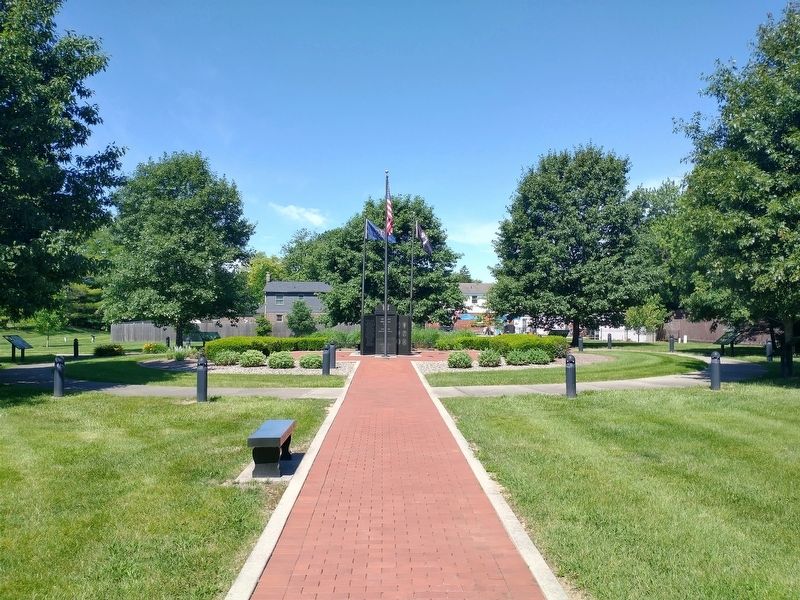
July 24-26, 1953: Marines holding theBerlin Complex area defend against heavy enemy attacks in the final U.S. ground combat.Photographed by Tom Bosse, June 16, 20263. A Salute to Freedom MarkerMarker is second from left.
July 27, 1953: The United States, North Korea, and China sign an armistice and end the war.
Erected by Brownsburg Parks.
Topics. This historical marker is listed in this topic list: War, Korean. A significant historical month for this entry is April 1945.
Location. 39° 49.859′ N, 86° 24.388′ W. Marker is in Brownsburg, Indiana, in Hendricks County. It is on South Locust Lane north of West Foxwood Drive, on the left when traveling north. Marker is located at the Veteran's Memorial Park and Gardens. Touch for map. Marker is at or near this postal address: 940 South Locust Lane, Brownsburg IN 46112, United States of America. Touch for directions.

Regionally, this marker is in Central Indiana and specifically in Greater Indianapolis. It is also in the American Midwest and in the Corn Belt. Globally, it is in North America, the Western Hemisphere, the Western World, and the Anglosphere. Historically, it finds itself in what was once the territory of the Mississippian Culture and also the Northwest Territory.
Other nearby markers. At least
Photographed by Tom Bosse, June 16, 2026
4. A Salute to Freedom Marker
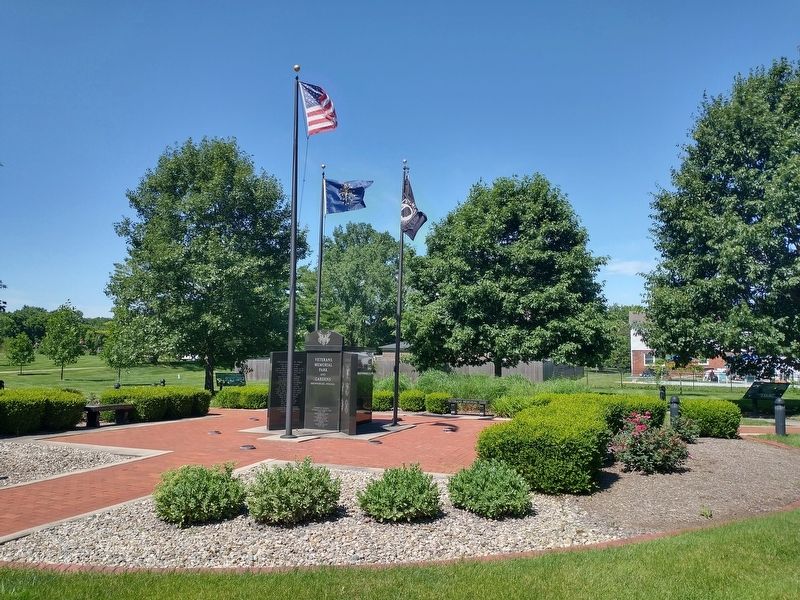
Marker is on the left.
Related markers. Click here for a list of markers that are related to this marker. A Salute to Freedom
Credits. This page was last revised on July 13, 2026. It was originally submitted on July 1, 2026, by Tom Bosse of Jefferson City, Tennessee. This page has been viewed 20 times since then. Photos: 1, 2, 3, 4. submitted on July 1, 2026, by Tom Bosse of Jefferson City, Tennessee. • Devry Becker Jones was the editor who published this page.
