National Museum of Transportation near Kirkwood in St. Louis County, Missouri — The American Midwest (Upper Plains)
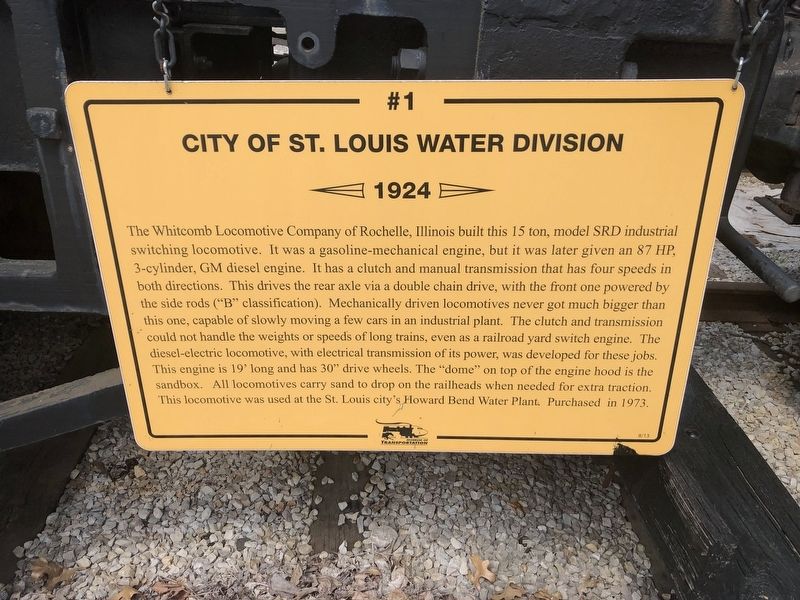
City of St. Louis Water Division #1
| — | 1924 | — |
Photographed by Devry Becker Jones (CC0), April 22, 2019
1. City of St. Louis Water Division #1 Marker
Erected 2013 by National Museum of Transportation.
Topics. This historical
this page online
Location. 38° 34.26′ N, 90° 27.8′ W. Marker is near Kirkwood, Missouri, in St. Louis County. It is in National Museum of Transportation. It can be reached from Barrett Station Road east of Old Dougherty Ferry Road, on the right when traveling east. Touch for map. Marker is at or near this postal address: 3015 Barrett Station Road, Saint Louis MO 63122, United States of America. Touch for directions.

Regionally, this marker is in Greater St. Louis. It is also in the American Midwest, in the Lewis & Clark Corridor, in the Corn Belt, and in the Great River Road Region. Globally, it is in North America, the Western Hemisphere, the Western World, and the Anglosphere. Historically, it finds itself in what was once the Viceroyalty of New France, the territory of the Mississippian Culture, the Louisiana Purchase, and the Antebellum South.
Other nearby markers. At least 8 other markers are within walking distance of this marker: General American Pfaulder Corporation Milk Car #1057 (here,
Photographed by Devry Becker Jones (CC0), April 22, 2019
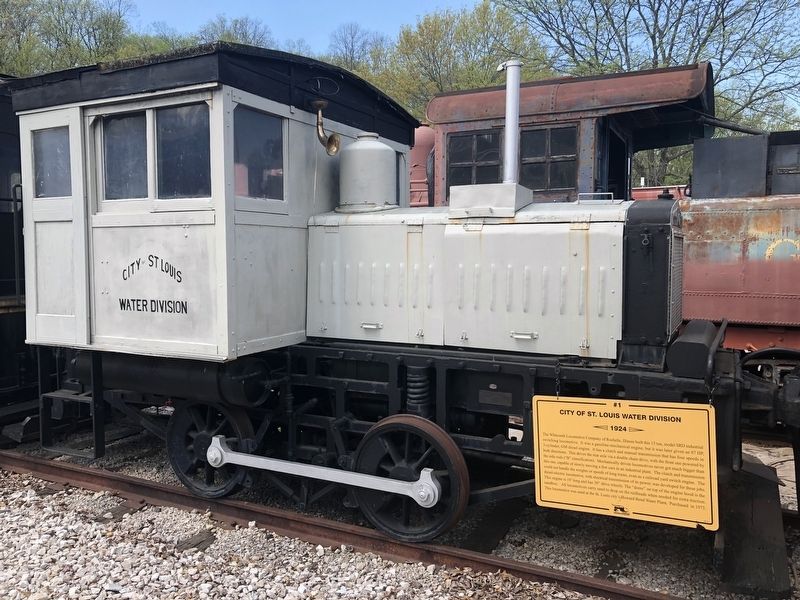
2. City of St. Louis Water Division #1 and Marker
Credits. This page was last revised on July 7, 2026. It was originally submitted on April 28, 2019, by Devry Becker Jones of Washington, District of Columbia. This page has been viewed 266 times since then and 44 times this year. Last updated on July 1, 2026, by Garrett Koch of Saint Louis, Missouri. Photos: 1, 2. submitted on April 28, 2019, by Devry Becker Jones of Washington, District of Columbia.
