Manzanar National Historic Site near Independence in Inyo County, California — The American West (Pacific Coastal)
Mess Halls of Manzanar
Photographed by Craig Baker, May 15, 2026
1. Mess Halls of Manzanar Marker
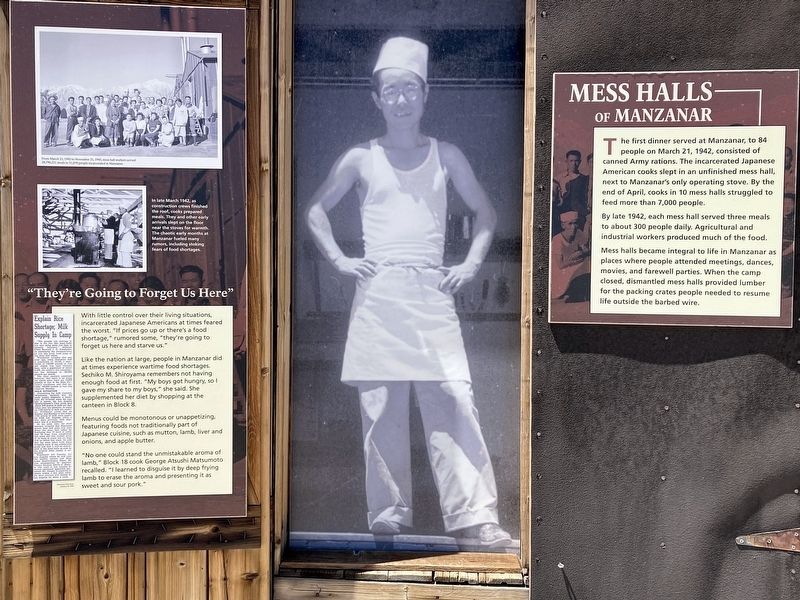
he first dinner served at Manzanar, to 84 1942, canned Army rations. The incarcerated Japanese American cooks slept in an unfinished mess hall, next to Manzanar's only operating stove. By the end of April, cooks in 10 mess halls struggled to feed more than 7,000 people. By late 1942, each mess hall served three meals to about 300 people daily. Agricultural and industrial workers produced much of the food. Mess halls became integral to life in Manzanar as places where people attended meetings, dances, movies, and farewell parties. When the camp closed, dismantled mess halls provided lumber for the packing crates people needed to resume life outside the barbed wire.
"They're Going to Forget Us Here"
With little control over their living situations. incarcerated Japanese Americans at times feared the worst. "If prices go up or there's a food shortage, rumored some, "they're going to forget us here and starve us."
Like the nation at large, people in Manzanar didi at times experience wartime food shortages Sechiko M. Shiroyama remembers not having enough food at first. "My boys got
this page online
Menus could be monotonous or unappetizing featuring foods not traditionally part of Japanese cuisine, such as mutton, lamb, liver and onions, and apple butter.
"No one could stand the unmistakable aroma of lamb," Block 18 cook George Atsushi Matsumoto recalled. "I learned to disguise it by deep frying lamb to erase the aroma and presenting it as sweet and sour pork."
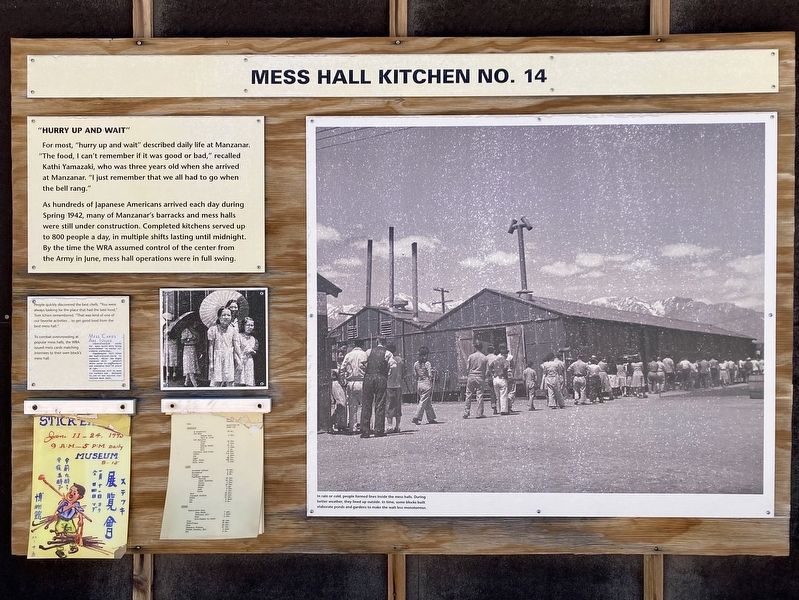
Mess Hall Kitchen No. 14
"Hurry Up and Wait"
For most, "hurry up and wait” described daily life at Manzanar "The food, I can't remember if it was good or bad," recalled Kathi Yamazaki, who was three years old when she arrived at Manzanar. "I just remember that we all had to go when the bell rang."
As hundreds of Japanese Americans arrived each day during Spring 1942, many of Manzanar's barracks and mess halls were still under construction. Completed kitchens served up to 800 people a day, in multiple shifts lasting until midnight. By the time the WRA assumed control of the center from the Army in June,
Photographed by Craig Baker, May 15, 2026
2. Mess Hall Marker
In rain or cold, people formed lines inside the mess halls. During better weather, they lined up outside. In time, some blocks built elaborate ponds and gardens to make the wait less monotonous.
People quickly discovered the best chefs. "You were always looking for the place that had the best food," Tom Ichien remembered. "That was kind of one of our favorite activities . . . to get good food from the best mess hall." To combat overcrowding at popular mess hals, the WRA issued mess cards matching internees to their own block's mess hall.
Erected by National Park Service.
Topics. This historical marker is listed in these topic lists: Asian Americans • War, World II. A significant historical year for this entry is 1942.
Location. 36° 43.663′ N, 118° 9.056′ W. Marker is near Independence, California, in Inyo County. It is in Manzanar National Historic Site. It can be reached from Manzanar Reward Road west of U.S. 395. Touch for map. Marker is at or near this postal address: 5001 US-395, Independence CA 93526, United States of America. Touch for directions.

Regionally,
Photographed by Craig Baker, May 15, 2026
3. Mess Halls of Manzanar
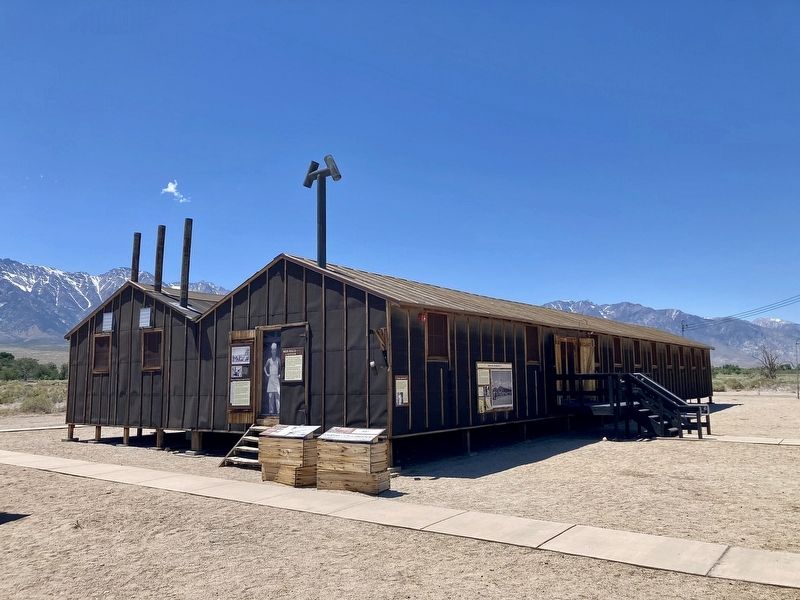
The markers are on the building.
Other nearby markers. At least 8 other markers are within walking distance of this marker: "Waiting in a Breadline" (a few steps from this marker); Made in Manzanar (a few steps from this marker); Pressing Needs (a few steps from this marker); Community Activities (within shouting distance of this marker); "Zeal for Cleanliness" (within shouting distance of this marker); Enduring Humiliation (within shouting distance of this marker); "That's What You Call Survival" (about 400 feet away, measured in a direct line); Crowded Quarters (about 400 feet away). Touch for a list and map of all markers in Independence.
Photographed by Craig Baker, May 15, 2026
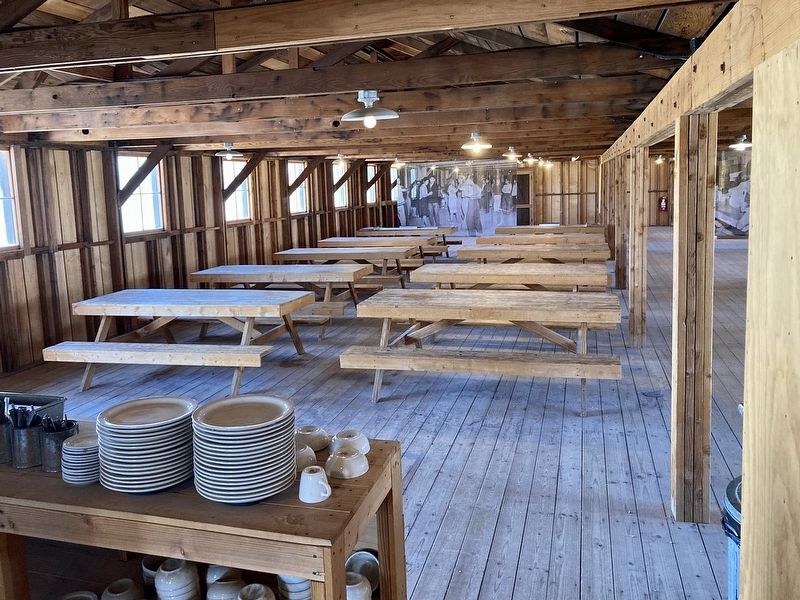
4. Mess Hall
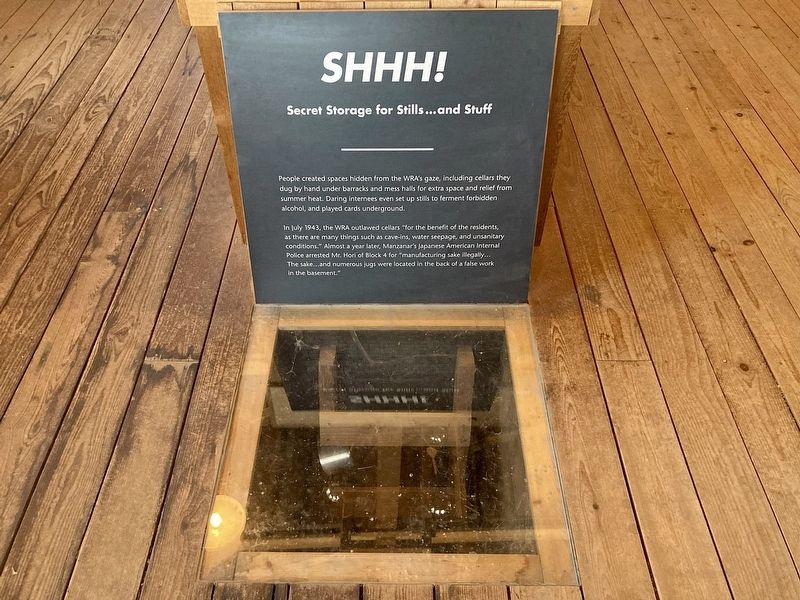
Photographed by Craig Baker, May 15, 2026
5. Secret Storage
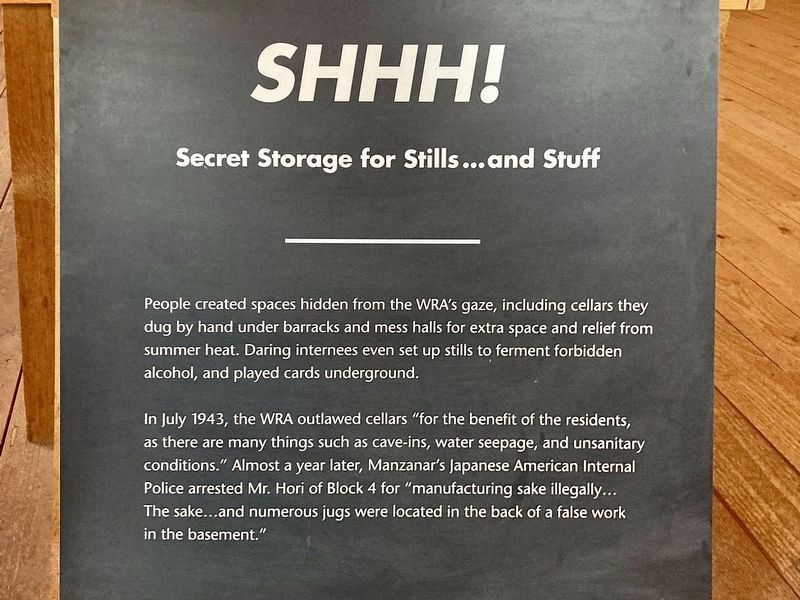
Photographed by Craig Baker, May 15, 2026
6. Secret Storage
People created spaces hidden from the WRA's gaze, including cellars they dug by hand under barracks and mess halls for extra space and relief from summer heat. Daring internees even set up stills to ferment forbidden alcohol, and played cards underground.
Credits. This page was last revised on July 5, 2026. It was originally submitted on July 4, 2026, by Craig Baker of Sylmar, California. This page has been viewed 15 times since then. Photos: 1, 2, 3, 4, 5, 6. submitted on July 4, 2026, by Craig Baker of Sylmar, California.
