Watertown in Codington County, South Dakota — The American Midwest (Upper Plains)
Mount Hope Cemetery Mausoleum
May 20, 2026
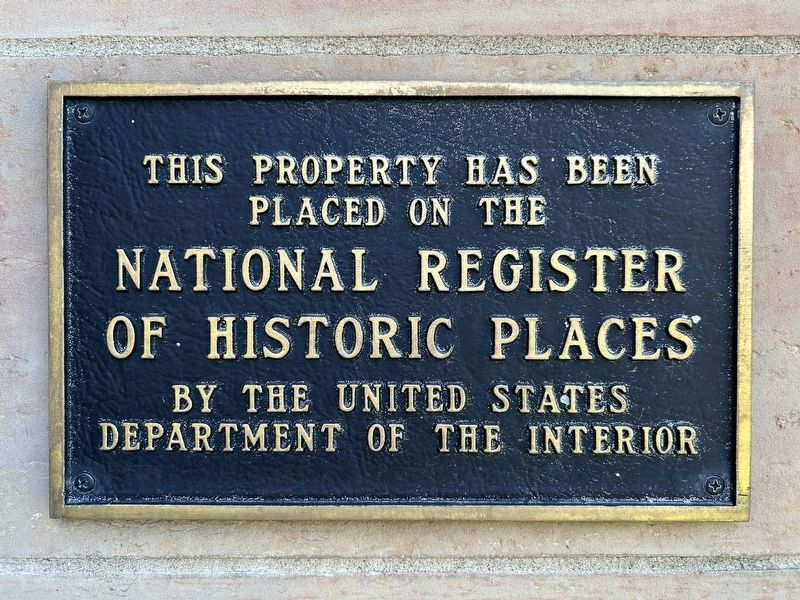
1. Mount Hope Cemetery Mausoleum Marker
Topics and series. This historical marker is listed in this topic list: Notable Buildings. In addition, it is included in the National Register of Historic Places (NRHP) series list.
Location. 44° 54.985′ N, 97° 5.938′ W. Marker is in Watertown, South Dakota, in Codington County. It can be reached from 11th Street Northeast south of 14th Avenue Northeast. Located in Mt. Hope Cemetery. Touch for map. Marker is at or near this postal address: 1333 11th St NE, Watertown SD 57201, United States of America. Touch for directions.

Regionally, this marker is in East River. It is also in the American Midwest, in the Lewis & Clark Corridor, in the Corn Belt, on the prairies, and on the Northern Plains. Globally, it is in North America, the Western Hemisphere, the Western World, and the Anglosphere. Historically, it finds itself in what was once Rupert’s Land and also the Louisiana Purchase.
Other nearby markers. At least 8 other markers are within
this page online
Also see . . . South Dakota SP Mount Hope Cemetery Mausoleum - National Archives Catalog. National Register of Historic Places Inventory—Nomination Form (1986).
From the Statement of Significance:(Submitted on July 18, 2026.)
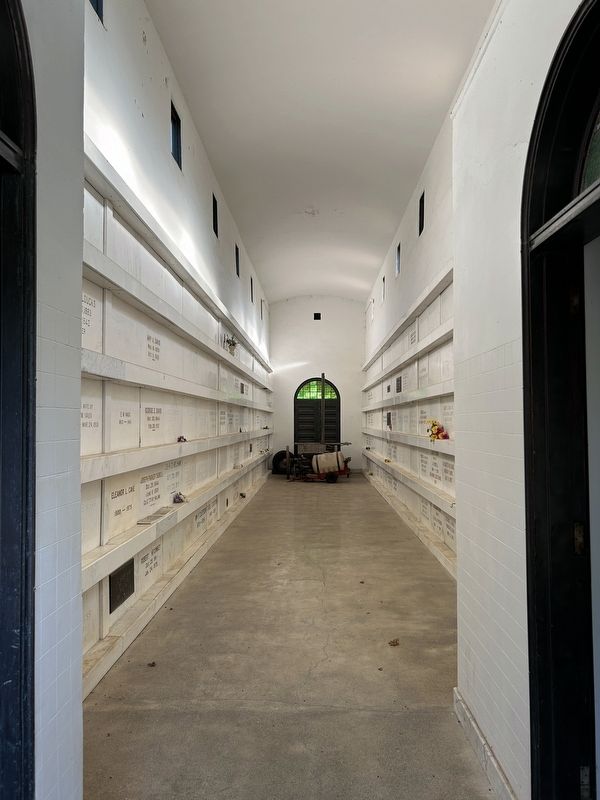
"Mausoleums were not often constructed in South Dakota cemeteries but the Mount Hope Cemetery Mausoleum in Watertown is a fine example of this building type. Significant in the area of architecture, this masonry building retains all of its original features including its side buttressing, wrought-iron entrance gate and marble interior.
"The Rural Cemetery Movement of the nineteenthcentury affected the development of many midwestern cemeteries. This movement encouraged that cemeteries be placed outside the city limits with nicely landscaped grounds. Associated buildings such as gatehouses, grounds keeper's lodges and mausoleums were conceived as ornamental structures that contributed to the beautification of the cemetery. The design of the Mt. Hope Cemetery reflected the rural cemetery movement. Formed when the City of Watertown purchased 40 acres from the Winona and St. Peter Railroad for $120, the Mount Hope Cemetery is landscaped with shrubbery and shade trees, and has curving road leading through the grounds. The earliest burial was that of a veteran named A. Wells who was born in 1848 and died in 1881. A brochure on the cemetery that was prepared by the City of Watertown states: 'It is the sincere wish and ambition of the City of Watertown to make Mount Hope Cemetery...one of the most beautiful burial places in the Northwest.'May 20, 20262. Mount Hope Cemetery Mausoleum & Marker
"On November 17, 1911, Mayor John W. Marin granted a permit to the South Dakota Mausoleum Company to build the 200 crypt Mount Hope Cemetery Mausoleum. Incorporated in February of1910, the company was in existence for only 20 years. The mausoleum was sited at the end of the north central axis of the cemetery making it a prominent landmark on the grounds. Today it appears almost exactly as it did when it was constructed."May 20, 20263. Mount Hope Cemetery Mausoleum, from the north


May 20, 2026
4. Mount Hope Cemetery Mausoleum, from the west

May 20, 2026
5. Mount Hope Cemetery Mausoleum, from the south
May 20, 2026
6. Mount Hope Cemetery Mausoleum Interior
Credits. This page was last revised on July 19, 2026. It was originally submitted on July 18, 2026. This page has been viewed 21 times since then. Photos: 1, 2, 3, 4, 5, 6. submitted on July 18, 2026.
