Mitte in Leipzig, Saxony, Germany — Central Europe
Mori Ôgai
(1862-1922)
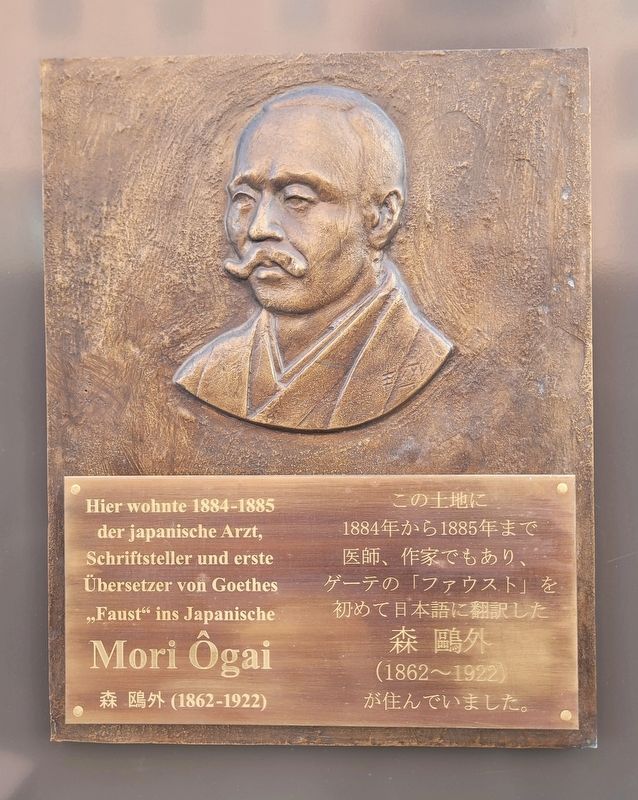
Photographed by James Hulse, March 12, 2026
1. Mori Ôgai Marker

Hier wohnte 1884-1885 der japanische Arzt, Schriftsteller und erste Übersetzer von Goethes „Faust“ ins Japanische Mori Ôgai 森鴎外 (1862-1922)
この土地に 1884年から1885年まで医師、作家でもあり、 ゲーテの「ファウスト」を初めて日本語に翻訳した森鷗外 (1862~1922) が住んでいました。
The Japanese physician and writer Mori Ôgai (1862–1922), the first person to translate Goethe’s “Faust” into Japanese, lived here from 1884 to 1885.
Topics. This historical marker is listed in this topic list: Arts, Letters, Music. A significant historical year for this entry is 1884.
Location. 51° 20.184′ N, 12° 23.226′ E. Marker is in Leipzig, Sachsen (Saxony). It is in Mitte. It is at the intersection of Talstraße and Johannispl., on the right when traveling
this page online

Regionally, this marker is in Central Germany. Globally, it is in Europe, the European Union, Atlantic Europe, Central Europe, the Schengen Area, Western Europe, and the Western World. Historically, it finds itself in what was once the Holy Roman Empire and also the former East Germany.
Other nearby markers. At least 8 other markers are within walking distance of this marker: Musikbibliothek Peters / Peters Music Library (about 90 meters away, measured in a direct line); Grassi-Museum für Musikinstrumente / Grassi Museum of Musical Instruments (about 120 meters away); Dr. Max Abraham / Dr. Henri Hinrichsen (about 120 meters away); Martha Hinrichsen (about 120 meters away); Dr. Hans Joachim Hinrichsen (about 120 meters away); Paul Hinrichsen (about 120 meters away); Dr. Henri Hinrichsen (about 120 meters away); Edvard Grieg (about 120 meters away). Touch for a list and map of all markers in Leipzig.
Also see . . . Mori Ōgai. Wikipedia
Lieutenant-General Mori Rintarō(Submitted on July 24, 2026, by James Hulse of Medina, Texas.)(森 林太郎; February 17, 1862 – July 8, 1922), known by his pen name Mori Ōgai, was a Japanese Army Surgeon general officer, translator, novelist, poet and father of famed author Mari Mori. He obtained his medical license at a very young age and introduced translated German language literary works to the Japanese public. Mori Ōgai also was considered the first to successfully express the art of western poetry in Japanese. He wrote many works and created many writing styles. The Wild Geese (1911–1913) is considered his major work. After his death, he was considered one of the leading writers who modernized Japanese literature.Photographed by James Hulse, March 12, 20262. Mori Ôgai MarkerThe marker is located at an entrance to the building.
His continued obstinacy to recognize beriberi as a thiamine deficiency led to the death of more than 27,000 Japanese soldiers.
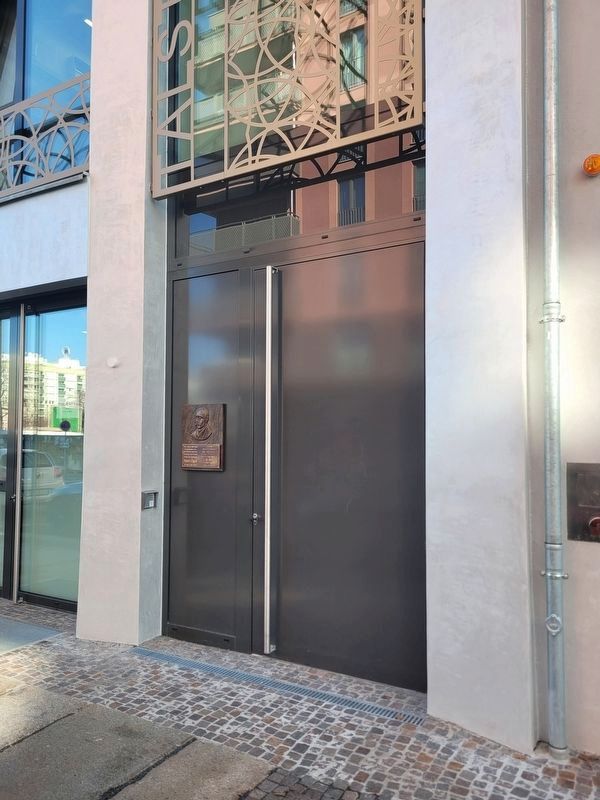
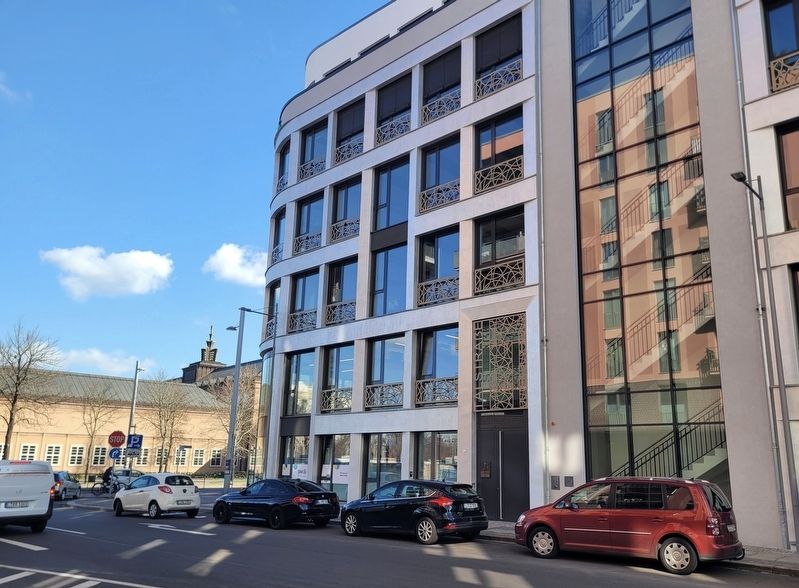
Photographed by James Hulse, March 12, 2026
3. Mori Ôgai Marker
The view of the marker and building from across the street.
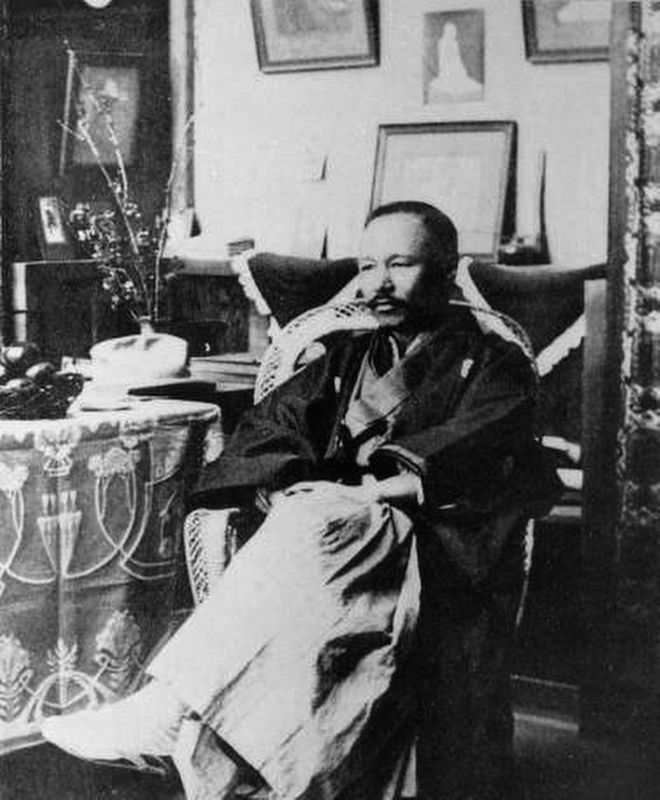
Public Domain via Wikipedia Commons, October 22, 1911
4. Mori Ôgai
Ougai Mori visits the atelier of Kozaburo Takeishi in Sugamo
Credits. This page was last revised on July 24, 2026. It was originally submitted on July 21, 2026, by James Hulse of Medina, Texas. This page has been viewed 7 times since then. Photos: 1, 2, 3, 4. submitted on July 24, 2026, by James Hulse of Medina, Texas.
