Near Brookneal in Campbell County, Virginia — The American South (Mid-Atlantic)
The Henry House
Patrick Henry’s Red Hill
Photographed by Tom Bosse, July 4, 2026
1. The Henry House Marker
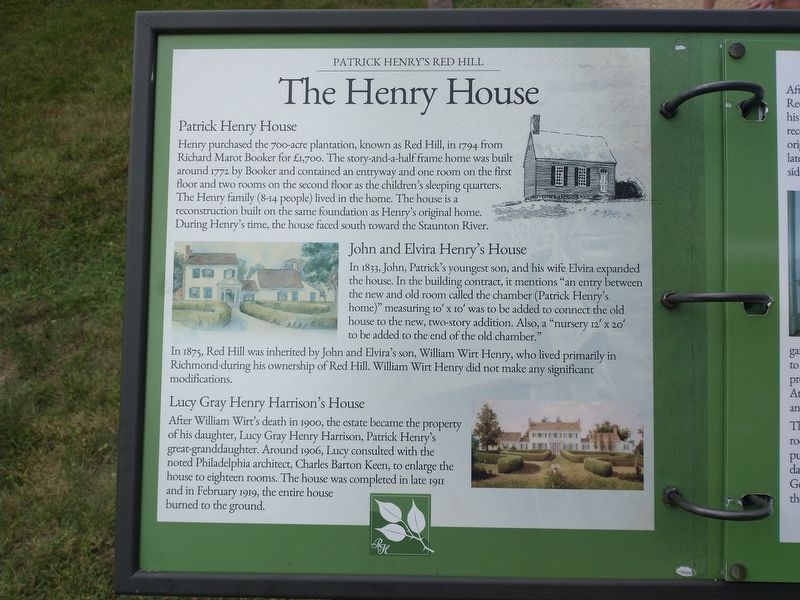
Henry purchased the 700-acre plantation, known as Red Hill, in 1794 from Richard Marot Booker for £1,700. The story-and-a half frame home was built around 1772 by Booker and contained an entryway and one room on the first floor and two rooms on the second floor as the children’s sleeping quarters. The Henry family (8-14 people) lived in the home. The house is a reconstruction built on the same foundation as Henry’s original home. During Henry’s time, the house aced south toward the Staunton River.
John and Elvira Henry’s House
In 1833, John, Patrick’s youngest son, and his wife Elvira expanded the house. In the building contract, it mentions “an entry between the new and old room called the chamber (Patrick Henry’s home)” measuring 10’ x 10’ was to be added to connect the old house to the new, two-story addition Also, a “nursery 12’ x 20’ to be added to the end of the old chamber”.
In 1875, Red Hill was inherited by John and Elvira’s son, William Wirt Henry, who lived primarily in Richmond during his ownership of Red Hill. William Wirt Henry did not make any significant modifications.
Lucy Gray Henry Harrison’s House
After
this page online
The Henry House Today
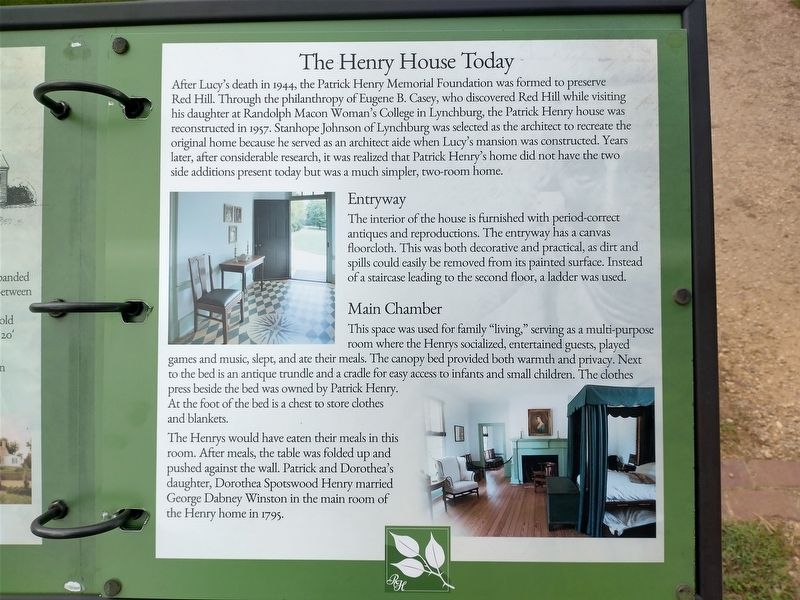
After Lucy’s death in 1944, the Patrick Henry memorial Foundation was formed to preserve Red Hill. Through the philanthropy of Eugene B. Casey, who discovered Red Hill while visiting his daughter at Randolph Macon Women’s College in Lynchburg, the Patrick Henry house was reconstructed in 1957. Stanhope Johnson of Lynchburg was selected as the architect to recreate the original home because he served as an architect aide when Lucy’s mansion was constructed. Years later, after considerable research, it was realized the Patrick Henry’s home did not have the two side additions present today but was a much simpler, two-room home.
Entryway
The interior of the house is furnished with period-correct antiques and reproductions. The entryway has a canvas
Photographed by Tom Bosse, July 4, 2026
2. The Henry House Marker
Main Chamber
This space was used for family “living”, service as a multi-purpose room where the Henry’s socialized, entertained guests, played games and music, slept, and ate their meals. The canopy bed provided both warmth and privacy. Next to the bed is an antique trundle and a cradle for easy access to infants and small children. The clothes press beside the bed was owned by Patrick Henry. At the foot of the bed is a chest to store clothes and blankets.
The Henry’s would have eaten their meals in this room. After meals, the table was folded up and pushed against the wall Patrick and Dorothea’s daughter, Dorothea Spotswood Henry married George Dabney Winston in the main room of the Henry home in 1795.
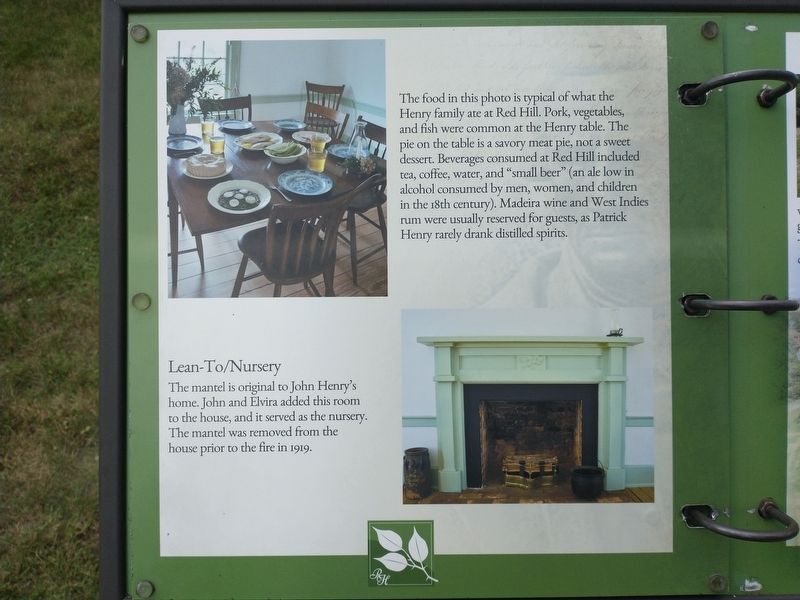
The food in this photo is typical of what the Henry family ate at Red Hill. Pork, vegetables, and fish were common at the Henry table. The pie on the table is a savory meat pie, not a sweet dessert. Beverages consumed at Red Hill included
Photographed by Tom Bosse, July 4, 2026
3. The Henry House Marker
Lean-To/Nursery
The mantel is original to John Henry’s home. John and Elvira Henry added this room to the house, and it served as the nursery. Then mantel was removed from the house prior to the fire in 1919.
The Grounds
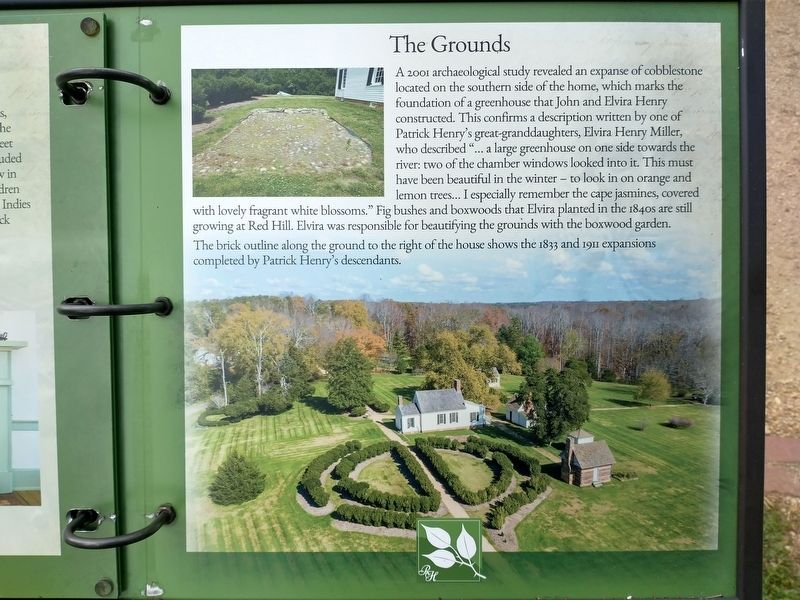
A 2001 archaeological study revealed an expanse of cobblestone located on the southern side of the home, which marks the foundation of a greenhouse that John and Elvira Henry constructed. This confirms a description written by one of Patrick Henry’s great-granddaughters, Elvira Henry Miller, who described “…a large greenhouse on one side towards the river: two of the chamber windows looked into it. This must have been beautiful in the winter – to look in on orange and lemon trees…I especially remember the cape jasmines, covered with lovely fragrant white blossoms.” Ig bushes and boxwoods that Elvira planted in the 1840s are still growing at Red Hill Elvira was responsible for beautifying
Photographed by Tom Bosse, July 4, 2026
4. The Henry House Marker
The brick outline along the ground to the right o the house shows the 1833 and 1911 expansions completed by Patrick Henry’s descendants.
Erected by Patrick Henry National Memorial.
Topics. This historical marker is listed in this topic list: Notable Buildings. A significant historical year for this entry is 1772.
Location. 37° 1.94′ N, 78° 53.885′ W. Marker is near Brookneal, Virginia, in Campbell County. It can be reached from Red Hill Road (County Route 677) 1.2 miles south of Patrick Henry Road, on the left when traveling south. Marker is located at Red Hill Patrick Henry National Memorial. Touch for map. Marker is at or near this postal address: 1250 Red Hill Road, Brookneal VA 24528, United States of America. Touch for directions.

Regionally, this marker is in the Piedmont and in Central Virginia. It is also in the American South and specifically in the Upper South. Globally, it is in North America, the Western Hemisphere, the Western World, and the Anglosphere. Historically, it finds itself in what was once the territory of the Mississippian Culture, one of the original Thirteen
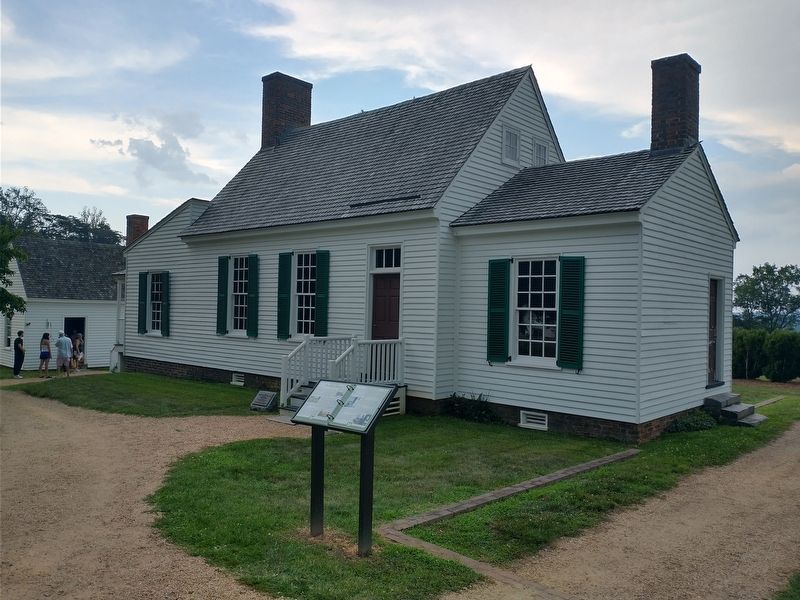
Photographed by Tom Bosse, July 4, 2026
5. The Henry House Marker
Other nearby markers. At least 8 other markers are within walking distance of this marker: Osage Orange Tree (a few steps from this marker); Patrick Henry House (a few steps from this marker); Kitchen (within shouting distance of this marker); Henry Family Graveyard (within shouting distance of this marker); a different marker also named Osage Orange Tree (within shouting distance of this marker); Harrison's Cabin (within shouting distance of this marker); Henry's Law Office (within shouting distance of this marker); The Nancy Case Kelly Memorial Herb Garden (within shouting distance of this marker). Touch for a list and map of all markers in Brookneal.
Also see . . . Red Hill. Patrick Henry National Memorial. (Submitted on August 1, 2026.)
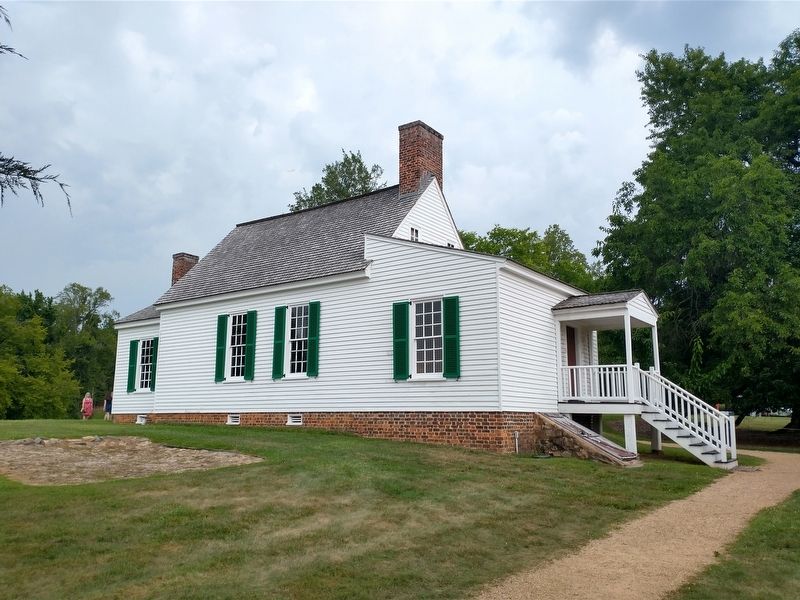
Photographed by Tom Bosse, July 4, 2026
6. The Henry House (Back)
Credits. This page was last revised on August 1, 2026. It was originally submitted on August 1, 2026, by Tom Bosse of Jefferson City, Tennessee. This page has been viewed 8 times since then. Photos: 1, 2, 3, 4, 5, 6. submitted on August 1, 2026, by Tom Bosse of Jefferson City, Tennessee. • Bernard Fisher was the editor who published this page.
