Picton in Prince Edward in Prince Edward County, Ontario — Central Canada (North America)
The “Conference Church”
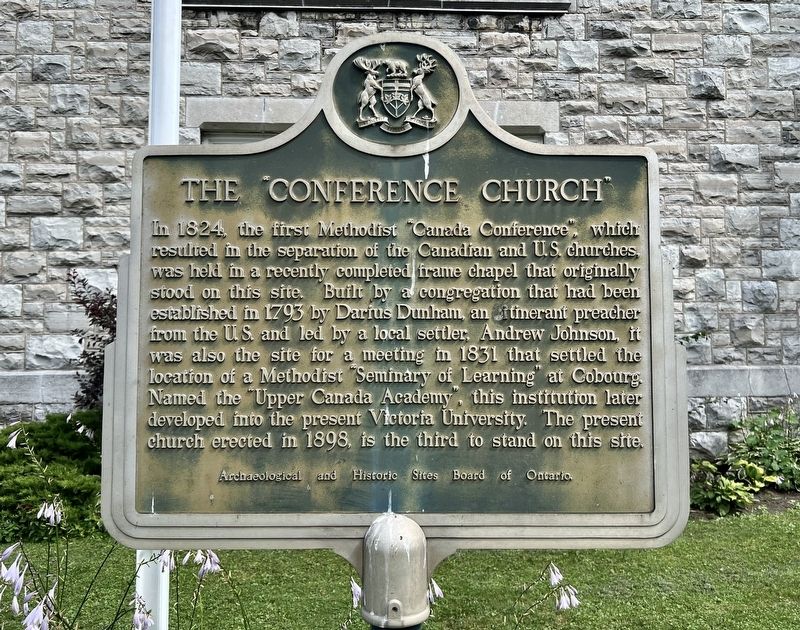
Photographed by Tim Boyd, July 30, 2026
1. The “Conference Church” Marker
Erected 1967 by Archeological and Historic Sites Board of Ontario.
Topics and series. This historical marker is listed in these topic lists: Education • Religion & Religious Structures. In addition, it is included in the Canada, Ontario Heritage Trust series list. A significant historical year for this entry is 1824.
Location. 44° 0.312′ N, 77° 8.645′ W. Marker is in Prince Edward, Ontario, in Prince Edward County. It is in Picton. It is on Chapel Street 0.1 kilometers south
this page online

Regionally, this marker is in Southeastern Ontario. It is also in Central Canada. Globally, it is in North America, on the Great Lakes, in the Western Hemisphere, in the Western World, and in the Anglosphere. Historically, it finds itself in what was once a British colony, the Viceroyalty of New France, the Haudenosaunee (Iroquois) Confederacy, and Rupert’s Land.
Other nearby markers. At least 8 other markers are within walking distance of this marker: John A. Macdonald in Hallowell (approx. 0.3 kilometers away); The Hastings and Prince Edward Regiment (approx. 0.3 kilometers away); Welcome to the Armoury (approx. 0.3 kilometers away); Letitia Youmans 1827-1896 (approx. 0.3 kilometers away); Bank of Montreal (approx. half a kilometer away); North American Hotel (approx. 0.6 kilometers away); The County Buildings (approx. 0.6 kilometers away); Macaulay Heritage Park (approx. one kilometer away). Touch for a list and map of all markers
Photographed by Tim Boyd, July 30, 2026
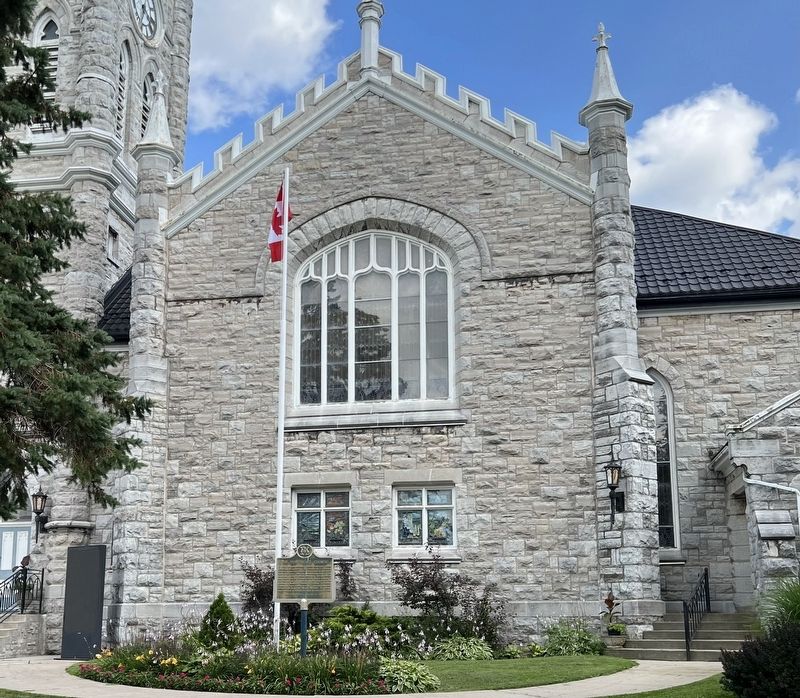
2. The “Conference Church” Marker
Also see . . . Methodism (Canadian Encyclopedia).
Methodism exercised its strongest influence in Upper Canada. Methodists were among the Loyalist founders and many more among "late Loyalists" who flocked into Upper Canada before the WAR OF 1812. With them came Methodist Episcopal "saddle bag preachers," whose zeal and adaptability made them highly effective in frontier conditions. After the war, Upper Canada Methodists laboured increasingly under suspicion of being "pro-American," and in 1828 they sought a remedy by severing their American connections. In 1833 they negotiated a union with the more conservative English Methodists who had first entered the colony in 1817.(Submitted on August 8, 2026, by Tim Boyd of Hamilton, Ontario.)
Photographed by Tim Boyd, July 30, 2026
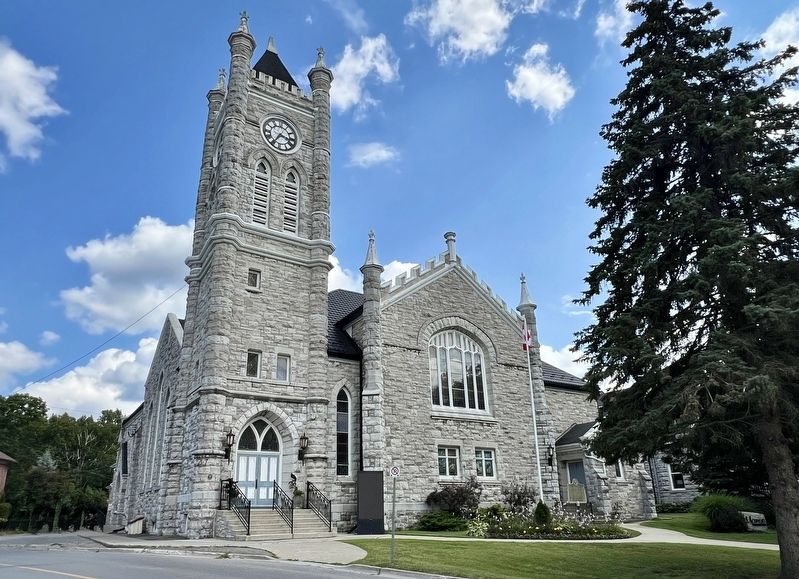
3. The “Conference Church” Marker
In front of Picton United Church
Credits. This page was last revised on August 8, 2026. It was originally submitted on August 8, 2026, by Tim Boyd of Hamilton, Ontario. This page has been viewed 13 times since then. Photos: 1, 2, 3. submitted on August 8, 2026, by Tim Boyd of Hamilton, Ontario. • Andrew Ruppenstein was the editor who published this page.
