Dodge City in Ford County, Kansas — The American Midwest (Upper Plains)
Gospel Hill
Photographed by Cosmos Mariner, August 18, 2022
1. Gospel Hill Marker
Frontier cattle towns were notoriously rough-and-tumble places where saloons and other businesses never closed. Religion sometimes came late to the social scene, but not so in Dodge City. Just two months into the town's existence, a railroader gathered children together in the dining room of the Dodge House and held a Sunday School. The loud singing troubled hotel guests, and later meetings were held in private homes. A visiting minister from the East organized the town's first church service. The temptation of a horse race, however, resulted in poor attendance by men that Sunday morning.
Interest in churches continued to grow, and by June 1874, thirteen members of the Central Christian Advocate organized a church and built a frame structure on the northeast corner of First and Spruce streets. Called the Union Church, it seated about one hundred worshippers on simple wooden benches. Heat came from a cast iron stove and light from bracketed coal oil lamps. All religious denominations used the Union Church until each organized formally and built its own building. The area where you are standing was known as Gospel Hill. Early
this page online
We believe it would be to the interest of Christianity if people who own dogs would not allow them to attend church. We may be mistaken; but it seems to us that a sermon has no effect on a dog, and he is liable to bark right out in [the] meeting as some did last Sunday.
The Union Church was supported by funds raised at socials and festivals. Saloon owners and their customers contributed donations and sometimes even attended. One box supper evolved into a spirited dance that resulted in several church benches being scuffed by cowboys' spurs.
The Dodge City Times, June 8, 1878, announced the organization of one church denomination: “The wicked city of Dodge City can at last boast of a Christian organization, a Presbyterian Church. It was organized last Sunday a week. We would have mentioned the matter last week but we thought it best to break the news gently to the outside world.”
The Reverend Ormond W. Wright served as pastor for both the Union Church and his own Presbyterian Church. He was an Easterner and never changed his style to fit frontier standards. Dressed in a long-tailed

Kansas State Historical Society, Boot Hill Museum, Kansas Heritage Center
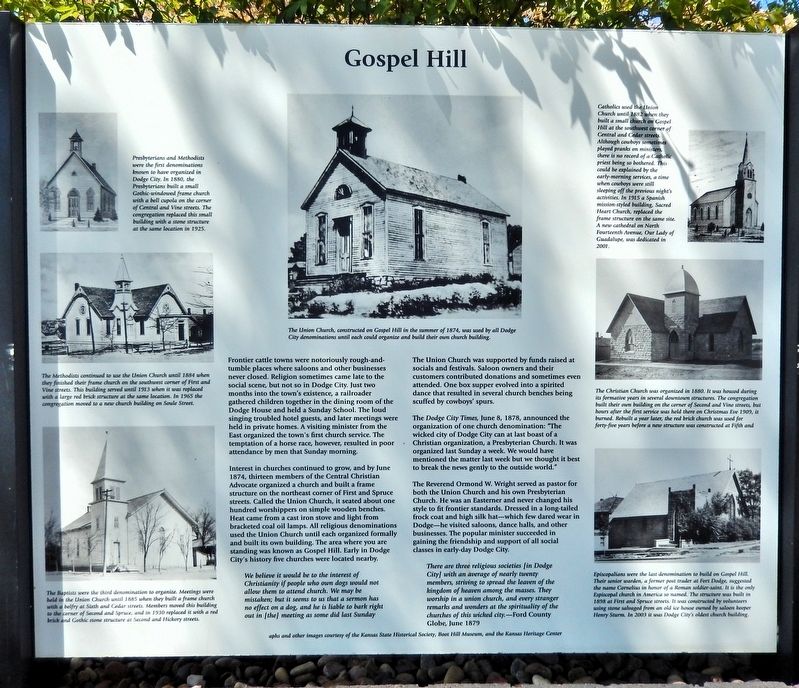
2. Marker detail: Union Church, 1874
The Union Church, constructed on Gospel Hill in the summer of 1874, was used by all Dodge City denominations until each could organize and build their own church building.
There are three religious societies [in Dodge City] with an average of nearly twenty members, striving to spread the leaven of the kingdom of heaven among the masses. They worship in a union church, and every stranger remarks and wonders at the spirituality of the churches of this wicked city.
—Ford County Globe, June 1879
Topics. This historical marker is listed in these topic lists: Architecture • Religion & Religious Structures • Settlements & Settlers. A significant historical month for this entry is June 1874.
Location. 37° 45.268′ N, 100° 1.063′ W. Marker is in Dodge City, Kansas, in Ford County. It is at the intersection of West Spruce Street and 1st Avenue, on the right when traveling west on West Spruce Street. Touch for map. Marker is at or near this postal address: 110 West Spruce Street, Dodge City KS 67801, United States of America. Touch for directions.

Regionally, this marker is in the
Kansas State Historical Society, Boot Hill Museum, Kansas Heritage Center
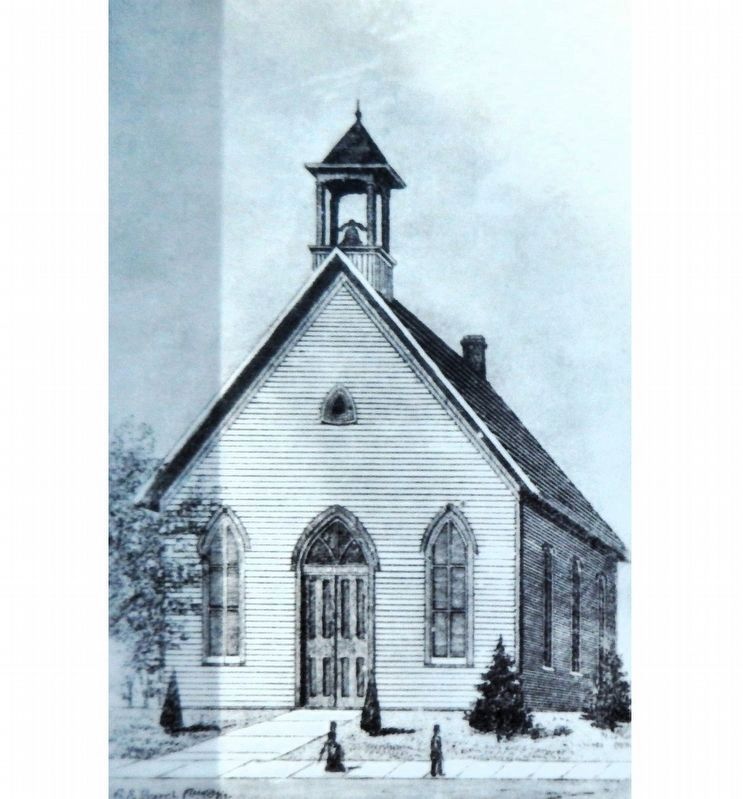
3. Marker detail: Presbyterian Church, 1880
Presbyterians and Methodists were the first denominations known to have organized in Dodge City. In 1880, the Presbyterians built a small Gothic-windowed frame church with a bell cupola on the corner of Central and Vine streets. The congregation replaced this small building with a stone structure at the same location in 1925.
Other nearby markers. At least 8 other markers are within walking distance of this marker: St. Cornelius' Episcopal Church History (within shouting distance of this marker); T. L. McCarty (within shouting distance of this marker); Dodge Theater Building (about 300 feet away, measured in a direct line); World Premier “Dodge City” Starring Errol Flynn (about 300 feet away); First Public School of the Western Frontier (about 300 feet away); Roger Ewing (about 400 feet away); The Hinkle House (about 400 feet away); “Chalk” Beeson (about 400 feet away). Touch for a list and map of all markers in Dodge City.
Related markers. Click here for a list of markers that are related to this marker.
Kansas State Historical Society, Boot Hill Museum, Kansas Heritage Center
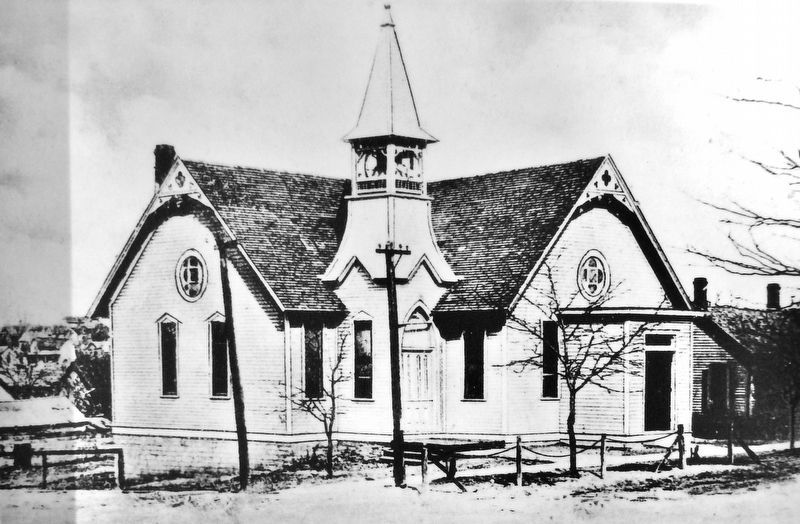
4. Marker detail: Methodist Church, 1884
The Methodists continued to use the Union Church until 1884 when they finished their frame church on the southwest corner of First and Vine streets. This building served until 1913 when it was replaced with a large red brick structure at the same location. In 1965 the congregation moved to a new church building on Soule Street.
Kansas State Historical Society, Boot Hill Museum, Kansas Heritage Center
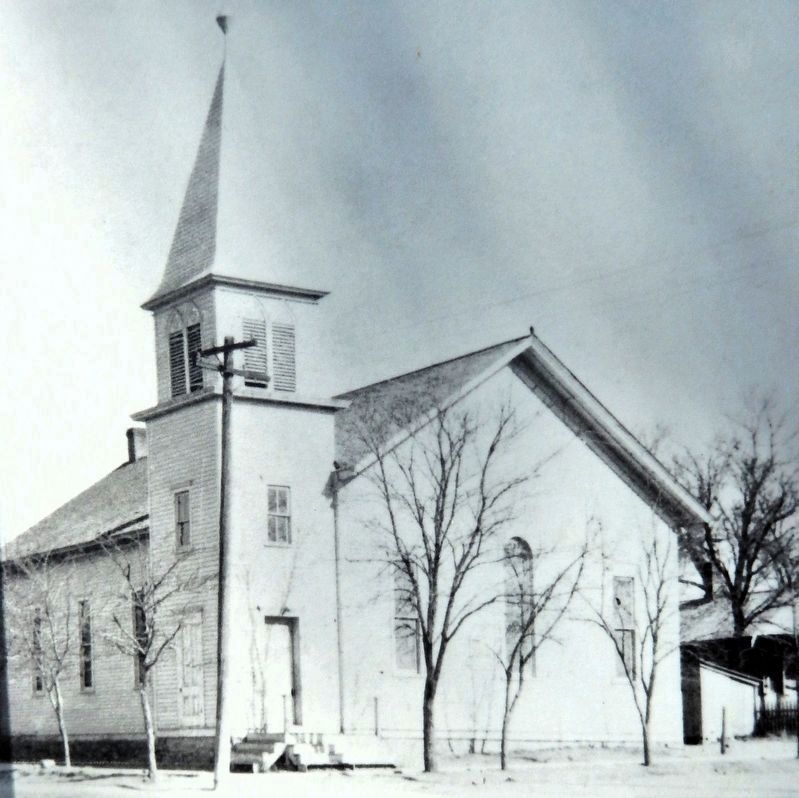
5. Marker detail: Baptist Church, 1885
The Baptists were the third denomination to organize. Meetings were held in the Union Church until 1885 when they built a frame church with a belfry at Sixth and Cedar streets. Members moved this building to the corner of Second and Spruce, and in 1930 replaced it with a red brick and Gothic stone structure at Second and Hickory streets.
Kansas State Historical Society, Boot Hill Museum, Kansas Heritage Center
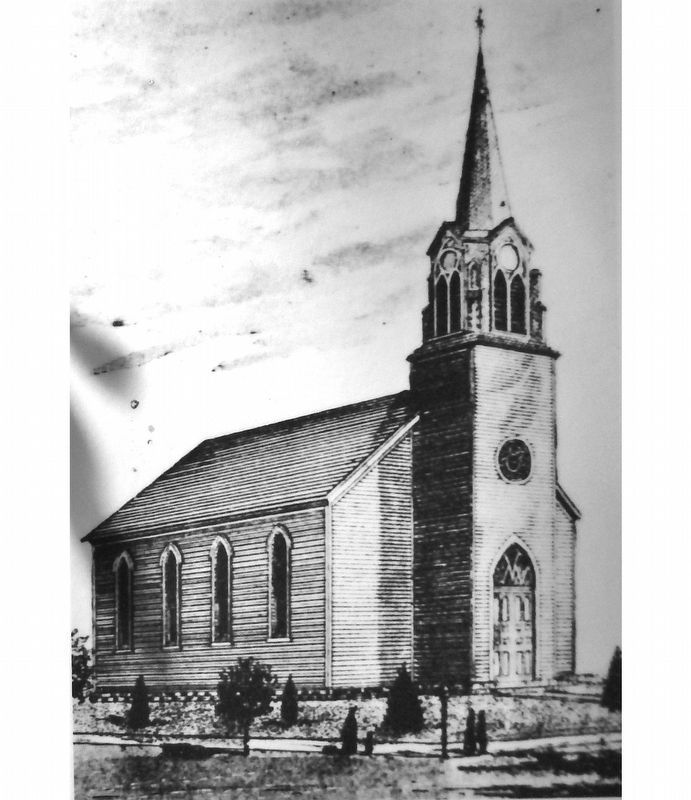
6. Marker detail: Catholic Church, 1882
Catholics used the Union Church until 1882 when they built a small church on Gospel Hill at the southwest corner of Central and Cedar streets. Although cowboys sometimes played pranks on ministers, there is no record of a Catholic priest being so bothered. This could be explained by the early-morning services, a time when cowboys were still sleeping off the previous night’s activities. In 1915 a Spanish mission-styled building, Sacred Heart Church, replaced the frame structure on the same site. A new cathedral on North Fourteenth Avenue, Our Lady of Guadalupe, was dedicated in 2001.
Kansas State Historical Society, Boot Hill Museum, Kansas Heritage Center
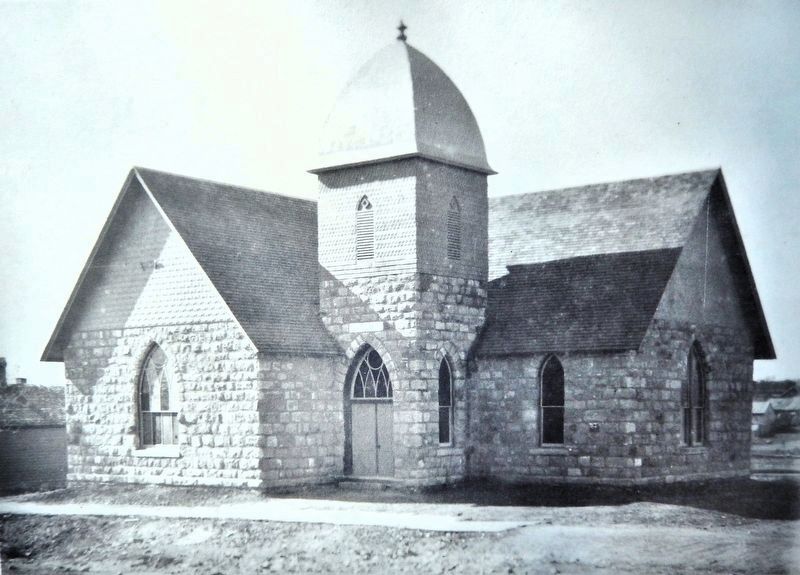
7. Marker detail: Christian Church
The Christian Church was organized in 1880. It was housed during its formative years in several downtown structures. The congregation built their own building on the corner of Second and Vine streets, but hours after the first service was held there on Christmas Eve 1909, it burned. Rebuilt a year later, the red brick church was used for forty-five years before a new structure was constructed on Fifth.

Photographed by Cosmos Mariner, August 18, 2022
8. Gospel Hill Marker
Looking north from West Spruce Street. The marker is near the sidewalk on the south side of the Dodge City Police Department building.
Photographed by Cosmos Mariner, August 18, 2022
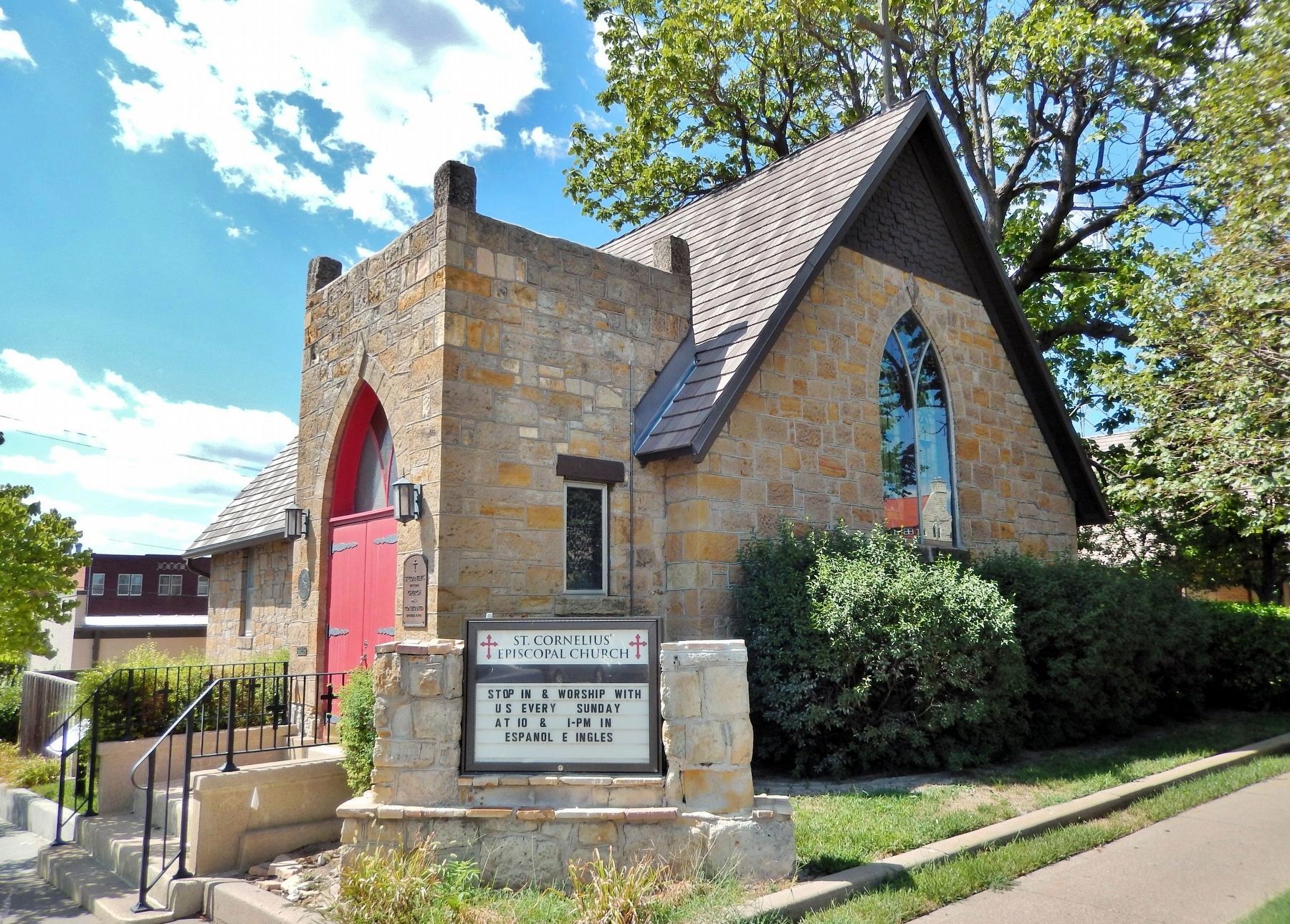
9. St. Cornelius Episcopal Church
Episcopalians were the last denomination to build on Gospel Hill. Their senior warden, a former post trader at Fort Dodge, suggested the name Cornelius in honor of a Roman soldier-saint. It is the only Episcopal church in America so named. The structure was built in 1898 at First and Spruce streets. It was constructed by volunteers using stone salvaged from an old icehouse owned by saloon keeper Henry Sturm. In 2003 it was Dodge City's oldest church building.
St. Cornelius Episcopal Church is a contributing property in Dodge City Downtown Historic District, National Register of Historic Places № 09000875.
Credits. This page was last revised on August 11, 2026. It was originally submitted on August 9, 2026, by Cosmos Mariner of Cape Canaveral, Florida. This page has been viewed 13 times since then. Photos: 1, 2, 3, 4, 5. submitted on August 10, 2026, by Cosmos Mariner of Cape Canaveral, Florida. 6, 7. submitted on August 11, 2026, by Cosmos Mariner of Cape Canaveral, Florida. 8. submitted on August 10, 2026, by Cosmos Mariner of Cape Canaveral, Florida. 9. submitted on August 11, 2026, by Cosmos Mariner of Cape Canaveral, Florida.
