1600 North Main
Butte–Anaconda Historic District

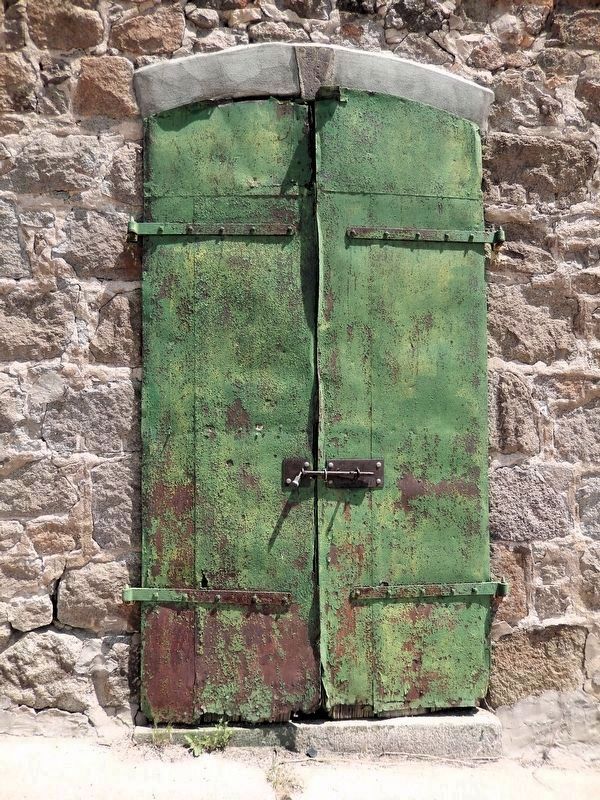
In 1880, when Joseph Broughton arrived in Walkerville, the booming silver town was a relatively isolated settlement. The Walker brothers — for whom the town is named — had purchased the Alice Mine only four years earlier with the help of their agent, future copper king Marcus Daly. With the Walkers' backing, Broughton opened a store at the corner of Daly and Main, where he sold everything from peanuts to threshing machines. Broughton, who lived in an apartment above the store, also served as Walkerville's postmaster, and his mercantile became a community focal point. Butte soon overshadowed the small silver town, but low prices and quality goods kept Broughton's customers loyal even after streetcars gave Walkerville residents easy access to Butte's large shopping district. Between 1891 and 1900, Broughton replaced his pre-1884 building with this stone-and-brick structure. A stepped wooden cornice with scrolled brackets adorns the building, whose canted corner entrance welcomes customers from both Daly and Main.
Erected by Montana Historical Society.
Topics and series. This historical marker is listed in these
this page online
Location. 46° 1.819′ N, 112° 32.097′ W. Marker is in Butte, Montana, in Silver Bow County. It is at the intersection of East Daly Street and North Main Street, on the right when traveling west on East Daly Street. The marker is mounted near the southwest corner of the subject building, facing East Daly Street. Touch for map. Marker is at or near this postal address: 1600 North Main Street, Butte MT 59701, United States of America. Touch for directions.

Regionally, this marker is in andspecifically outhwest Montana, in Gold West Country, in Mining Country. It is also in the American Mountain West and in the Lewis & Clark Corridor. Globally, it is in North America, the Rocky Mountains, the Western Hemisphere, the Western World, and the Anglosphere. Historically, it finds itself in what was once Rupert’s Land and also the Louisiana Purchase.
Other nearby markers. At

Regarding 1600 North Main. 1600 North Main is a contributing property in Butte–Anaconda Historic District, National Register of Historic Places № 66000438.
From the National Register Nomination prepared by Derek Strahn, 1/2006:
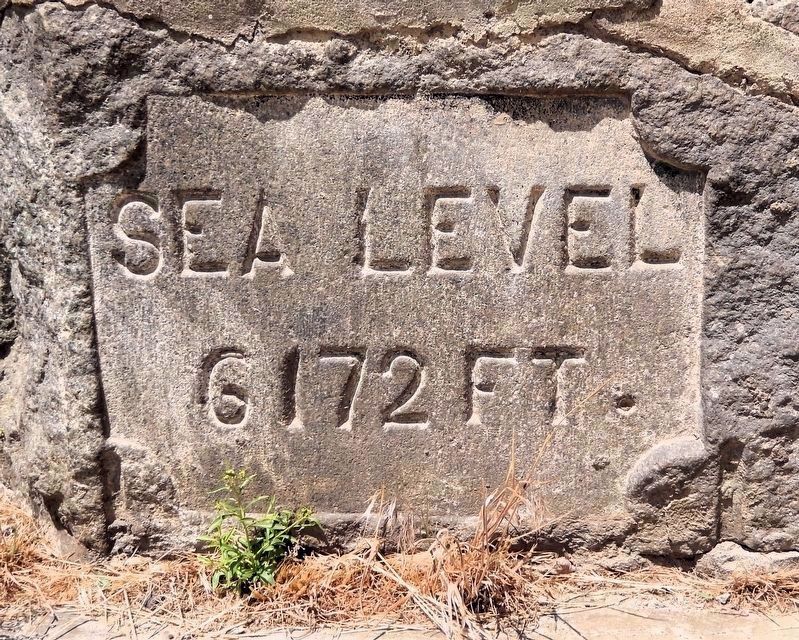
Many sturdy business buildings still stand along Main and Daly Streets, and represent commercial building patterns of the nineteenth-century Rocky Mountain mining frontier. These buildings are one or two stories in height, with heavy ashlar native stone on the first story and wooden construction above. Examples include the Joseph Broughton Co.[corner of Main and Daly]; the John Caplice & A.W. McCune Co.; the Bielenberg & Bruhn Meat Market; and the Schonsberg Brothers store and Saloon.Photographed by Cosmos Mariner, July 6, 20243. 1600 North Main: cornerstoneThis unusual cornerstone beside the corner entrance gives the elevation: 6172 feet above sea level. Note: the elevation just 1½ miles downhill at Butte city center is 5823 feet, a drop of nearly 350 feet, illustrating the steepness of the streets and terrain around this town!Located just west of the Continental Divide, on the northern slope of the Summit Valley in southwestern Montana's Silver Bow County, the city of Butte is concentrated on a furrowed outcropping that once was appropriately nicknamed the “Richest Hill on Earth.” Both Butte and Walkerville owe their life to mining and a labyrinth of precious metals deposited deep beneath the earth's surface. These geologic patterns directed mining and milling operations to be concentrated mostly along the steeply sloping upper Butte Hill and on the ridge crests. It was mining, smelting, and railroading that shaped the built environment of the Butte-Anaconda Historic District throughout the period of significance from 1876-1934. Supported by complex technology, outside capital, and railroads, the mines on Butte Hill represented industrial mining on a colossal scale. In 1961, Butte's national prominence as a copper-producing center was recognized with its designation as a National Historic Landmark.
Also see . . .
1. 1600 North Main Street (Montana Historical Society).
2. Butte–Anaconda Historic District (Wikipedia).
Excerpt: The Butte–Anaconda Historic District is a National Historic Landmark that spans parts of Walkerville, Butte and Anaconda, Montana. It was declared an National Historic Landmark in 1961. The district's national significance relates to its long history of copper production as well as to its role in the development of the labor union movement in the United States. As the source of nearly one-third of all the world's copper in the early 1900s, Butte's mines provided one of the metals that were critical to American industrialization. Walkerville represents some of the earliest mines in the district and preserves the early mining camp flavor present in the 1890s to 1910s. Butte itself is an urban metropolis where industrial relics such as mine yards and head frames are juxtaposed with a wide variety of residential and business structures. Anaconda was created as a company town that contained the smelters for Butte's ore.(Submitted on August 15, 2026, by Cosmos Mariner of Cape Canaveral, Florida.)

Credits. This page was last revised on August 15, 2026. It was originally submitted on August 12, 2026, by Cosmos Mariner of Cape Canaveral, Florida. This page has been viewed 15 times since then. Photos: 1, 2, 3, 4, 5. submitted on August 14, 2026, by Cosmos Mariner of Cape Canaveral, Florida.
