South Loop in Chicago in Cook County, Illinois — The American Midwest (Great Lakes)
Prairie Avenue Historic District
| — | Chicago Landmark | — |
Photographed by Sean P. Flynn, August 14, 2026
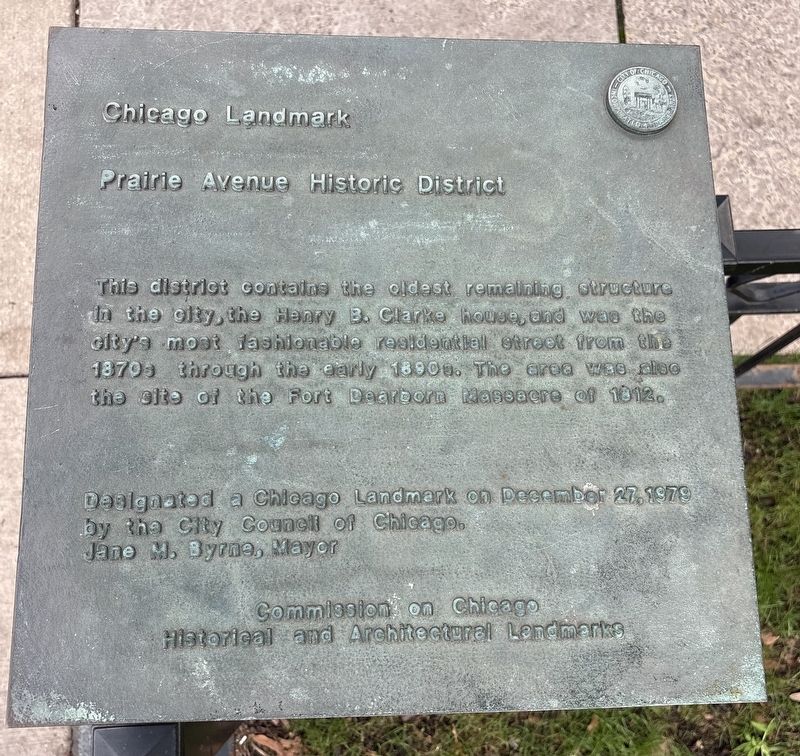
1. Prairie Avenue Historic District Marker
Designated a Chicago Landmark on December 27, 1979 by the City of Chicago.
Jane M. Byrne, Mayor
Erected by Commission on Chicago Historical and Architectural Landmarks, City of Chicago.
Topics and series. This historical marker is listed in these topic lists: Notable Buildings • War of 1812. In addition, it is included in the Chicago's Surviving Pre-Fire Structures, the Illinois, Chicago Landmarks Commission, and the National Register of Historic Places (NRHP) series lists. A significant historical date for this entry is December 27, 1979.
Location. 41° 51.472′ N, 87° 37.241′ W. Marker is in Chicago, Illinois, in Cook County. It is in South Loop. It is at the intersection of South Prairie Avenue and East 18th Street, on the right when traveling north on South Prairie Avenue. Touch for map. Marker is at or near this postal address: 1801 South Prairie Avenue, Chicago IL
this page online

Regionally, this marker is on Chicago’s South Side. It is also in the American Midwest. Globally, it is in North America, on the Great Lakes, in the Western Hemisphere, in the Western World, and in the Anglosphere. Historically, it finds itself in what was once the Viceroyalty of New France, the territory of the Mississippian Culture, and the Northwest Territory.
Other nearby markers. At least 8 other markers are within walking distance of this marker: George Pullman (a few steps from this marker); John J. and Frances M. Glessner House (a few steps from this marker); Outside the District (within shouting distance of this marker); A Heritage Preserved (within shouting distance of this marker); Lost Houses of Prairie Avenue: 1600-1700 Blocks (within shouting distance of this marker); Beginnings 1812-1871 (within shouting distance of this marker); Lost Houses of Prairie Avenue: 1800-1900 Blocks (East Side) (within shouting distance of this marker); Glory Days 1872-1904 (within shouting distance of this marker). Touch for a list and map of all markers in Chicago.
Another

Photographed by Sean P. Flynn, August 14, 2026
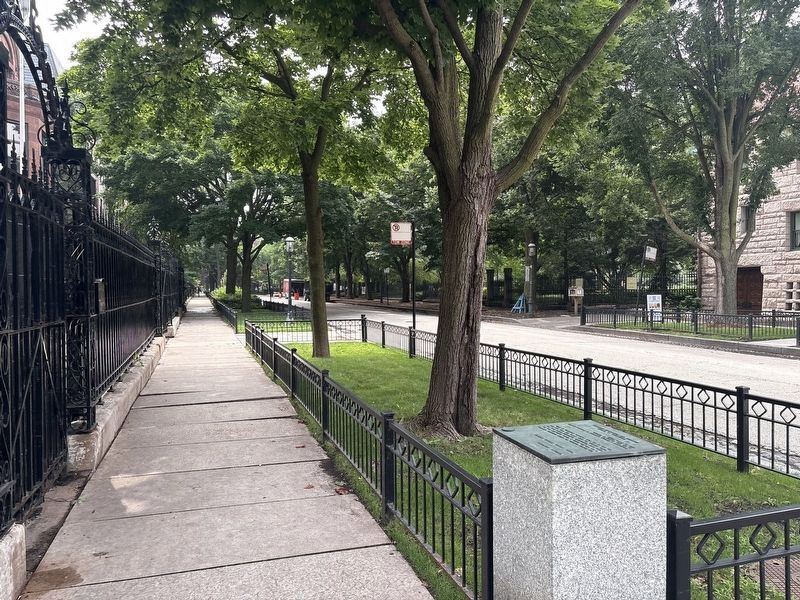
2. Prairie Avenue Historic District Marker
The marker is in front of 1801 S. Prairie Avenue, known as the William W. Kimball House. It was the headquarters of the U.S. Soccer Federation from 1991 until 2023. It was sold in 2023 along with the home next to it (1811 S. Prairie), and the site was under renovations in the summer of 2026.
More about this marker. The marker sits in front of 1801 S. Prairie Ave., which is known as the Kimball House, after its original owner, piano manufacturer William Kimball. From 1991 until 2023 it served as the offices for the U.S. Soccer Federation.
A separate marker from 1979 about restoration efforts in the district can be found across the street, in front of the Glessner House.
The Clarke House referenced on the plaque is about a block southwest of here, the center of a park called Chicago Women's Park and Gardens. It was originally located at 17th Street and Michigan Avenue, northwest of this spot. It was later moved to the Bronzeville neighborhood, a few miles south. In 1977, the building was moved to its current location by its then-owner, Bishop Louis Henry Ford, a prominent Chicago church leader who had presided over the funeral of Emmett Till, and it became a museum. The building was renamed the Clarke-Ford House in 2022, in honor of Bishop Ford.
Regarding Prairie Avenue Historic District. The
Photographed by Sean P. Flynn, August 14, 2026
3. Prairie Avenue Historic District
On the right side is the Glessner House, which was completed in 1885 and is both a Chicago Landmark and a National Historic Landmark. Further down the street is the Chicago Women's Park and Gardens.
Also see . . .
1. Prairie Avenue. A history of the Prairie Avenue district from the Glessner House, a Chicago Landmark across the street from this marker that is now a musuem.
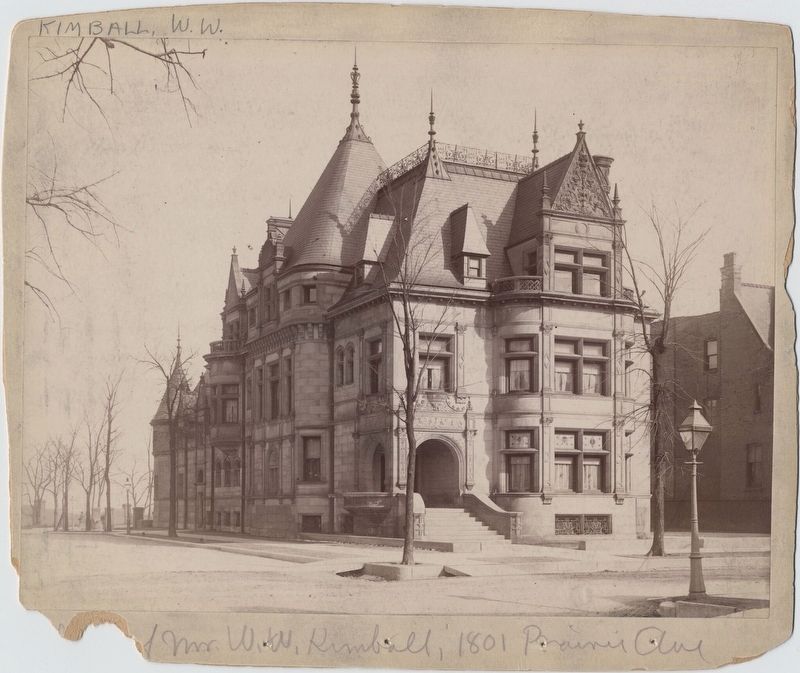
Excerpt: "Prairie Avenue, once known as 'millionaires’ row' declined in the early 1900s as a residential area due(Submitted on August 15, 2026, by Sean P. Flynn of Oak Park, Illinois.)to its proximity to the growing downtown and the push of the printing, publishing and automobile industries into the area. The Prairie Avenue Historic District was listed on the National Register of Historic Places in 1972 and was designated a City of Chicago Landmark District in 1979."Courtesy of Chicago History Museum (ICHi-038220), circa 18934. 1801 S. PrairieThe modern historical marker sits in front of this home, whose first owner was piano manufacturer William Kimball.
2. Prairie Avenue District (Wikipedia). (Submitted on August 15, 2026, by Sean P. Flynn of Oak Park, Illinois.)
3. With the sale of 2 Prairie Ave. mansions, a residential revival. An article about the 2023 sale of two historic Prairie Avenue homes, from Chicago Agent Magazine. (Submitted on August 15, 2026, by Sean P. Flynn of Oak Park, Illinois.)
4. Chicago magazine: The true story of the deadly encounter at Fort Dearborn. (Submitted on August 15, 2026, by Sean P. Flynn of Oak Park, Illinois.)
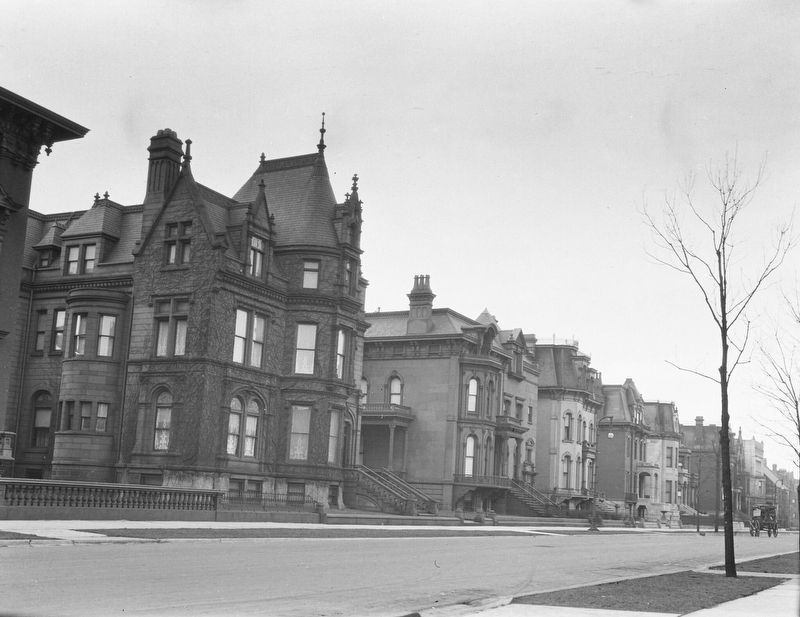
Charles R. Clark, photographer; courtesy of Chicago History Museum (ICHi-066015), circa 1905
5. Prairie Avenue residences north of 18th Street, 1905

Photographed by Sean P. Flynn, August 14, 2026
6. Plaque for the Prairie Avenue District’s 1979 restoration
Credits. This page was last revised on August 19, 2026. It was originally submitted on August 14, 2026, by Sean P. Flynn of Oak Park, Illinois. This page has been viewed 32 times since then. Photos: 1, 2, 3. submitted on August 14, 2026, by Sean P. Flynn of Oak Park, Illinois. 4. submitted on August 15, 2026, by Sean P. Flynn of Oak Park, Illinois. 5. submitted on August 19, 2026, by Sean P. Flynn of Oak Park, Illinois. 6. submitted on August 16, 2026, by Sean P. Flynn of Oak Park, Illinois.
