South Loop in Chicago in Cook County, Illinois — The American Midwest (Great Lakes)
John J. and Frances M. Glessner House
Henry Hobson Richardson, architect; 1887
| — | Chicago Landmark | — |
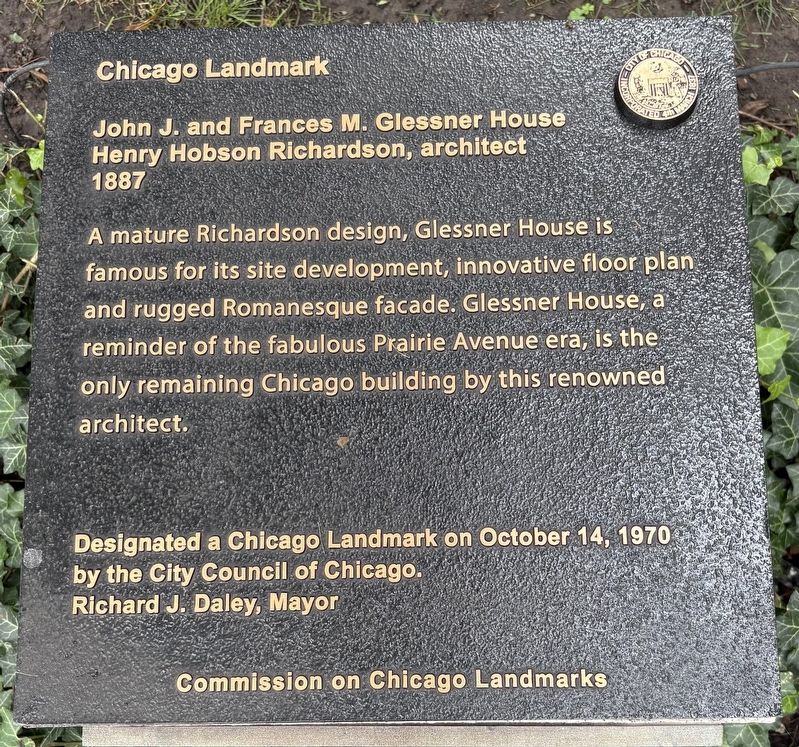
Photographed by Sean P. Flynn, August 14, 2026
1. John J. and Frances M. Glessner House Marker
Designated a Chicago Landmark on October 14, 1970 by the City Council of Chicago.
Richard J. Daley, Mayor
Erected by Commission on Chicago Landmarks, City of Chicago.
Topics and series. This historical marker is listed in these topic lists: Architecture • Notable Buildings. In addition, it is included in the Illinois, Chicago Landmarks Commission, and the National Historic Landmarks series lists. A significant historical year for this entry is 1885.
Location. 41° 51.462′ N, 87° 37.25′ W. Marker is in Chicago, Illinois, in Cook County. It is in South Loop. It is at the intersection of South Prairie Avenue and East 18th Street on South Prairie Avenue. The marker is on a pedestal leading to the Prairie Avenue entrance of the home. Touch for map. Marker is at or near this postal address: 1800 South Prairie Avenue, Chicago IL 60616, United States of America.
this page online

Regionally, this marker is on Chicago’s South Side. It is also in the American Midwest. Globally, it is in North America, on the Great Lakes, in the Western Hemisphere, in the Western World, and in the Anglosphere. Historically, it finds itself in what was once the Viceroyalty of New France, the territory of the Mississippian Culture, and the Northwest Territory.
Other nearby markers. At least 8 other markers are within walking distance of this marker: Outside the District (a few steps from this marker); A Heritage Preserved (a few steps from this marker); Lost Houses of Prairie Avenue: 1600-1700 Blocks (a few steps from this marker); Prairie Avenue Historic District (a few steps from this marker); Beginnings 1812-1871 (a few steps from this marker); Lost Houses of Prairie Avenue: 1800-1900 Blocks (East Side) (within shouting distance of this marker); Glory Days 1872-1904 (within shouting distance of this marker); George Pullman (within shouting distance of this marker). Touch for a list and map of all markers in Chicago.
Another marker is no longer nearby. John J. Glessner House (was here, next
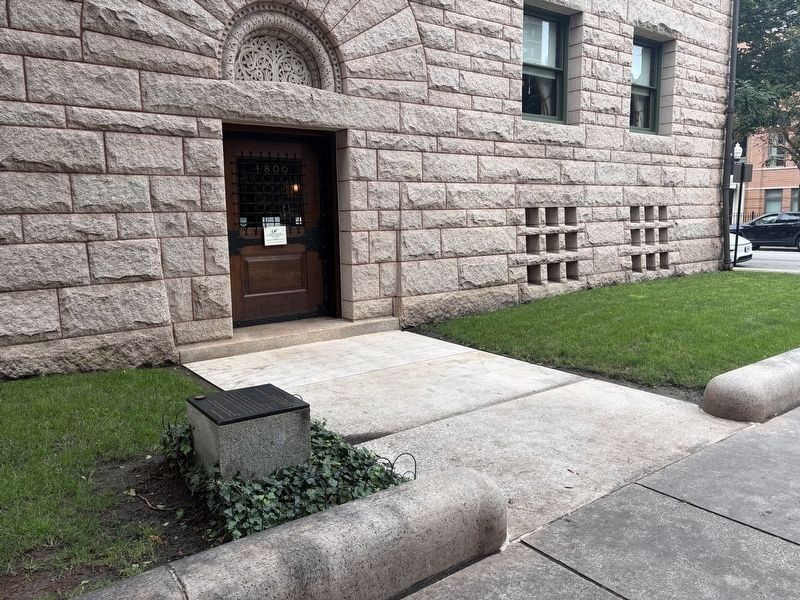
Photographed by Sean P. Flynn, August 14, 2026
2. John J. and Frances M. Glessner House
More about this marker. This marker is fairly unique among Chicago Landmark markers in being the reissue of a previously existing marker. This one was re-erected because the building was renamed to include John Glessner’s wife, Frances Macbeth Glessner. Other than the title and a single comma in the inscription, the only other difference from the original plaque’s text is the use of the term “Commission on Chicago Landmarks," the present-day name for the city's official preservation organization, which was known in 1970 by the longer “Commission on Chicago Historical and Architectural Landmarks.”
Regarding John J. and Frances M. Glessner House. John Glessner was an executive for a farm machinery maker, and he settled in Chicago with his wife Frances soon after they were married in 1870. In 1885, he enlisted Boston-based architect Henry Hobson Richardson to a build a new house, in a style known as Richardsonian Romanesque, on the tony Prairie Avenue on Chicago's South Side.
John Glessner lived in this home until his death in 1936. After he died, the

Photographed by Sean P. Flynn, August 14, 2026
3. John J. and Frances M. Glessner House
The architect H.H. Richardson died in 1886 at the age of 48, very soon after completing the design for this home. His most notable other works in Chicago were the Marshall Fields Wholesale Store in the Loop, built for the famed Chicago department store but razed and replaced in 1930 by the Chicago Board of Trade Building; and the MacVeagh House on N. Lake Shore Drive, which was torn down and replaced by a high rise

Perry E. Borchers, photographer; courtesy of Library of Congress Prints and Photographs Division, 1965
4. John J. and Frances M. Glessner House
The home was saved in 1966 (a year after this photo was taken) when the Chicago School of Architecture Foundation (now the Chicago Architecture Foundation) was founded to acquire and save it.
Also see . . .
1. Glessner House official site. (Submitted on August 19, 2026, by Sean P. Flynn of Oak Park, Illinois.)
2. Chicago Architecture Center: Glessner House.
Excerpt: "Some believe that Richardson designed the Glessner House as a fortress to offer protection to its inhabitants against the growing unrest of the lower classes during America’s turbulent Gilded Age. However, Richardson died on April 26, 1886, and all of the essential structure had been designed by 1885. The Haymarket event, which occurred on May 4, 1886 couldn’t possibly have been inspiration for the home’s fortress-like design."(Submitted on August 19, 2026, by Sean P. Flynn of Oak Park, Illinois.)
3. Olmsted Network: Henry Hobson Richardson biography. Richardson's most famous work is likely the Trinity Church in Boston. (Submitted on August 19, 2026, by Sean P. Flynn of Oak Park, Illinois.)

Photographed by Sean P. Flynn, August 14, 2026
5. John J. and Frances M. Glessner House markers
The Chicago Landmark marker shares a pedestal with another marker about its status as a National Historic Landmark.
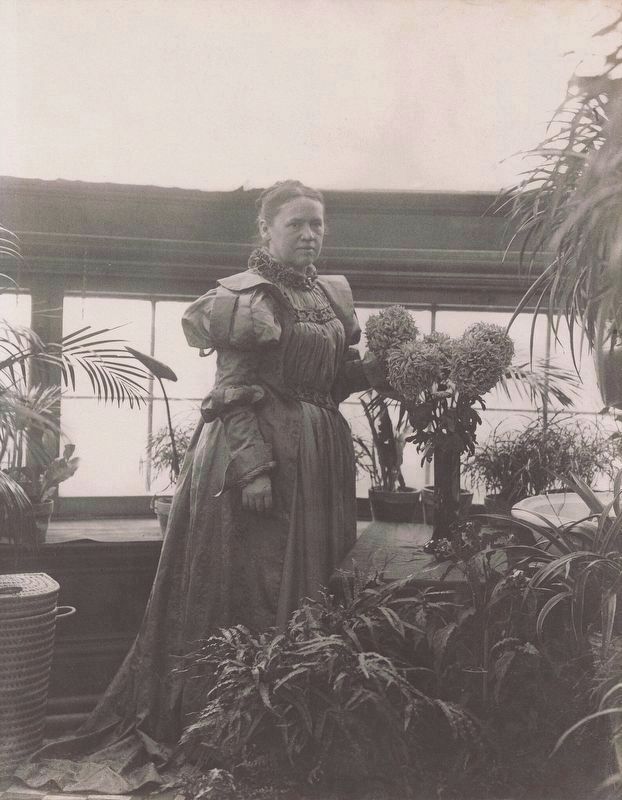
Courtesy of Chicago History Museum (ICHi-061818), March 4, 1892
6. Frances Macbeth Glessner
The Glessners married in 1870 and moved to Chicago soon thereafter. According to the caption from the Chicago History Museum, Mrs. Glessner was "possibly in costume for the Benvenuto Cellini dinner party."
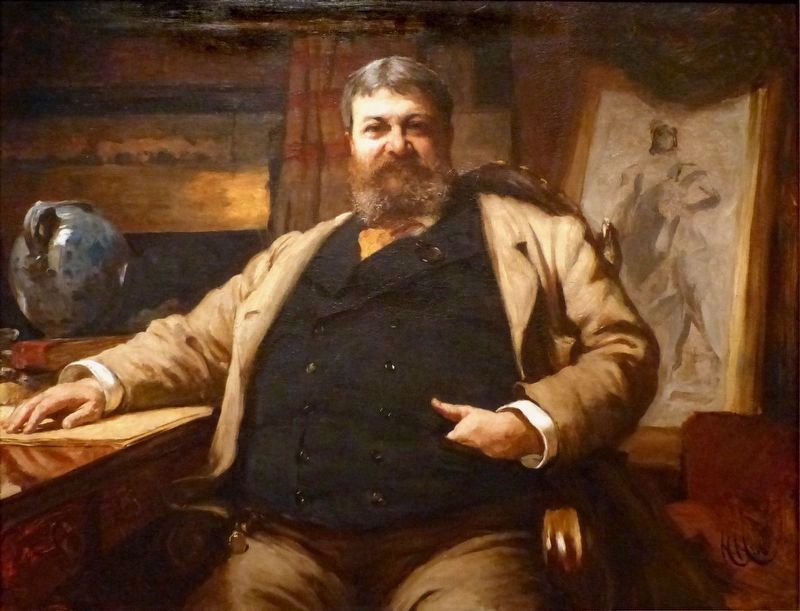
Photographed by Allen C. Browne, November 29, 2015
7. H.H. Richardson, architect
This 1886 painting of H.H. Richardson by Hubert von Herkomer hangs in the National Portrait Gallery in Washington DC.
“Born St. James Parish, Louisiana, Trained in Paris at the Ecole des Beaux-Arts, Henry Hobson Richardson became America's leading architect in the late 1800s. He designed a wide range of structures, including churches, railroad stations, department stores, courthouses, libraries, and private homes. Best known today for Trinity Church in Boston, Massachusetts, Richardson fused the Romanesque style of medieval France with the picturesque style popular in England and the United States. In this portrait, British artist Hubert von Herkomer found his sitter's girth, accentuated by the rounded pitcher in the background, an ideal metaphor for his character. During the sittings, Herkomer noted that Richardson was 'as solid in his friendship as in his figure. Big-bodied, big-hearted, large-minded, fullbrained, loving as he is pugnacious.' This painting remained in the subject's family until its acquisition by the National Portrait Gallery in 2009.” — National Portrait Gallery
“Born St. James Parish, Louisiana, Trained in Paris at the Ecole des Beaux-Arts, Henry Hobson Richardson became America's leading architect in the late 1800s. He designed a wide range of structures, including churches, railroad stations, department stores, courthouses, libraries, and private homes. Best known today for Trinity Church in Boston, Massachusetts, Richardson fused the Romanesque style of medieval France with the picturesque style popular in England and the United States. In this portrait, British artist Hubert von Herkomer found his sitter's girth, accentuated by the rounded pitcher in the background, an ideal metaphor for his character. During the sittings, Herkomer noted that Richardson was 'as solid in his friendship as in his figure. Big-bodied, big-hearted, large-minded, fullbrained, loving as he is pugnacious.' This painting remained in the subject's family until its acquisition by the National Portrait Gallery in 2009.” — National Portrait Gallery
Credits. This page was last revised on September 22, 2026. It was originally submitted on August 18, 2026, by Sean P. Flynn of Oak Park, Illinois. This page has been viewed 29 times since then. Photos: 1, 2, 3, 4, 5. submitted on August 18, 2026, by Sean P. Flynn of Oak Park, Illinois. 6. submitted on August 19, 2026, by Sean P. Flynn of Oak Park, Illinois. 7. submitted on November 24, 2016, by Allen C. Browne of Silver Spring, Maryland.
