Mooresville in Iredell County, North Carolina — The American South (South Atlantic)
Coddle Creek, 1753
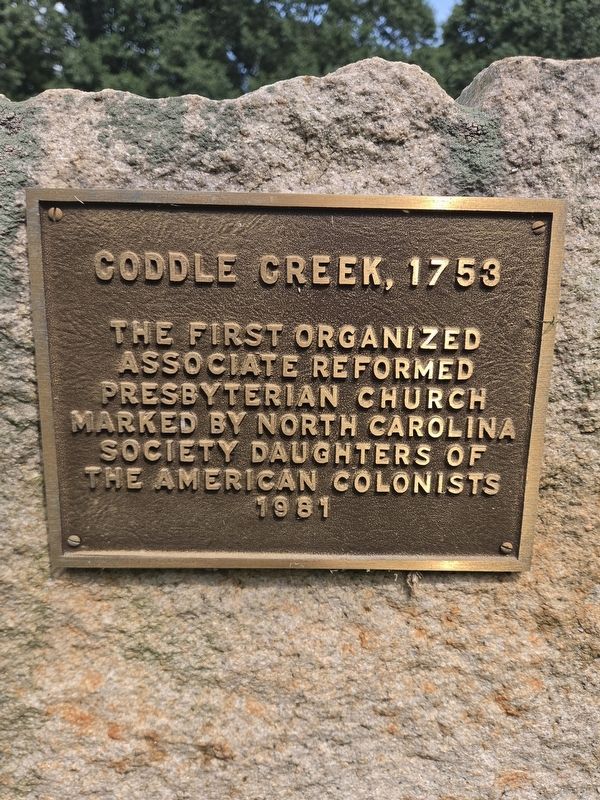
Photographed by Mark Parker, August 15, 2026
1. Coddle Creek, 1753 Marker
Erected 1981 by North Carolina Society Daughters of the American Colonists.
Topics and series. This historical marker is listed in this topic list: Religion & Religious Structures. In addition, it is included in the Daughters of the American Colonists series list. A significant historical year for this entry is 1753.
Location. 35° 30.646′ N, 80° 46.118′ W. Marker is in Mooresville, North Carolina, in Iredell County. It is at the intersection of Coddle Creek Highway (North Carolina Route 3) and Patterson Farm Road, on the right when traveling north on Coddle Creek Highway. Touch for map. Marker is at or near this postal address: 2297 Coddle Creek Highway, Mooresville NC 28115, United States of America. Touch for directions.

Regionally, this marker is in the Piedmont and in Greater Charlotte. It is also in the American South and specifically in the Upper South. Globally, it is in North America, the Western Hemisphere, the Western World, and the Anglosphere. Historically, it finds itself in what was once the territory of the Mississippian Culture,
this page online
Other nearby markers. At least 8 other markers are within 5 miles of this marker, measured as the crow flies: Beaver Dam (approx. 3.7 miles away); Stinson Hall (approx. 3.7 miles away); “Mill Hill” (approx. 3.9 miles away); Granville Grant (approx. 4 miles away); D.H. Hill (approx. 4.4 miles away); Davidson College War Memorial (approx. 4.4 miles away); Davidson Alumni World War II Memorial (approx. 4.4 miles away); Original Chapel of Davidson College (approx. 4½ miles away).
Also see . . .
1. Coddle Creek History. A Historical Sketch of Coddle Creek Associate Reformed Presbyterian Church By L. M. Allison, Jr.
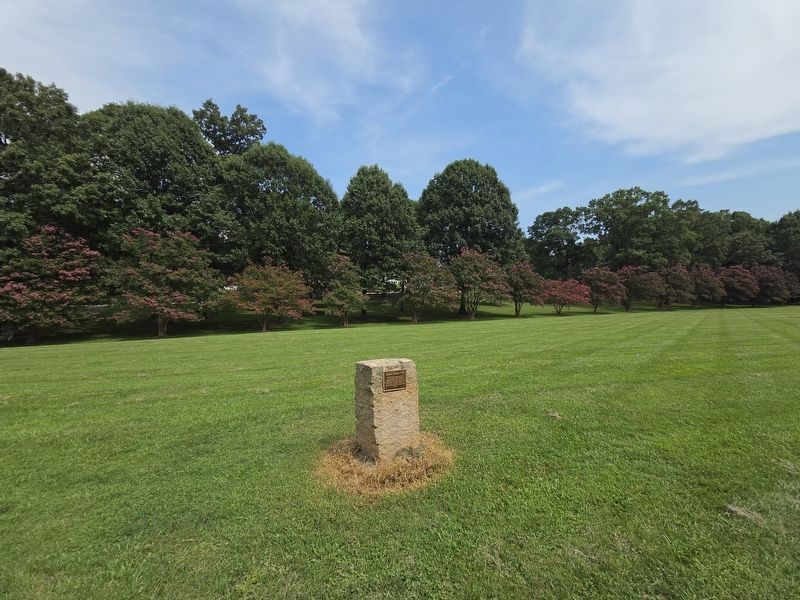
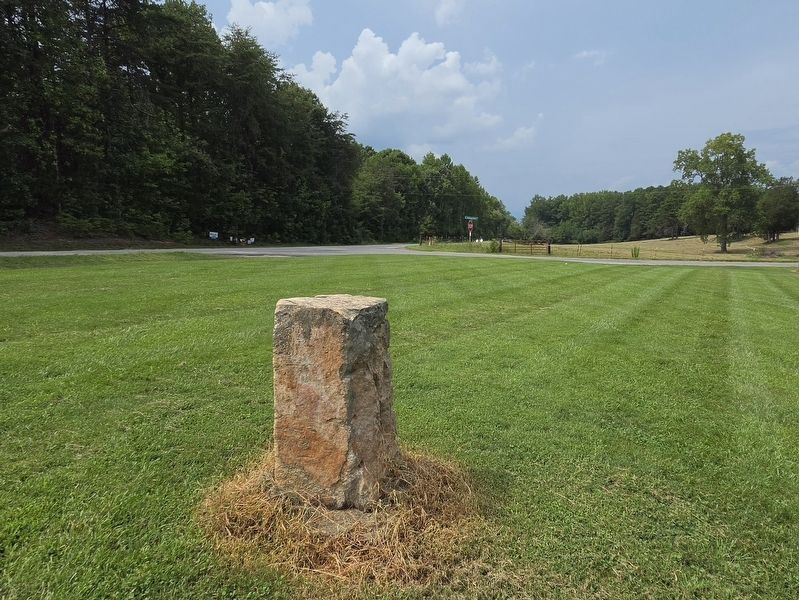
From the available records, it is not possible to determine the exact date of the organization of Coddle Creek Church. The earliest congregational records were lost; the earliest county records were destroyed by fire. But it is possible to determine the approximate date of organization. Concrete evidence as to the date of organization comes from a diary left by Rev. Hugh McAden, pioneer Presbyterian missionary(Submitted on August 23, 2026, by Mark Parker of Hickory, North Carolina.)from Pennsylvania. Mr. McAden travelled through North Carolina in 1755. On this trip he visited in the home of Justice Carruth and on the following Sabbath, September 21, 1755, preached at the meeting-house “about two miles off to a pretty large congregation of people, who seemed pretty regular and discreet.” On his way back home from South Carolina, Mr. McAden again visited in the home of Justice Carruth and again preached to the same congregation of people, this time on December 21, 1755. Mr. McAden referred to the congregation as Coddle Creek. There was therefore, a house of worship and an organized congregation at Coddle Creek in the year 1755. Another bit of evidence comes from the diary of Mr. McAden. He preached at Thyatira one week before he preached at Coddle Creek. The deed to Thyatira, then called “Cathey Meeting House”, was made in January 1753. It seems safe to assume that the two churches were organized about the same time. It is certainly not a serious error to hold the bi-centennial anniversary celebration in this year 1953. The oldest legible inscription on a tombstone is that of a member of the Carruth family, whichPhotographed by Mark Parker, August 15, 20262. Coddle Creek, 1753 Marker. The church is beyond the grove of treesbears the date 1757. Community tradition says that two graves to the rear of the pulpit are earlier. On the basis of rather strong evidence, it seems safe to say that Coddle Creek Church is two hundred years old and is one of the oldest, if not the oldest, existing Associate Reformed Presbyterian Church in the world.Photographed by Mark Parker, August 15, 20263. Coddle Creek, 1753 Marker reverse sideLooking towards the intersection of Coddle Creek Hwy & Patterson Farm Road
2. Coddle Creek Associate Reformed Presbyterian Church, Session House and CemeteryNomination Form. <blockquote>The first Presbyterian congregation in Iredell County was established ca. 1755 at Coddle Creek. Since the majority of Iredell's eighteenth century settlers were of Scotch-Irish background, the Presbyterian Church is the oldest denomination in the county. Coddle Creek was one of the earliest meeting houses west of the Yadkin River. Later in the century Coddle Creek Church became one of the first congregations of dissenting Presbyterians, known as Associate Reform Presbyterians, in North Carolina. The present church structure, built in 1884, is a notable local interpretation of a transitional late Greek Revival/Victorian
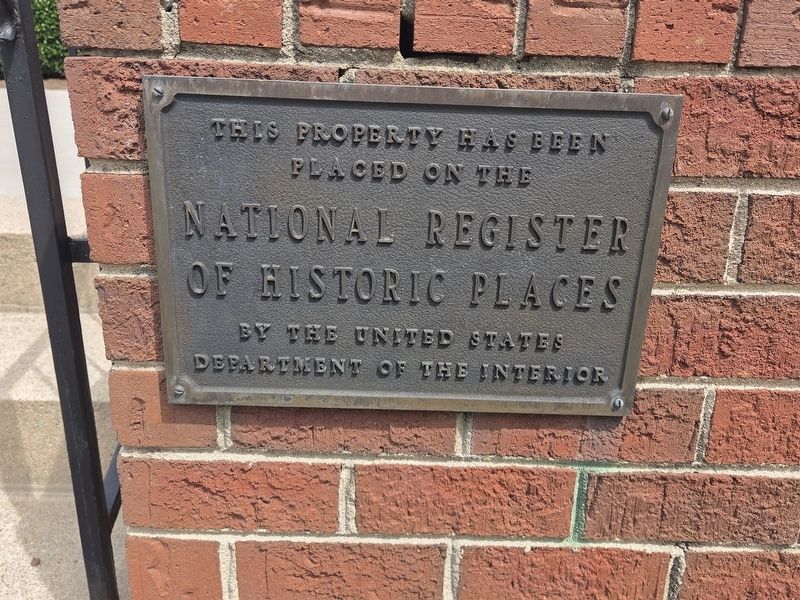
Photographed by Mark Parker, August 15, 2026
4. National Register of Historic Places plaque near the sanctuary entrance
3. Coddle Creek Associate Reformed Presbyterian Church, Session House and CemeteryNomination Form. <blockquote>The first Presbyterian congregation in Iredell County was established ca. 1755 at Coddle Creek. Since the majority of Iredell's
Photographed by Mark Parker, August 15, 2026
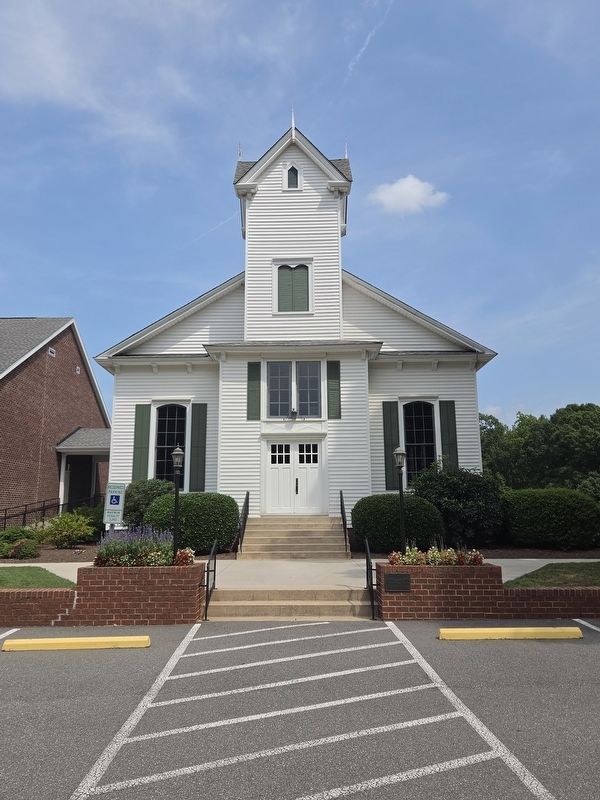
5. Coddle CreeK ARP Church. National Register of Historic Places plaque right of the steps
Photographed by Mark Parker, August 15, 2026
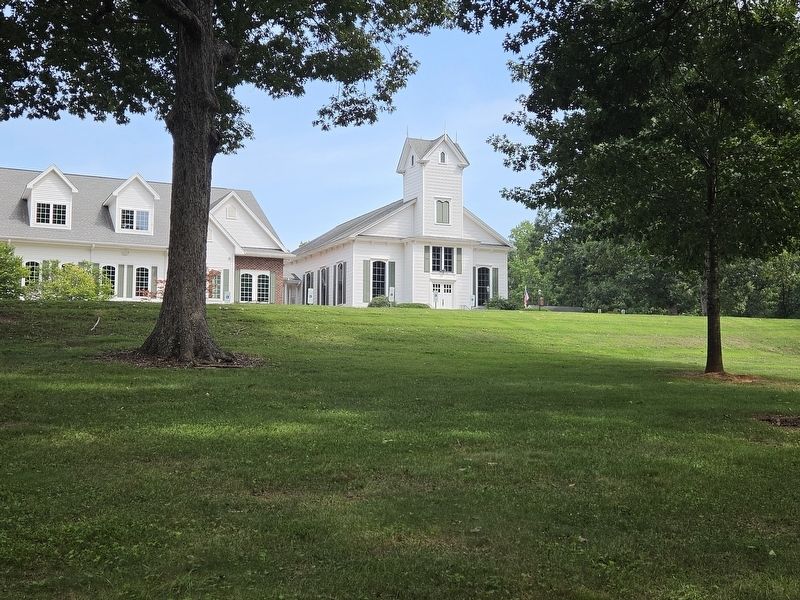
6. Wide view Coddle Creek ARP Church
Credits. This page was last revised on August 26, 2026. It was originally submitted on August 23, 2026, by Mark Parker of Hickory, North Carolina. This page has been viewed 12 times since then. Photos: 1, 2, 3, 4, 5, 6. submitted on August 23, 2026, by Mark Parker of Hickory, North Carolina. • Andrew Ruppenstein was the editor who published this page.
