Waterloo, Cedar Falls and Northern Center Point Depot
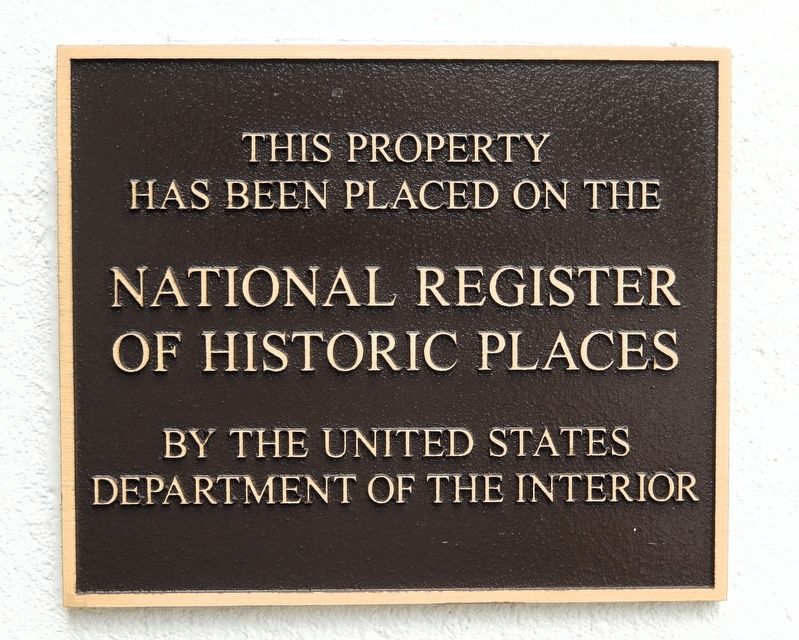
This property has been placed on the
National Register of Historic Places
by the United States Department of the Interior
Topics and series. This historical marker is listed in these topic lists: Architecture • Notable Buildings • Railroads & Streetcars. In addition, it is included in the National Register of Historic Places (NRHP) series list. A significant historical year for this entry is 1914.
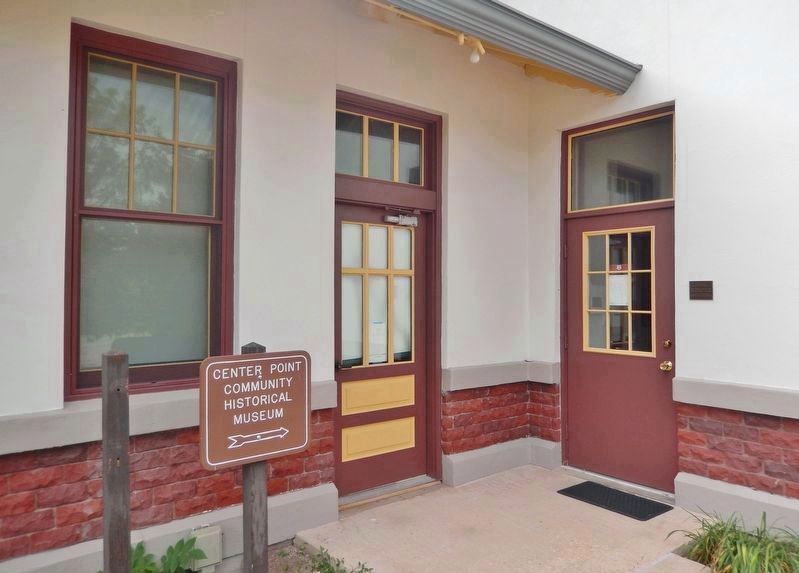
Location. 42° 11.561′ N, 91° 46.887′ W. Marker is in Center Point, Iowa, in Linn County. It is on East Washington Street just east of Franklin Street, on the right when traveling east. The marker is on the right side of the southwest corner station entrance. Touch for map. Marker is at or near this postal address: 700 Washington Street, Center Point IA 52213, United States of America. Touch for directions.

Regionally, this marker is in Eastern Iowa. It is also in the American Midwest and in the Corn Belt. Globally, it is in North America, the Western Hemisphere, the Western World, and the Anglosphere. Historically, it finds itself in what was once the territory of the Mississippian Culture and also the Louisiana
this page online
Other nearby markers. At least 8 other markers are within 15 miles of this marker, measured as the crow flies: Center Point Depot (a few steps from this marker); Gold Medal Flour Mural (approx. 8.2 miles away); All Gave Some... Some Gave All (approx. 8.2 miles away); The Freedom Rock of Benton County (approx. 8.2 miles away); Shellsburg's Spandrel Bridge (approx. 8.2 miles away); Post 298 Veterans' Memorial (approx. 12.3 miles away); Freedom Flame (approx. 14½ miles away); Marion Civil War Memorial (approx. 14½ miles away).
Regarding Waterloo, Cedar Falls and Northern Center Point Depot. National Register of Historic Places № 100002185.
From the National Register Nomination prepared by Leah D. Rogers, 1/11/2018:
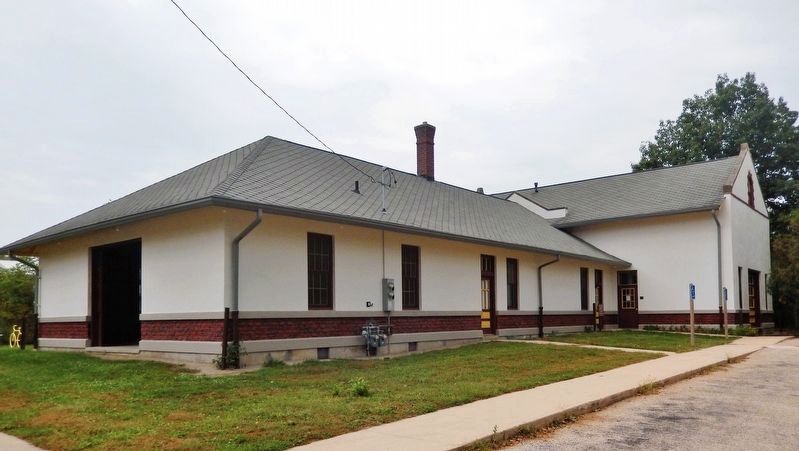
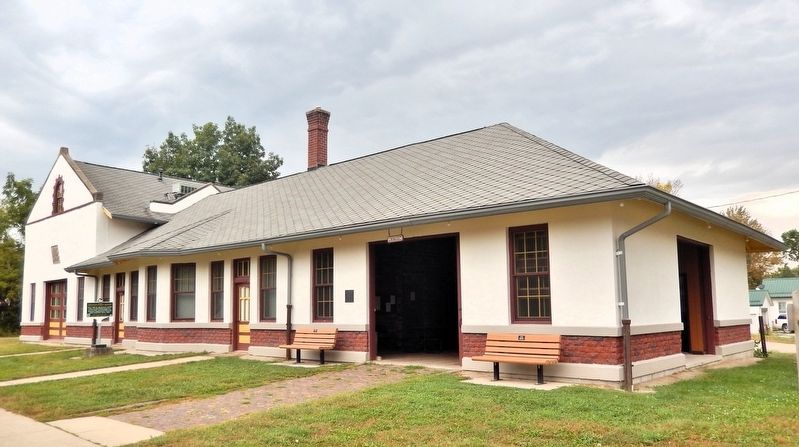
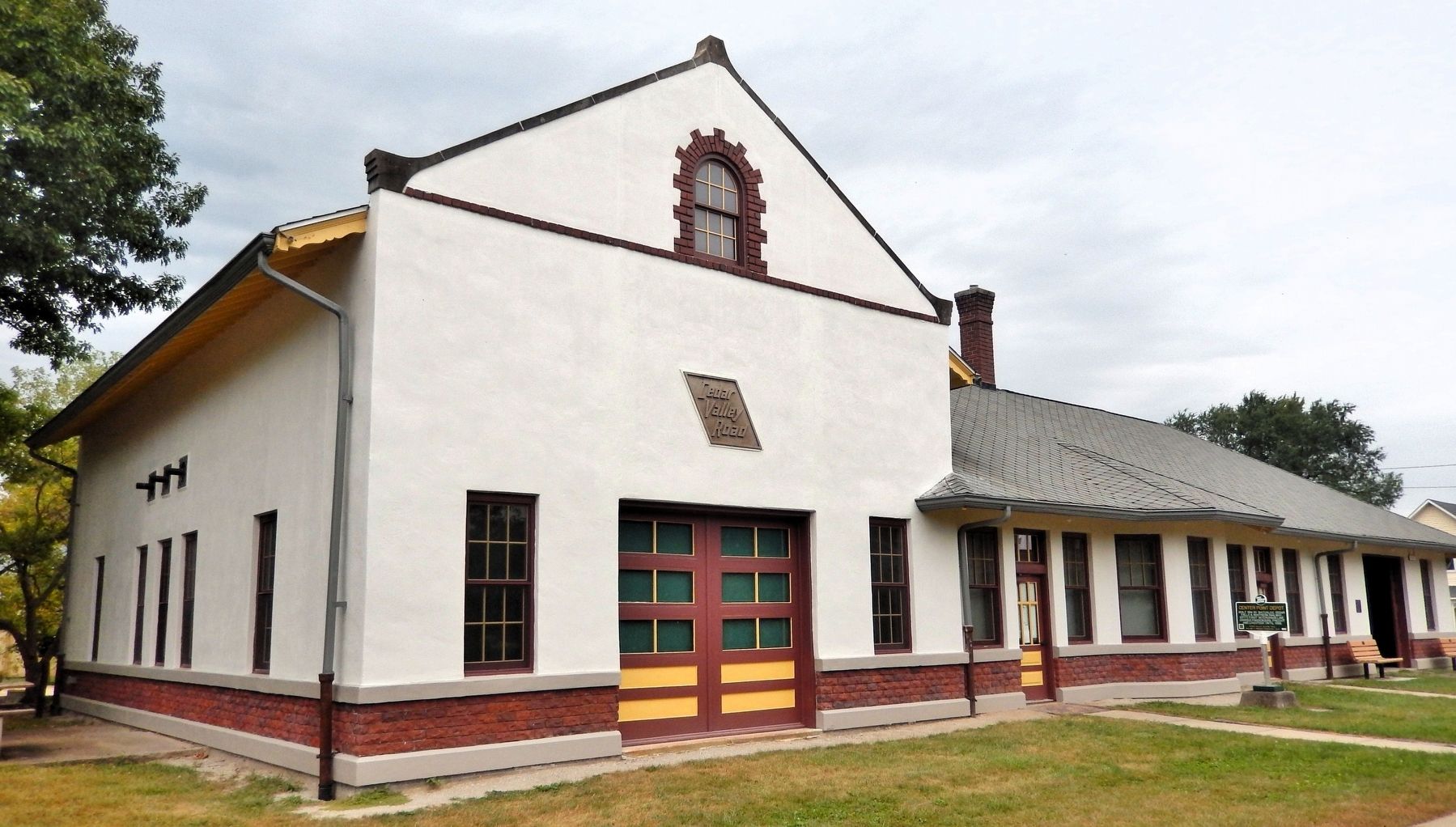
The Center Point depot is distinguished by a two-story, front-gabled substation room that occupies the south end of the building. The ticket office/waiting room was in the center section of the one-story, hip-roofed section on the north side of the substation. The freight warehouse occupied the north end of the one-story, hip-roofed section. The walls are built of tile blocks that are stuccoed on the exteriorand painted white. The water table level of the exterior wall is faced with rough-faced, dark red vitrified bricks, with the brick section capped with a concrete course and having a concrete footer to shed water away from the concrete foundation. There is no basement in this building but there is a crawlspace under all but the substation portion of the building. There are several windows with window wells for the crawlspace. The architectural style of the Center Point Depot reflects influence from the Mission style and the Prairie/Craftsman styles of architecture, all popular in the early 20th century. Most of the WCF&N depots built around the same time were more influenced by the Prairie/Craftsman styles, with the Center Point Depot being notable for its Mission influence. This is seen in the raised shaped parapets, the round-arched windows, and the stuccoed exterior.Photographed by Cosmos Mariner, September 18, 20252. Waterloo, Cedar Falls and Northern Center Point Depot MarkerThe marker is on the right side of the southwest corner station entrance. Today this building is home to the Center Point Historical Depot Museum.The depot in Center Point is one of only a few that still convey their historical association with the WCF&N, which was one of Iowa’s major interurban lines in the late 19th and early 20th centuries. The Waterloo, Cedar Falls and Northern (WCF&N) interurban rail line
(aka, the “Cedar Valley Road”) was an electric rail line that provided passenger and freight service between Cedar Rapids, Waterloo, Cedar Falls, and Waverly, Iowa. When completed, this line was considered among the better built interurban lines in the state and was called “a steam railroad with a trolley wire over it” because of the substantial nature of its construction. However, the construction of the interstate highway system in the mid-1950s quickly replaced the need for interurban rail transport, with Iowa’s cities now connected by an improved interstate and state highway system. Passenger service on the WCF&N was discontinued on February 20, 1956, in the wake of a major fire at the roundhouse in Waterloo two years prior. Freight service continued along the WCF&N, but by the mid-1950s, the freight tonnage transported along this line was in sharp decline.Photographed by Cosmos Mariner, September 18, 20253. Waterloo, Cedar Falls and Northern Center Point DepotLooking southeast from Washington Street.The WCF&N interurban line was reorganized as the Waterloo Railway in 1958 by the Chicago, Rock Island and Pacific and the Illinois Central railroads. The Waterloo line was fully integrated into the Illinois Central system in 1970 and continued to haul freight until the line was
abandoned in 1973 and the tracks subsequently removed. The abandoned rail line was later developed into the Cedar Valley Nature Trail, which stretches from Cedar Rapids to Waterloo and is also part of the American Discovery Trail System.Photographed by Cosmos Mariner, September 18, 20254. Waterloo, Cedar Falls and Northern Center Point DepotLooking southwest from Washington Street.
Related markers. Click here for a list of markers that are related to this marker. Center Point Depot
Also see . . . WCF&N Center Point Depot and Substation (Wikipedia).
Excerpt: The Mission Revival building was constructed in 1914 by the Waterloo, Cedar Falls and Northern Railway, an interurban line that ran between the Waterloo – Cedar Falls area and Cedar Rapids. Passenger service ended here in 1956, and rail freight was discontinued in 1973. The station sat empty until it was renovated beginning in 1983. Other renovation projects were carried out 1998 to 1999 and 2013. The building was acquired by the Linn County Conservation Board in the early 1980s and turned into a museum and rest stop along the Cedar Valley Nature Trail, which follows the former rail bed. The building was listed on the National Register of Historic Places in 2018.(Submitted on August 25, 2026, by Cosmos Mariner of Cape Canaveral, Florida.)
The Center Point substation originally housed two 650-volt, 500kv, 500-rpm Allis-Chalmer’s rotary converters, which were mounted on two wooden blocks. The main powerhouse was in western Waterloo and generated the electrical power which was transmitted over the high-tension lines to the various interurban stations. An alternating current (AC) was produced by the powerhouse. The AC current was converted to direct current (DC) at each of the substations along the route.
Credits. This page was last revised on August 25, 2026. It was originally submitted on August 24, 2026, by Cosmos Mariner of Cape Canaveral, Florida. This page has been viewed 25 times since then. Photos: 1, 2, 3, 4, 5. submitted on August 25, 2026, by Cosmos Mariner of Cape Canaveral, Florida.
