Stevens Seminary Bell
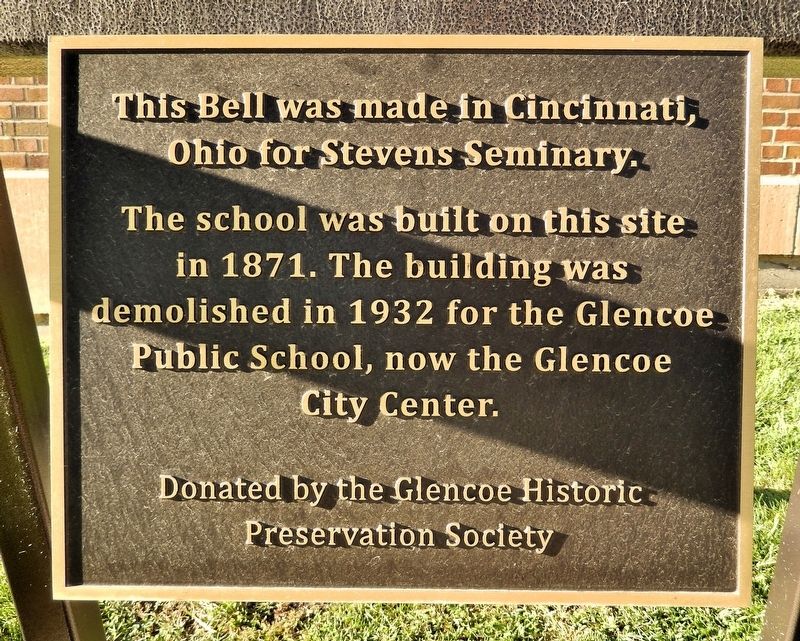
This Bell was made in Cincinnati, Ohio for Stevens Seminary.
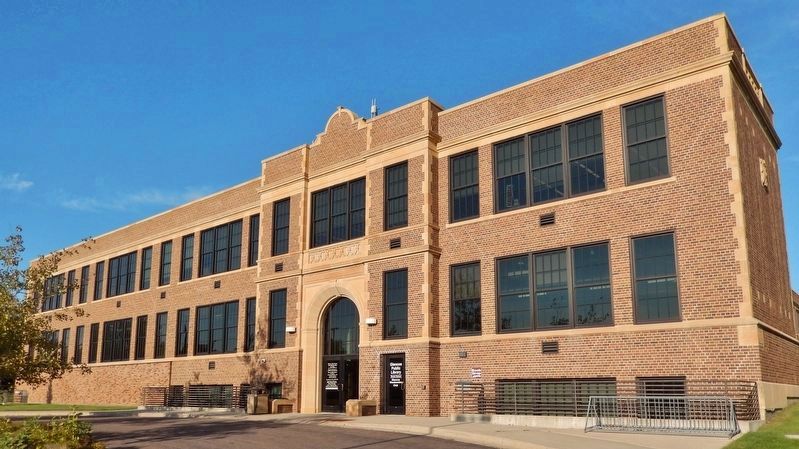
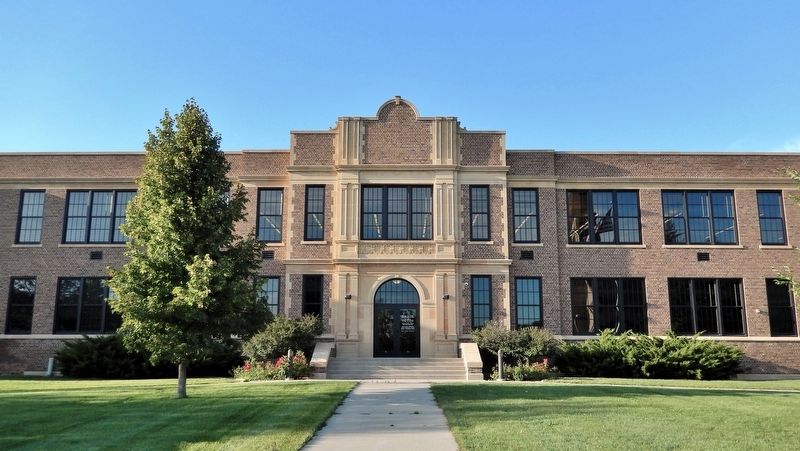
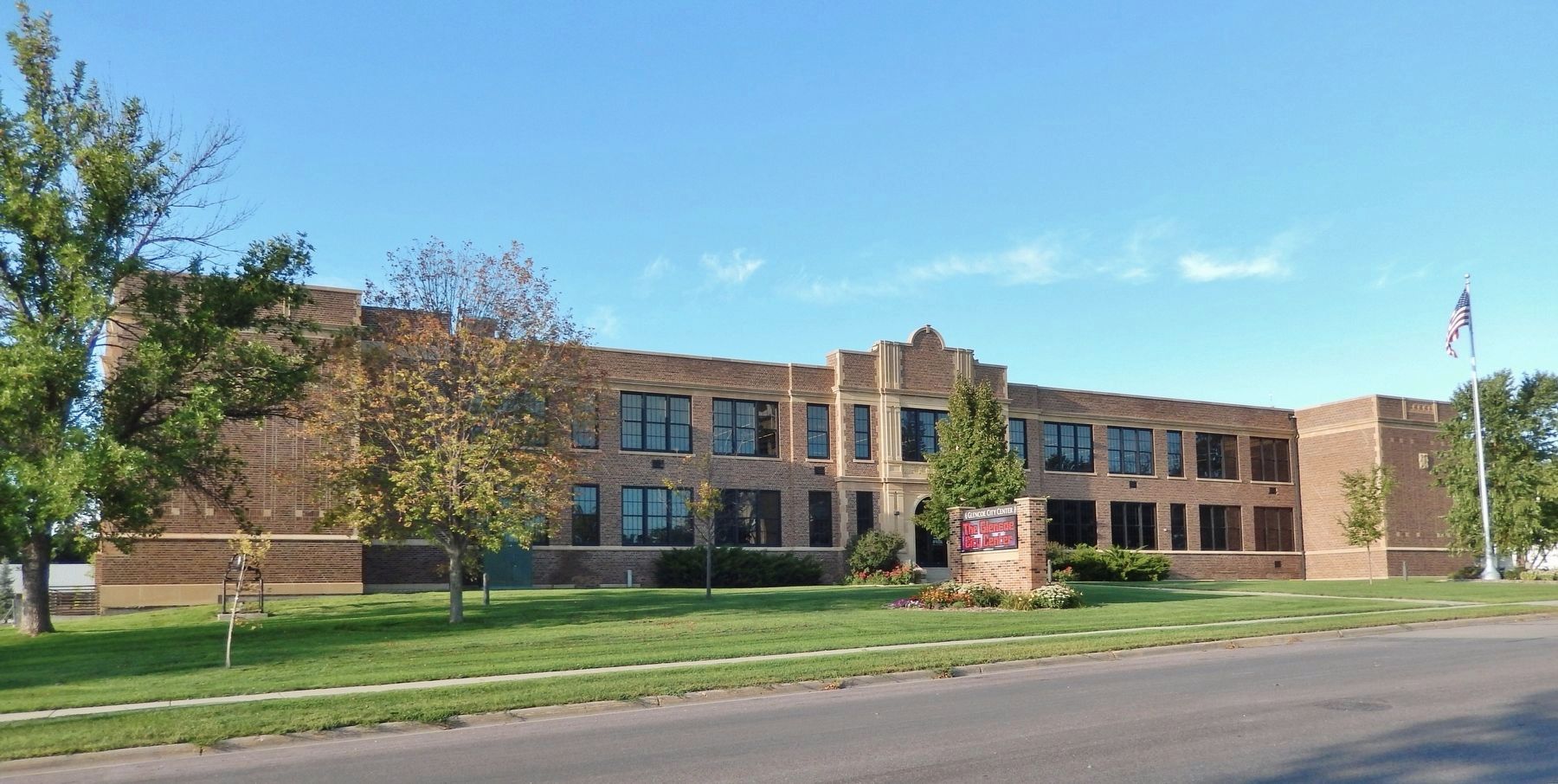
The school was built on this site in 1871. The building was demolished in 1932 for the Glencoe Public School, now the Glencoe City Center.
Donated by the Glencoe Historic Preservation Society
Topics and series. This historical marker is listed in these topic lists: Architecture • Education. In addition, it is included in the National Register of Historic Places (NRHP) series list. A significant historical year for this entry is 1871.
Location. 44° 46.223′ N, 94° 8.893′ W. Marker is in Glencoe, Minnesota, in McLeod County. It is on 11th Street East 0.1 miles east of Ives Avenue North, on the left when traveling east. The bell and marker are near the southwest corner of the Glencoe City Center, facing 11th Street East. Touch for map. Marker is at or near this postal address: 1107 11th Street East, Glencoe MN 55336, United States of America. Touch for directions.

Regionally, this marker is in Southwest Minnesota. It is also in the American Midwest and in the Corn Belt. Globally, it is in North America, the Western Hemisphere, the Western World, and the Anglosphere.
this page online
Other nearby markers. At least 5 other markers are within 10 miles of this marker, measured as the crow flies: Colonel John H. Stevens / Honorable Henry Hill (within shouting distance of this marker); Glencoe Veterans Memorial (approx. 0.8 miles away); Lester Prairie Veterans Memorial (approx. 9½ miles away); Silver Lake Auditorium (approx. 9½ miles away); St Joseph's Church and School (approx. 9.6 miles away).
Regarding Stevens Seminary Bell. The Glencoe Public School (Glencoe Grade and High School) is listed on the National Register of Historic Places — № 12000872.
From the National Register Nomination prepared by Daniel J. Hoisington, June 2012:
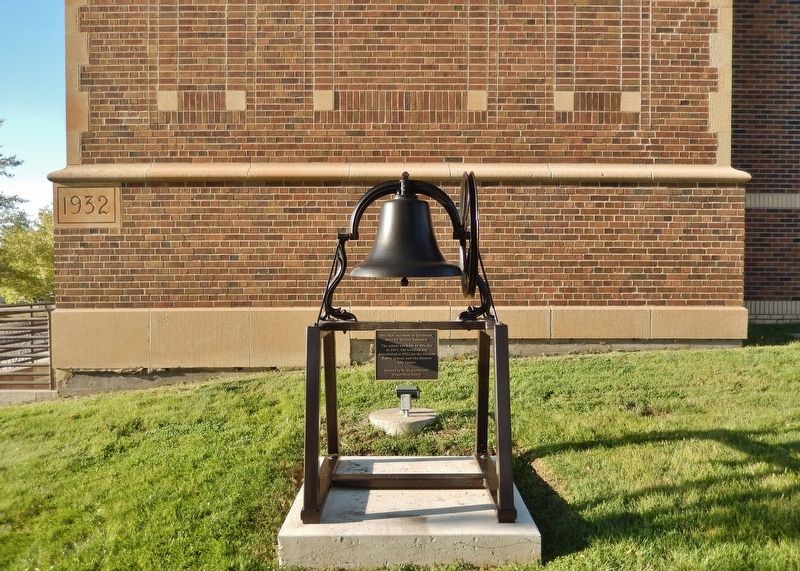
Glencoe was settled in 1855, with John Harrington Stevens as its leading citizen. Following the election of John Stevens to the state legislature in 1856, he strongly promoted the establishment of a new agricultural college in Glencoe. His bill was signed into law in March 1858. Although the citizens of McLeod County raised more than $10,000,a severe recession, and then the Civil War, brought the project to a halt. In 1871, the Stevens Seminary, a white, wood-framed school building, used for public school classes, was erected on the site of the present building, with a substantial addition completed in 1877.Photographed by Cosmos Mariner, September 7, 20232. Stevens Seminary Bell and MarkerThe bell and marker are on exhibit beside the southwest corner of the Glencoe City Center (formerly the Glencoe Public School).As early as 1922, city leaders began a campaign for a new public school. In 1931, the school board began its search for an architect. After interviewing fourteen different firms, the committee visited surrounding towns, then finally selected the firm of George Pass and Son and P. T. Rockey of Mankato. On January 29, 1932, voters streamed to the polls in near record numbers, in spite of a blizzard, and overwhelmingly supported building the new school on the former seminary site.
When the building opened, the community was proud of its new building, having financed it through a decade-long sinking fund savings plan. The formal dedication, on January 30, 1933, was a moment of civic pride. The school’s primary purpose was the education of the youth of Glencoe. Between 1933 and 1954, every public school student from kindergarten through twelfth grade attended here. Enrollment
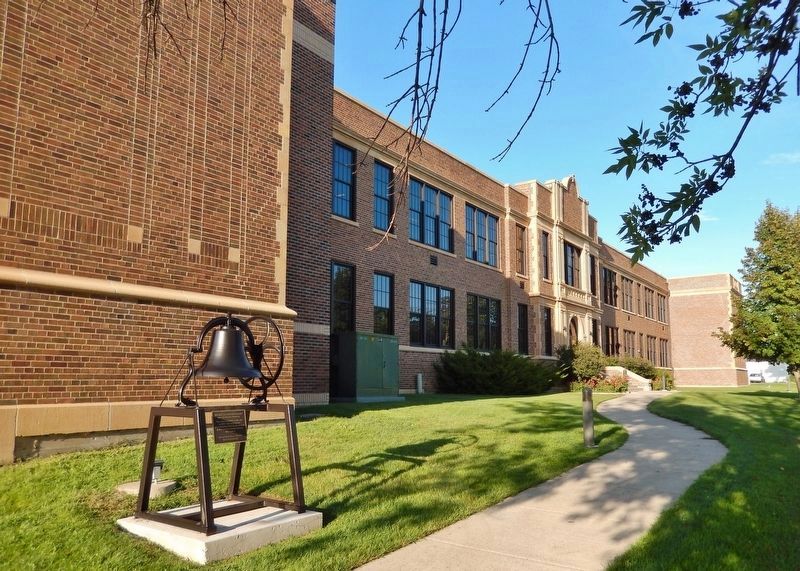
might vary, but a typical year (1948) shows 180 elementary grade students, 156 junior high pupils, and 263 high schoolers. The school was well equipped for the needs of the community, with an industrial arts department, an agriculture division, and a teacher training department. The gracious auditorium/gymnasium played host to dozens of school plays and sporting events. The Glencoe Grade and High School stood at the center of community life. It became part of the town’s daily rhythm of life — classes, sporting events, parent-teacher conferences, school plays and concerts. Several generations of young people received instruction and training, preparing them for active roles as adults. The school also proved to be the conduit for a host of social programs, aimed not just at children, but at adults as well. These ranged from agricultural extension classes that taught cooking to public health programs on childcare and public health.Photographed by Cosmos Mariner, September 7, 20233. Glencoe City CenterIn October 1952, voters approved the purchase of land for a new school by a 2-1 majority. This was followed by approval of a $525,000 bond issue in December. The Helen Baker School opened in September 1954.
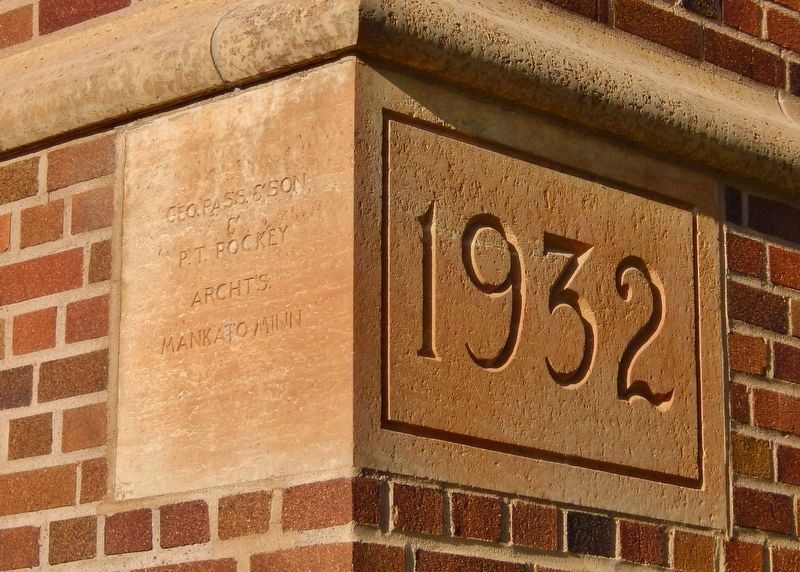
The Glencoe School was now used for Junior and Senior High School. Even with the additional space freed by the move of the elementary grades, the school remained too crowded. In 1970, a new high school was built, and this building became the district’s middle school, known as the Henry Hill Intermediate School, serving grades five through eight. After the Glencoe school system merged with the Silver Lake system in 1996, the school district began to look for a newer facility, moving out of this building in 2002. In 2009, the city undertook a major renovation of the school, converting it into municipal offices, event center, public library, and space for many community organizations such as the Glencoe Historical Society and the Glencoe Chamber of Commerce.Photographed by Cosmos Mariner, September 7, 20234. Glencoe City Center CornerstoneGeorge Pass and Son and P. T. Rockey Architects
Mankato, Minnesota
1932
Related markers. Click here for a list of markers that are related to this marker.
Also see . . .
1. Glencoe Grade and High School (U.S. Historic Places).
Excerpt: Glencoe Grade and High School in Glencoe, Minnesota, is a historic building listed on the National Register of Historic Places in 2012. It is significant for its contributions to education and social(Submitted on August 29, 2026, by Cosmos Mariner of Cape Canaveral, Florida.)history in the area. The school reflects the community's commitment to education and has served as an important institution in Glencoe.Photographed by Cosmos Mariner, September 7, 20235. Glencoe City Center
2. Stevens Seminary (McLeod County Museum of History). (Submitted on August 29, 2026, by Cosmos Mariner of Cape Canaveral, Florida.)
Credits. This page was last revised on September 2, 2026. It was originally submitted on August 27, 2026, by Cosmos Mariner of Cape Canaveral, Florida. This page has been viewed 23 times since then. Photos: 1, 2, 3, 4, 5, 6. submitted on August 28, 2026, by Cosmos Mariner of Cape Canaveral, Florida. 7. submitted on August 29, 2026, by Cosmos Mariner of Cape Canaveral, Florida.
