Regierungsvierte in Berlin in Mitte, Germany — Northeast German Plain (The European Plain)
Das Verlagshaus Rudolf Mosse
⎯⎯⎯
The Rudolf Mosse Publishing House
Photographed by James Hulse, March 6, 2026
1. Das Verlagshaus Rudolf Mosse / The Rudolf Mosse Publishing House Marker

Das Verlagshaus Rudolf Mosse
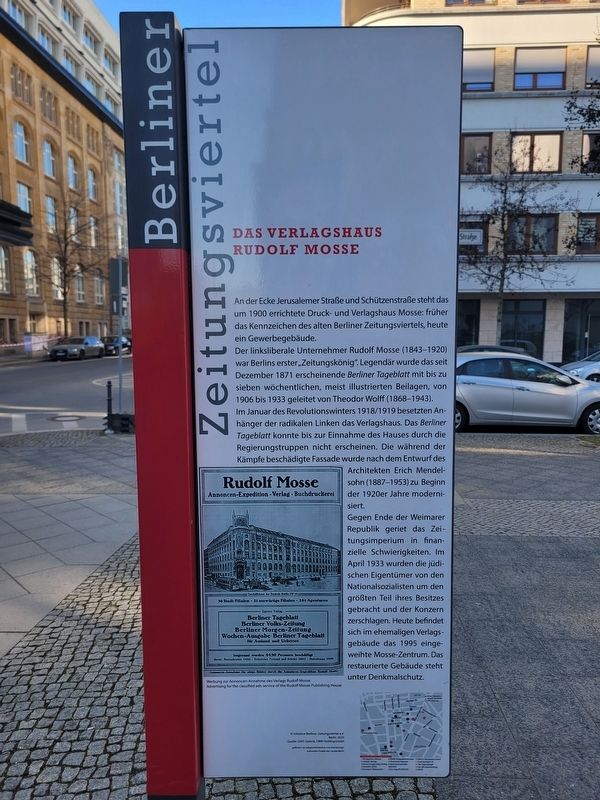
An der Ecke Jerusalemer Straße und Schützenstraße steht das um 1900 errichtete Druck- und Verlagshaus Mosse: früher das Kennzeichen des alten Berliner Zeitungsviertels, heute ein Gewerbegebäude.
Der linksliberale Unternehmer Rudolf Mosse (1843–1920) war Berlins erster „Zeitungskönig“. Legendär wurde das seit Dezember 1871 erscheinende Berliner Tageblatt mit bis zu sieben wöchentlichen, meist illustrierten Beilagen, von 1906 bis 1933 geleitet von Theodor Wolff (1868–1943).
Im Januar des Revolutionswinters 1918/1919 besetzten Anhänger der radikalen Linken das Verlagshaus. Das Berliner Tageblatt konnte bis zur Einnahme des Hauses durch die Regierungstruppen nicht erscheinen. Die während der Kämpfe beschädigte Fassade wurde nach dem Entwurf des Architekten Erich Mendelsohn (1887–1953) zu Beginn der 1920er Jahre modernisiert.
Gegen Ende der Weimarer Republik geriet das Zeitungsimperium in finanzielle Schwierigkeiten. Im April 1933 wurden die jüdischen Eigentümer von den Nationalsozialisten um den größten Teil ihres Besitzes gebracht und der Konzern zerschlagen. Heute befindet sich im ehemaligen
this page online
Werbung zur Annoncen-Annahme des Verlags Rudolf Mosse
Schäden am Verlagshaus Mosse nach den Januarkämpfen 1919
The Rudolf Mosse Publishing House
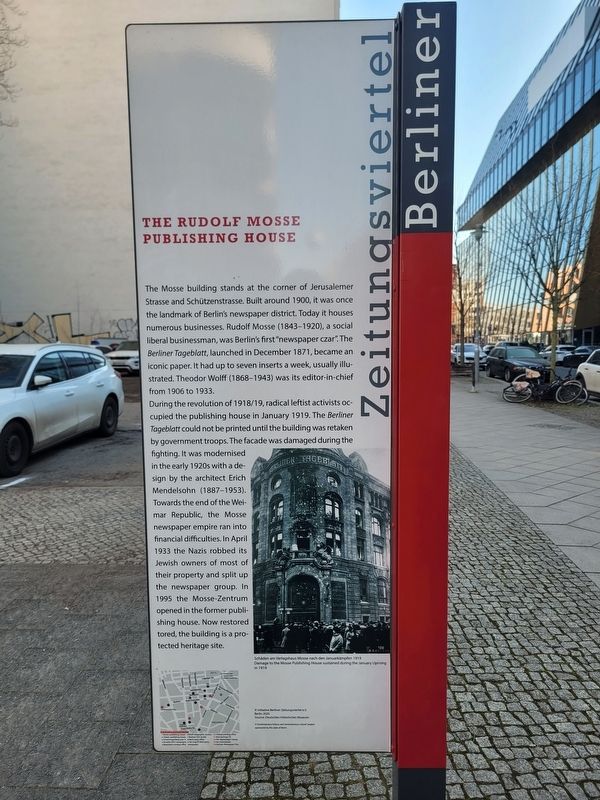
The Mosse building stands at the corner of Jerusalemer Strasse and Schützenstrasse. Built around 1900, it was once the landmark of Berlin’s newspaper district. Today it houses numerous businesses. Rudolf Mosse (1843–1920), a social liberal businessman, was Berlin’s first “newspaper czar.” The Berliner Tageblatt, launched in December 1871, became an iconic paper. It had up to seven inserts a week, usually illustrated. Theodor Wolff (1868–1943) was its editor-in-chief from 1906 to 1933.
During the revolution of 1918/19, radical leftist activists occupied the publishing house in January 1919. The Berliner Tageblatt could not be printed until the building was retaken by government troops. The facade was damaged during the fighting. It was modernised in the early 1920s with a design by the architect Erich Mendelsohn (1887–1953).
Towards the end of the Weimar Republic,
Photographed by James Hulse, March 6, 2026
2. Das Verlagshaus Rudolf Mosse / The Rudolf Mosse Publishing House Marker
Advertising for the classified ads service of the Rudolf Mosse Publishing House
Damage to the Mosse Publishing House sustained during the January Uprising in 1919
Erected 2020 by Initiative Berliner Zeitungsviertel e.V. and the State of Berlin.
Topics. This historical marker is listed in this topic list: Notable Buildings. A significant historical month for this entry is January 1919.
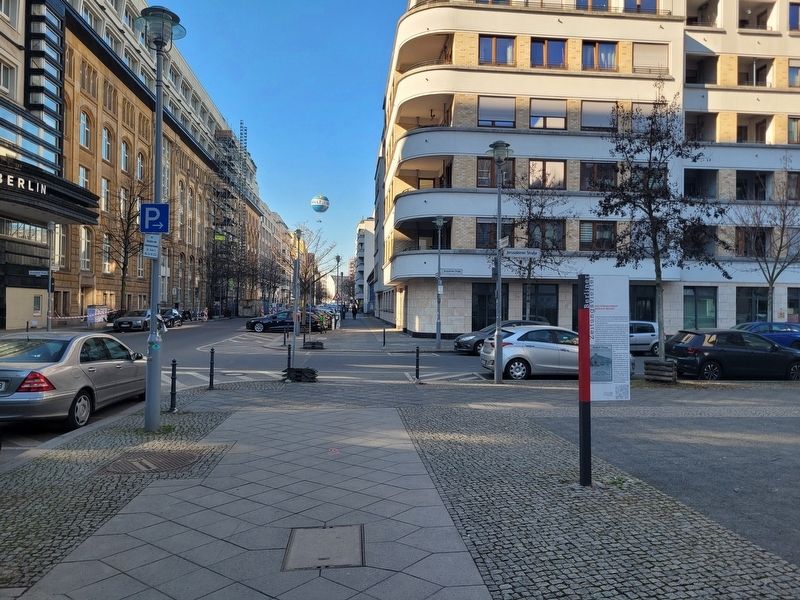
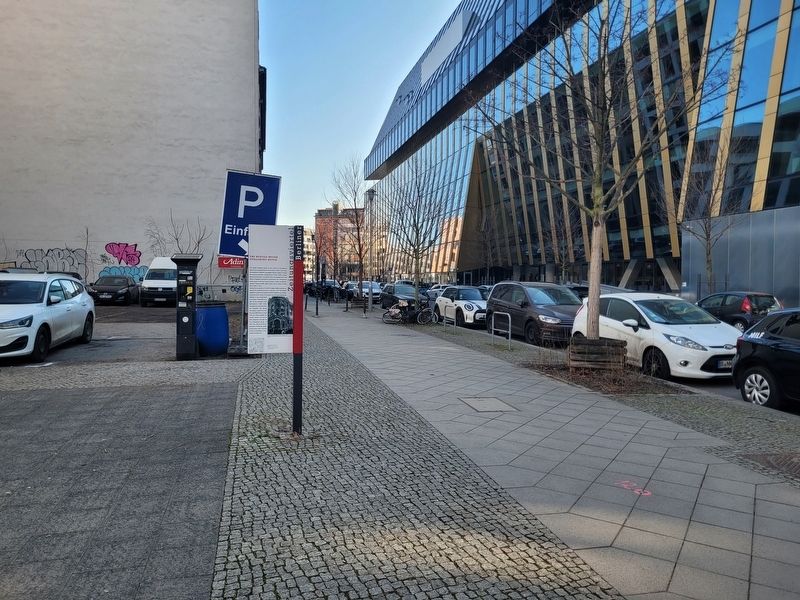
Location. 52° 30.546′ N, 13° 23.836′ E. Marker is in Berlin, in Mitte. It is in Regierungsvierte. It is at the intersection of Schützenstraße and Jerusalemer Str., on the right when traveling west on Schützenstraße. Touch for map. Marker is at or near this postal address: Schützenstraße 49, Berlin 10117, Germany. Touch for directions.

Regionally, it is in Europe, the European Union, Atlantic Europe, Central Europe, the Schengen Area, Western Europe, and the Western
Photographed by James Hulse, March 6, 2026
3. Das Verlagshaus Rudolf Mosse / The Rudolf Mosse Publishing House Marker
Other nearby markers. At least 8 other markers are within walking distance of this marker: Ruth Käthe Roth (within shouting distance of this marker); Kurt Roth (within shouting distance of this marker); Ludwig Roth (within shouting distance of this marker); Zimmerstrasse (about 120 meters away, measured in a direct line); „Balanceakt“ von Stephan Balkenhol / „Balancing Act“ by Stephan Balkenhol (about 150 meters away); Siegbert Rotholz (about 180 meters away); Lotte Rotholz (about 180 meters away); Außenansicht der Synagoge Lindenstraße / Exterior view of the Synagogue on Lindenstraße (about 180 meters away). Touch for a list and map of all markers in Berlin.
Photographed by James Hulse, March 6, 2026
4. Das Verlagshaus Rudolf Mosse / The Rudolf Mosse Publishing House Marker
Credits. This page was last revised on August 30, 2026. It was originally submitted on August 30, 2026, by James Hulse of Medina, Texas. This page has been viewed 10 times since then. Photos: 1, 2, 3, 4. submitted on August 30, 2026, by James Hulse of Medina, Texas.
