
Fort Frances in Rainy River District, Ontario — Central Canada (North America)
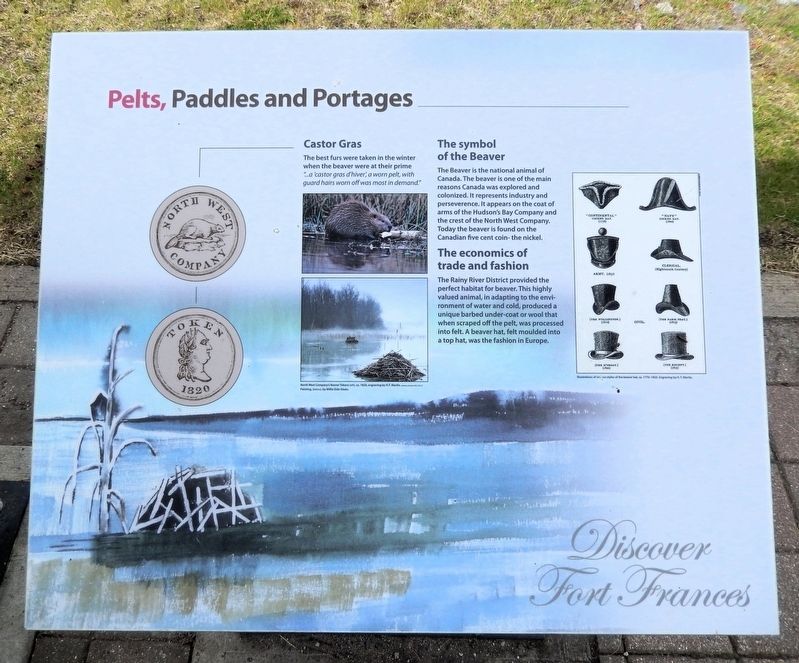
Pelts, Paddles and Portages
| — | Discover Fort Frances | — |
Photographed by Cosmos Mariner, June 17, 2024
1. Pelts, Paddles and Portages Marker
Castor Gras
The best furs were taken in the winter when the beaver were at their prime “…a ‘castor gras d'hiver’, a worn pelt, with guard hairs worn off was most in demand.”
The symbol of the Beaver
The Beaver is the national animal of Canada. The beaver is one of the main reasons Canada was explored and colonized. It represents industry and perseverance. It appears on the coat of arms of the Hudson's Bay Company and the crest of the North West Company. Today the beaver is found on the Canadian five cent coin — the nickel.
The economics of trade and fashion
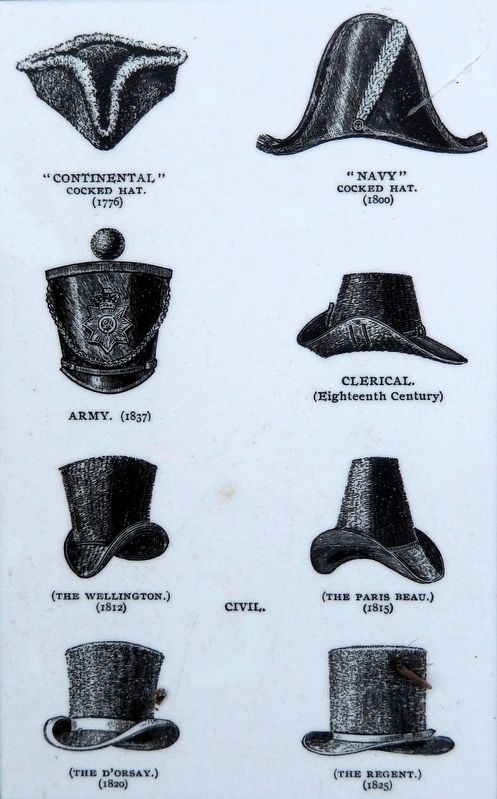
The Rainy River District provided the perfect habitat for beaver. This highly valued animal, in adapting to the environment of water and cold, produced a unique barbed under-coat or wool that when scraped off the pelt, was processed into felt. A beaver hat, felt moulded into a top hat, was the fashion in Europe.
[background image caption] Painting by Millie Elde Gladu.
Topics. This historical marker is listed in these topic lists: Animals • Industry & Commerce.
Location. 48° 36.783′ N, 93° 22.06′ W. Marker is in Fort
this page online

Regionally, this marker is in Northern Ontario and specifically in Northwest Ontario. It is also in Central Canada. Globally, it is in North America, the Great North Woods, the Western Hemisphere, the Western World, and the Anglosphere. Historically, it finds itself in what was once a British colony, the Viceroyalty of New France, the Haudenosaunee (Iroquois) Confederacy, and Rupert’s Land.
Other nearby markers. At least 8 other markers are within walking distance of this marker: Explore Fort Frances East (here, next to this marker); Establishing the Fur Trade (about 240 meters away, measured in a direct line); a different marker also named Pelts, Paddles and Portages (about 240 meters away);
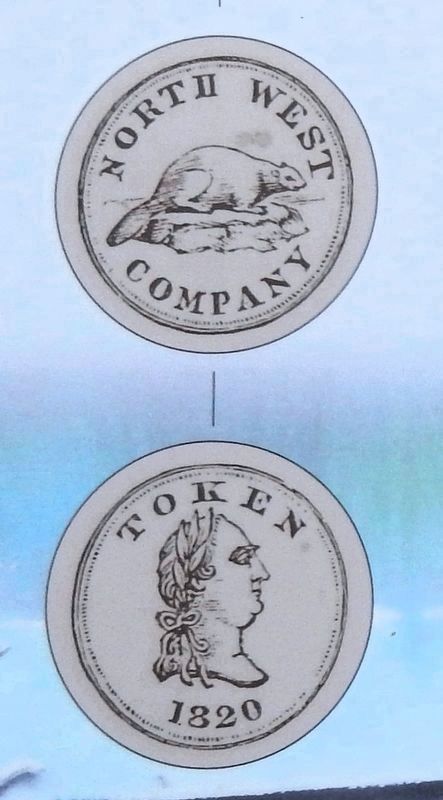
Courtesy Glenbow Museum NA-1532-3
2. Marker detail: North West Company’s Beaver Tokens
ca.1820. Engraving by H.T. Martin.
Also see . . . Beaver Tales (Canada's History).
(by Nicholas Hamilton, October 30, 2024) Excerpt: Before poutine, maple syrup, or even hockey became synonymous with Canada, there was the beaver. Those tree-felling, dambuilding rodents have helped to shape the environment, culture, and history of modern Canada, but their importance stretches much further back, to the country’s Indigenous peoples and European settlers.(Submitted on September 5, 2026, by Cosmos Mariner of Cape Canaveral, Florida.)For centuries, people have admired beavers for their construction skills. The dams and lodges that they build make it easy to see why the animal became a symbol of wisdom and industriousness. But it was the beaver’s waterproof pelt that caught the eye of early European explorers who, having depleted their own beaver populations to meet
the demand for top hats, realized that they’d found a fresh supply. The resulting profits became a driving force for the European colonization of the land that would become Canada. The fur trade nearly drove the beaver to extinction, but, thanks to conservation efforts and the decline in the popularity of beaver-felt hats, the animal has since made a comeback.Courtesy Glenbow Museum NA-1532-43. Marker detail: Beaver Hat StylesIllustrations of various styles of the beaver hat, ca. 1776-1825. Engraving by H.T. Martin.And so, after a long relationship with the beaver, Canada decided to make things official in March 1975 with the National Symbol of Canada Act.
Photographed by Cosmos Mariner, June 17, 2024
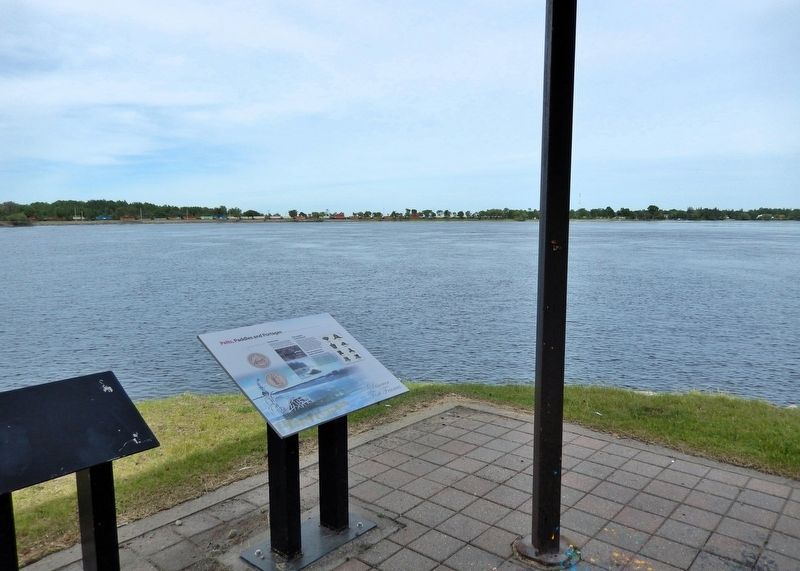
4. Pelts, Paddles and Portages Marker
Looking northeast across the Rainy River. This interpretive panel is near the northeast corner of the picnic shelter.
Credits. This page was last revised on September 5, 2026. It was originally submitted on September 3, 2026, by Cosmos Mariner of Cape Canaveral, Florida. This page has been viewed 8 times since then. Photos: 1, 2, 3, 4. submitted on September 5, 2026, by Cosmos Mariner of Cape Canaveral, Florida.
