Melbourne Arts Precinct , Victoria, Australia — Oceania
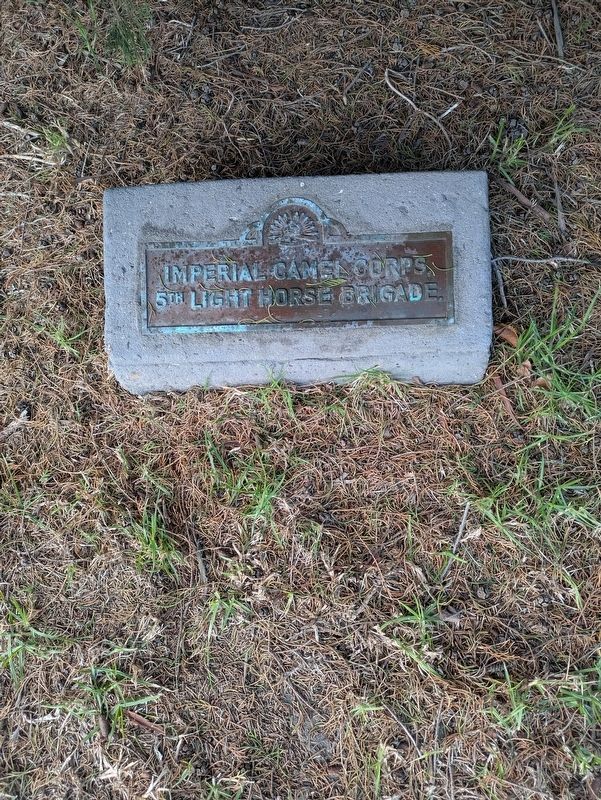
Imperial Camel Corps
| — | Shrine of Remembrance | — |
Photographed by Dean Barton-Ancliffe, July 23, 2026
1. Imperial Camel Corps Marker
5th Light Horse Brigade
Erected by Australian Defence Forces.
Topics. This memorial is listed in this topic list: War, World I.
Location. 37° 49.63′ S, 144° 58.32′ E. Memorial is in Melbourne, Victoria. It is in Melbourne Arts Precinct. It can be reached from Saint Kilda Road 0.1 kilometers south of Anzac Avenue. Touch for map. Memorial is at or near this postal address: 100 Birdwood Avenue, Melbourne VIC 3004, Australia. Touch for directions.

Regionally, it is in Oceania, in Australasia, in the Pacific Ocean, in South Pacific, on the Pacific Rim, in the Western World, and in the Anglosphere. Historically, it finds itself in what was once a British colony.
Other nearby markers. At least 8 other markers are within walking distance of this marker: 13th Light Horse (a few steps from this marker); 3rd Cavalry Regiment (a few steps from this marker); Australian Light Horse Engineers (within shouting distance of this marker); 106th Tank Attack Regiment A.I.F. (within shouting distance of this marker); 5th Victorian Contingent Memorial (about
this page online
Also see . . . Imperial Camel Corps. Monument Australia
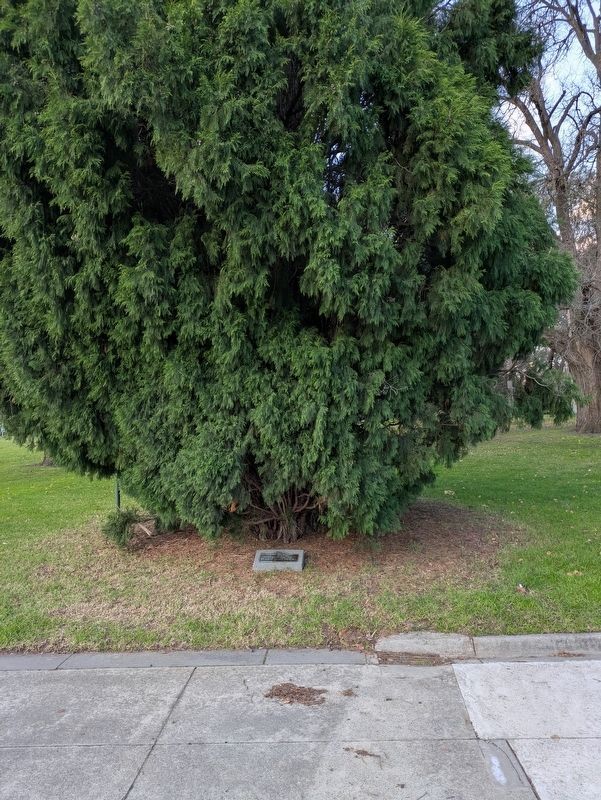
The tree commemorates the Imperial Camel Corps, 5th Light Horse Brigade which served during World War One. The tree was planted in 1934 by Captain J.R.Hall and was No.16 in the ballot.(Submitted on September 4, 2026, by Dean Barton-Ancliffe of Rowville, Victoria.)
One of the most picturesque ceremonies yet held at the Shrine of Remembrance will take place on Saturday, 4th August, when nearly 100 trees will be planted along the main approaches - on the city side. Each tree will represent a Victorian unit or association, and each will be planted by a representative of the unit concerned after a brief, address at 3 p.m. by the chairman of the shrine trustees (Sir H. Chauvel) at the intersection of the main approach and Government House drive. The position of the trees for each unit was selected by ballot.
Age (Melbourne), 24 July 1934.
The Imperial Camel Corps Brigade was formed in 1916 from Britishand Commonwealth troops and was attached to the Anzac Mounted Division. There were four regiments: the 1st and 3rd were Australian, the 2nd was British, and the 4th was a mix of New Zealanders and Australians. Each regiment had around 770 men, and at full strength the brigade contained almost 4,000 camels.Photographed by Dean Barton-Ancliffe, July 23, 20262. Imperial Camel Corps Marker at the 16th Tree
In 1917 the brigade took part in the fighting at Gaza and Beersheba in Palestine. By the following year the country’s harsh terrain had made the camels less effective than horses. No longer needed, the Australian cameleers were transferred to the light horse.
Credits. This page was last revised on September 5, 2026. It was originally submitted on September 4, 2026, by Dean Barton-Ancliffe of Rowville, Victoria. This page has been viewed 6 times since then. Photos: 1, 2. submitted on September 4, 2026, by Dean Barton-Ancliffe of Rowville, Victoria. • Andrew Ruppenstein was the editor who published this page.
