Melbourne Arts Precinct in Southbank in Melbourne, Victoria, Australia — Oceania
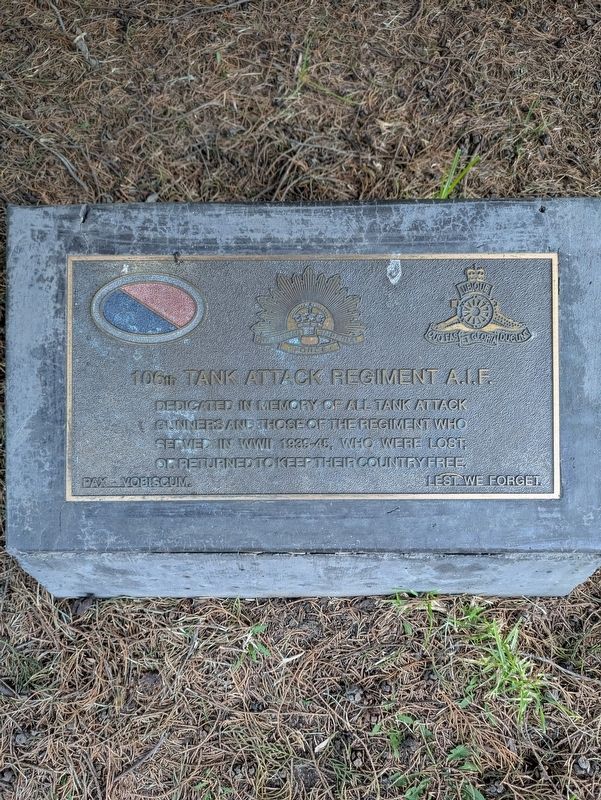
106th Tank Attack Regiment A.I.F.
| — | Shrine of Remembrance | — |
Photographed by Dean Barton-Ancliffe, July 23, 2026
1. 106th Tank Attack Regiment A.I.F. Marker
Dedicated in Memory of All Tank Attack
Gunners and those of the Regiment who
served in WWII 1939-45, who were lost,
or returned to keep their country free.
Pax - Vobiscum. Lest we Forget
Erected by Australian Imperial Force.
Topics. This memorial is listed in this topic list: War, World II.
Location. 37° 49.652′ S, 144° 58.32′ E. Memorial is in Southbank, Victoria, in Melbourne. It is in Melbourne Arts Precinct. It can be reached from St Kilda Road 0.1 kilometers south of Anzac Avenue. Touch for map. Memorial is at or near this postal address: 256 St Kilda Road, Southbank VIC 3006, Australia. Touch for directions.

Regionally, it is in Oceania, Australasia, the Pacific Ocean, South Pacific, the Pacific Rim, the Western World, and the Anglosphere. Historically, it finds itself in what was once a British colony.
Other nearby markers. At least 8 other markers are within walking distance of this marker: Australian Light Horse Engineers (a few steps from this marker); 3rd Cavalry Regiment (a few steps from this marker);
this page online
Also see . . . 106 Tank Attack Regiment Association. Shrine
The 106 Tank Attack Regiment was formed on 9 December 1941. During the Second World War they served in northern Australia and New Guinea, including at Buna, Lae and Medang.(Submitted on September 4, 2026, by Dean Barton-Ancliffe of Rowville, Victoria.)
They acted primarily as coastal defence to prevent enemy landings. On New Guinea they served under tough conditions – dengue fever and food poisoning were rife, and they were under constant threat of air raids.
The regiment was disbanded in late 1944 and its men were distributed to other units for the rest of the war.
Photographed by Dean Barton-Ancliffe, July 23, 2026
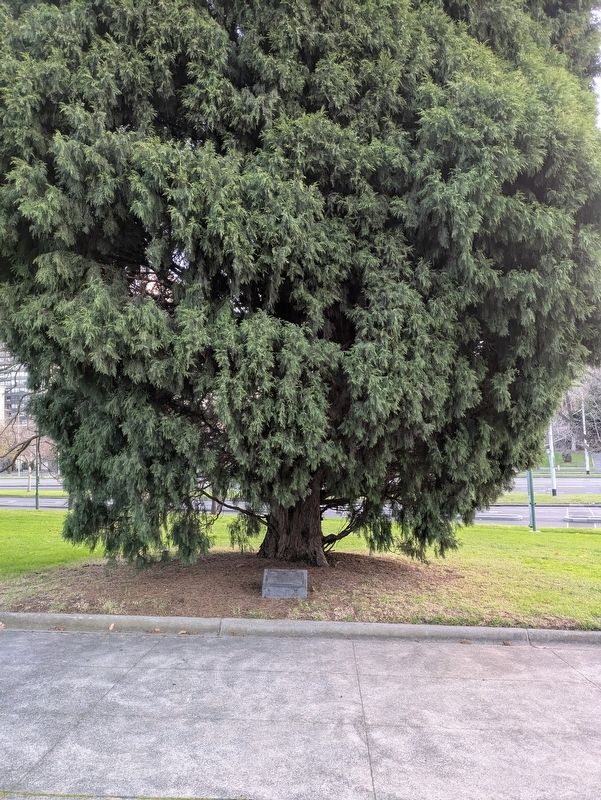
2. 106th Tank Attack Regiment A.I.F. Marker at the Tree
Credits. This page was last revised on September 5, 2026. It was originally submitted on September 4, 2026, by Dean Barton-Ancliffe of Rowville, Victoria. This page has been viewed 6 times since then. Photos: 1, 2. submitted on September 4, 2026, by Dean Barton-Ancliffe of Rowville, Victoria. • Andrew Ruppenstein was the editor who published this page.
