Allen in Collin County, Texas — The American South (West South Central)
Allen Colored School
Photographed by James Hulse, September 4, 2026
1. Allen Colored School Marker
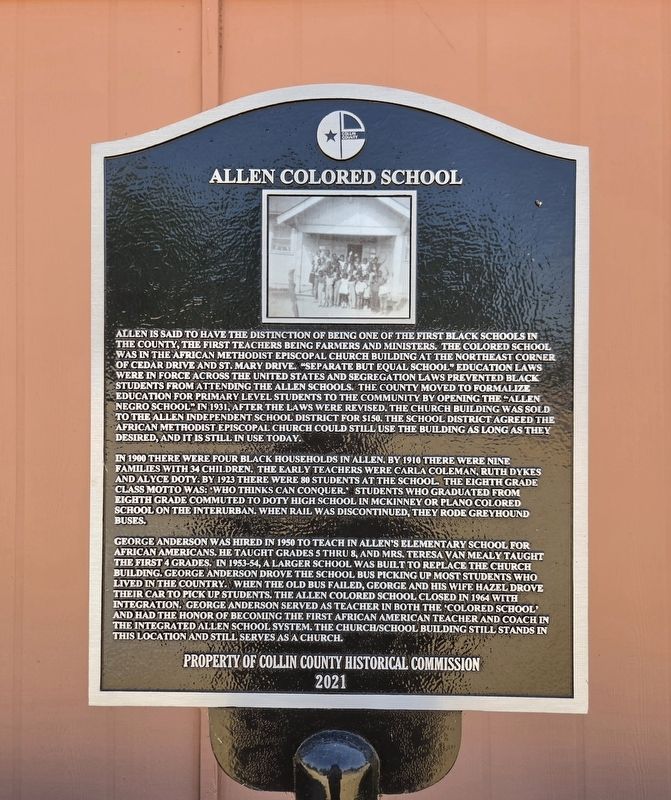
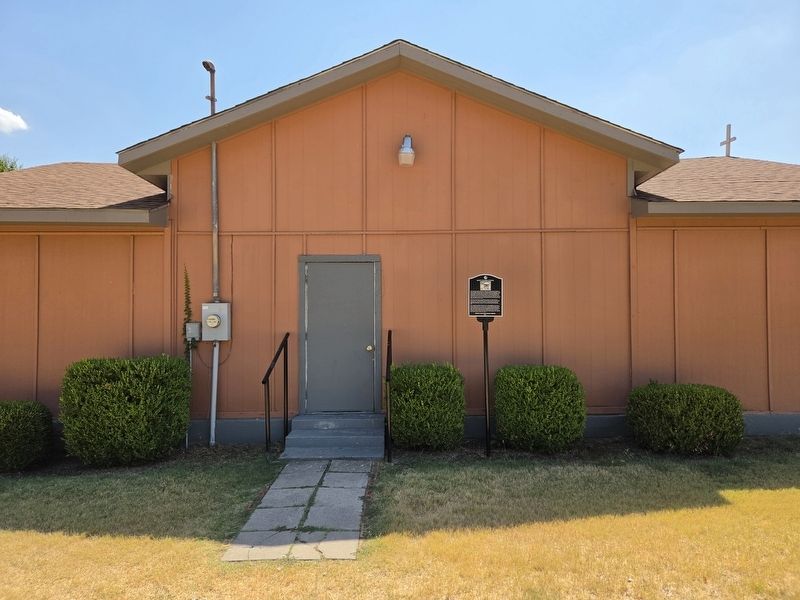
Allen is said to have the distinction of being one of the first black schools in the county, the first teachers being farmers and ministers. The colored school was in the African Methodist Episcopal Church building at the northeast corner of Cedar Drive and St. Mary Drive. “Separate but equal school” education laws were in force across the United States and segregation laws prevented black students from attending the Allen schools. The county moved to formalize education for primary level students to the community by opening the “Allen Negro School” in 1931, after the laws were revised. The church building was sold to the Allen Independent School District for $150. The school district agreed the African Methodist Episcopal Church could still use the building as long as they desired, and it is still in use today. In 1900 there were four black households in Allen. By 1910 there were nine families with 34 children. The early teachers were Carla Coleman, Ruth Dykes and Alyce Doty. By 1923 there were 80 students at the school. The eighth grade class motto was: “Who thinks can conquer.” Students who graduated from eighth grade
this page online
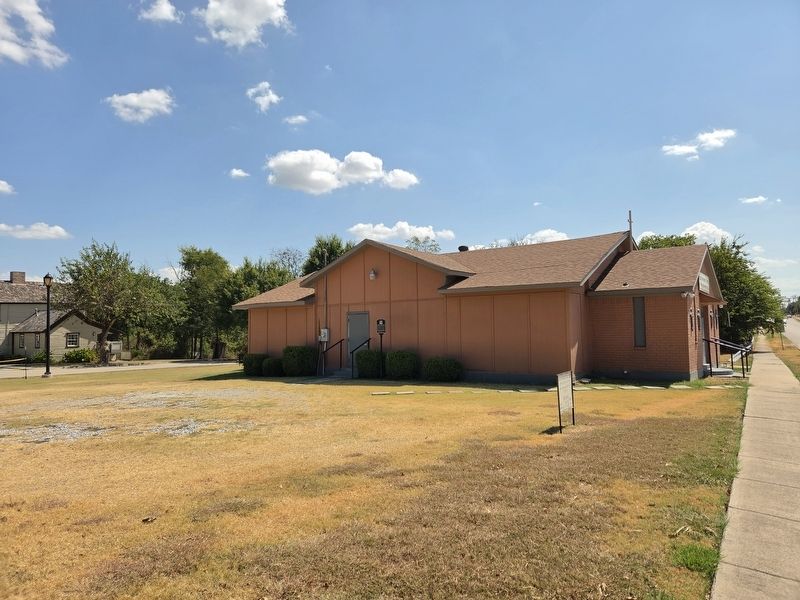
George Anderson was hired in 1950 to teach in Allen’s elementary school for African Americans. He taught grades 5 thru 8, and Mrs. Teresa Van Mealy taught the first 4 grades. In 1953-54, a larger school was built to replace the church building. George Anderson drove the school bus picking up most students who lived in the country. When the old bus failed, George and his wife Hazel drove their car to pick up students. The Allen Colored School closed in 1964 with integration. George Anderson served as teacher in both the “Colored School” and had the honor of becoming the first African American teacher and coach in the integrated Allen school system. The church/school building still stands in this location and still serves as a church.
Erected 2021 by Collin County Historical Commission.
Topics. This historical marker is listed in these topic lists: African Americans • Education. A significant historical year for this entry is 1931.
Location. 33° 6.345′ N, 96° 39.971′ W. Marker is in Allen,
Photographed by James Hulse, September 4, 2026
2. Allen Colored School Marker

Regionally, this marker is in the Prairies & Lakes Region and in the Dallas-Fort Worth Metropolitan Area. Globally, it is in North America, a Gulf of Mexico state, the Western Hemisphere, the Western World, and the Anglosphere. Historically, it finds itself in what was once New Spain, the Republic of Texas, one of the Confederate States of America, and the Antebellum South.
Other nearby markers. At least 8 other markers are within walking distance of this marker: Greater Moore’s Chapel (a few steps from this marker); Outhouse (within shouting distance of this marker); Westel or I-House (within shouting distance of this marker); Chicken Coop (within shouting distance of this marker); Kitchen Garden (within shouting distance of this marker); Lynge House (about 300 feet away, measured in a direct line); Allen Christian Church (about 300 feet away);
Photographed by James Hulse, September 4, 2026
3. Allen Colored School Marker
Credits. This page was last revised on September 5, 2026. It was originally submitted on September 5, 2026, by James Hulse of Medina, Texas. This page has been viewed 15 times since then. Photos: 1, 2, 3. submitted on September 5, 2026, by James Hulse of Medina, Texas.
