Gouda, South Holland, Netherlands — Northwestern Europe
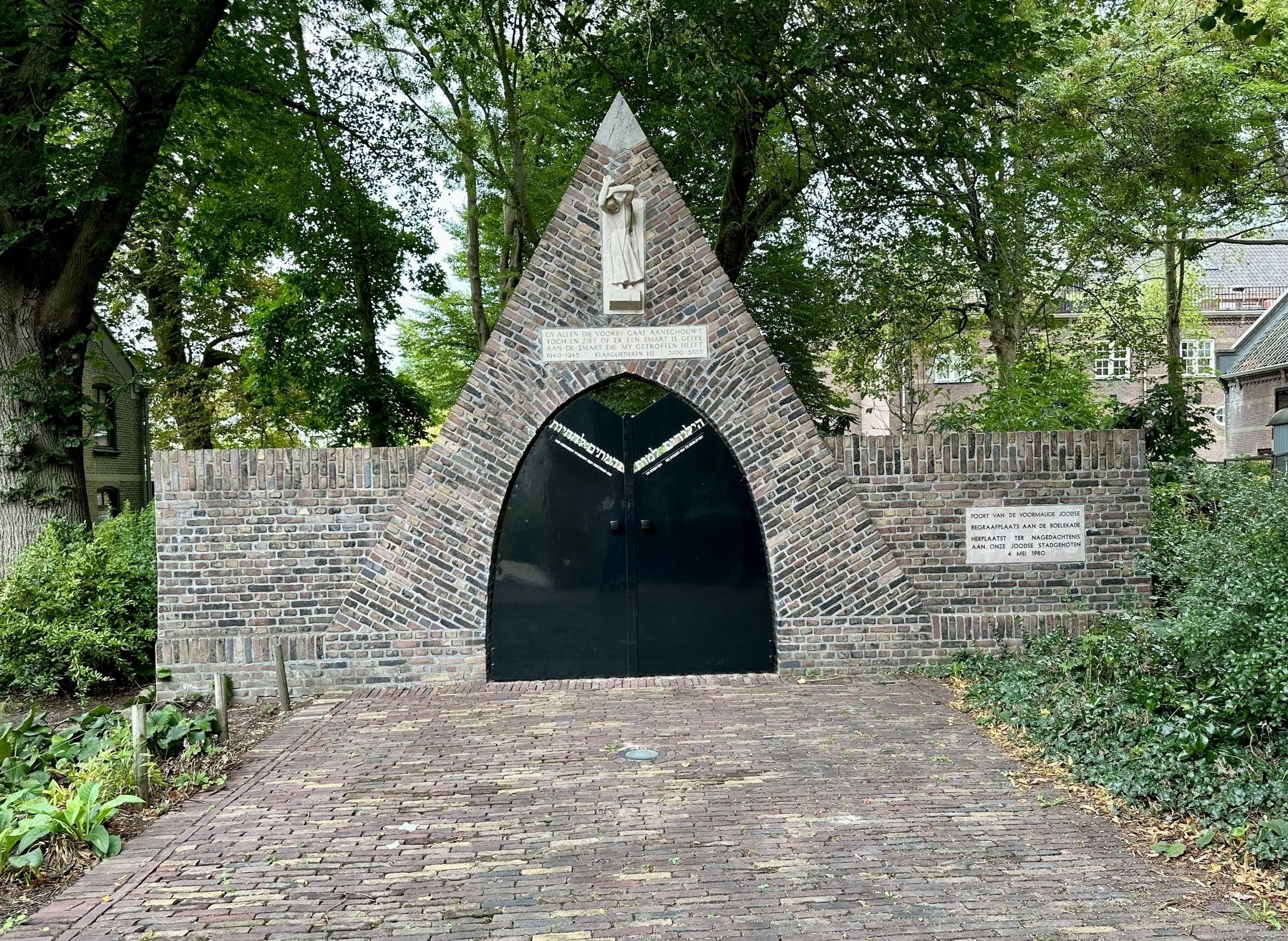
Het Joodse Poort - Gouda Holocaust Memorial
Photographed by Andrew Ruppenstein, September 2, 2026
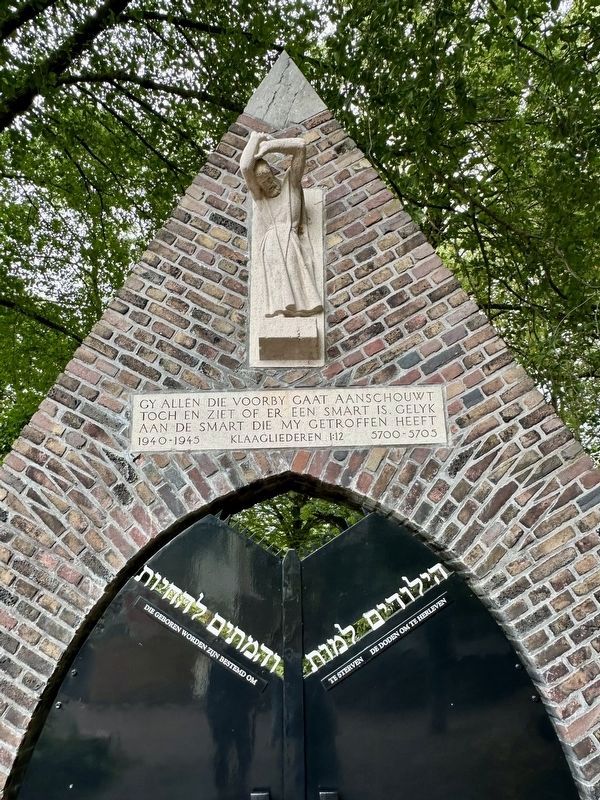
1. Gouda Holocaust Memorial - gate text

1940-1945 Klaagliederen 1:12 5700-5705
Die geboren worden zijn bestemd om te stervende doden om te herleven
והמתים להחיות והמתים להחיות
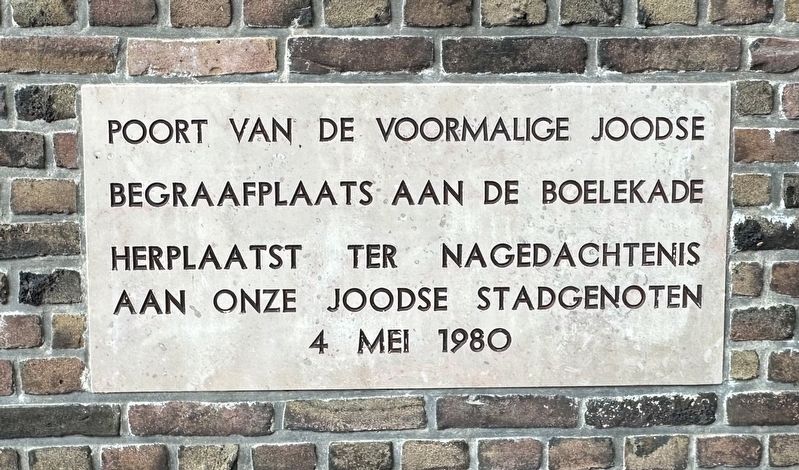
Poort van de voormalige joodse begraafplaats aan de Boelekade
Herplaatst ter nagedachtenis aan onze joodse stadgenoten
4 mei 1980
All you who pass by, look and see if there is any sorrow like the sorrow that has befallen me.
1940–1945 Lamentations 1:12 5700–5705
Those who are born are destined to die, and those who die are destined to be brought to life again.
Gate of the former Jewish cemetery on Boelekade. Relocated in memory of our Jewish fellow citizens.
4 May 1980
Erected 1980.
Topics and series. This memorial is listed in this topic list: War, World II. In addition, it is included in the The Holocaust series list.
Location. 52° 0.663′ N,
this page online

Regionally, it is in Europe, the European Union, Atlantic Europe, the Benelux Low Countries, the Schengen Area, Western Europe, and the Western World. Historically, it finds itself in what was once the Roman Empire and specifically also the Holy Roman Empire.
Other nearby markers. At least 8 other markers are within walking distance of this marker: Joods Poortje/Raoul Wallenbergplantsoen / Jewish Gate/Raoul Wallenberg Garden (here, next to this marker); Een Historische Plek / A Historic Location (a few steps from this marker); Ubi Bene, Ibi Patria (within shouting distance of this marker); Willem Vroesenhuis / William Vroesen House (within shouting distance of this marker); Weeshuis / Orphanage (within shouting distance of this marker); Arti Legi (about 150 meters away, measured in a direct
Photographed by Andrew Ruppenstein, September 2, 2026
2. Gouda Holocaust Memorial - wall text
Also see . . .
1. Joodse Monumenten en Gouda (Gouda Metaheerhuis, in Dutch). (Submitted on September 21, 2026, by Andrew Ruppenstein of Lamorinda, California.)
2. Gouda (Joods Cultureel Kwartier). Excerpt:
…The rolls of the Jewish community at Gouda were augmented in 1935 when the community at Woerden was merged into its ranks. The Jewish population of Gouda also increased during the first year of the German occupation of the Netherlands during the Second World War. In 1940, a number of the many foreign Jewish refugees who had taken up residence in the Netherlands arrived in Gouda following the mass expulsion by the Germans of foreign Jews from cities and towns in the coastal regions of the Netherlands.(Submitted on September 21, 2026.)
A separate school for Jewish children was established at Gouda following the Germans' wartime barring of Jewish pupils from the town's public schools. The school remained open until April of 1943 and the completion of the deportationof Jews from Gouda.Photographed by Andrew Ruppenstein, September 2, 20263. Het joodse poort - The Jewish GateThis gate once served as the entrance to the Jewish cemetery on Boelekade. Following the relocation of the remains in 1976, the gate was moved to Jeruzalemstraat to serve as a memorial. In 1960, the Jewish community added a memorial feature to the gate: a sculpted figure of a mourner accompanied by the text: "All you who pass by, behold and see if there is any sorrow like the sorrow that has befallen me 1940–1945 Lamentations 1:12 5700–5705." Below this, in Hebrew, is the inscription: "Those who are born are destined to die; the dead, to live again." - Gouda Metaheerhuis (in translation)
Deportations of Jews from Gouda commenced late in August of 1942. Local members of the Dutch collaborationist party NSB joined the Germans in implementing the deportations. Almost all the Jews living in Gouda, including the residents of the Jewish old age home, were deported and later murdered. The interior of the synagogue was vandalized and destroyed during the war; the synagogue's Torah scrolls were hidden and later recovered, as were a number of its ceremonial objects.
Jewish life in Gouda did not resume following the end of the war. The farm school at Catharinahoeve was sold a few years after the war, as were the synagogue and Jewish home for the aged. The Jewish community at Gouda was formally abolished in 1964 and subsequently was administratively merged into the Jewish community at Rotterdam.
Credits. This page was last revised on September 21, 2026. It was originally submitted on September 21, 2026, by Andrew Ruppenstein of Lamorinda, California. This page has been viewed 7 times since then. Photos: 1, 2, 3. submitted on September 21, 2026, by Andrew Ruppenstein of Lamorinda, California.
