Near Hunspach in Bas-Rhin, Alsace, Lorraine, Champagne-Ardenne, France — Western Europe
Le fort de Schoenenbourg
Bienvenue
⎯⎯⎯
Schoenenbourg Fortress
Welcome
Photographed by James Hulse
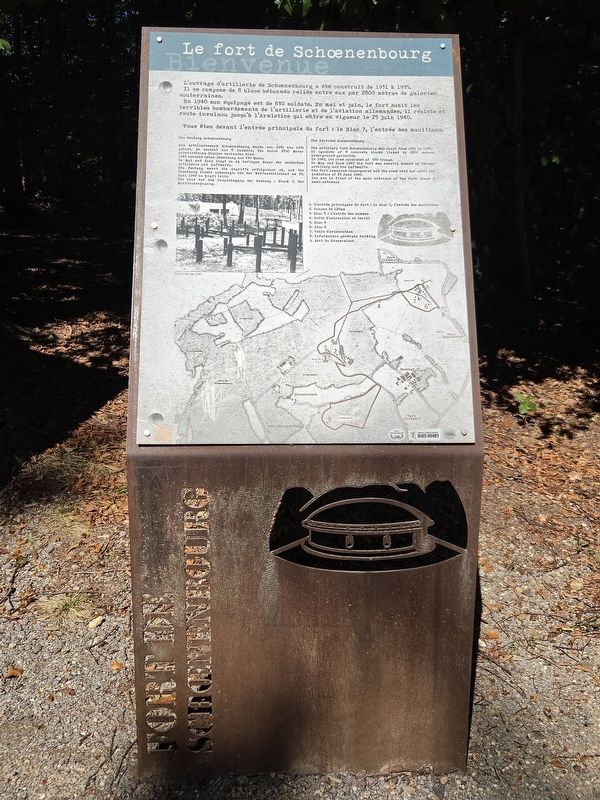
1. Le fort de Schoenenbourg / Schoenenbourg Fortress Marker

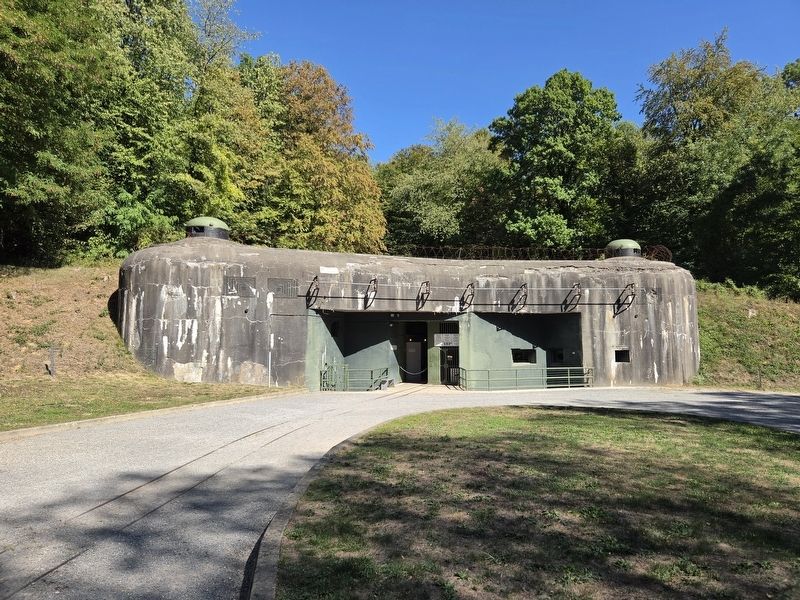
L’ouvrage d’artillerie de Schoenenbourg a été construit de 1931 à 1935. Il se compose de 8 blocs bétonnés reliés entre eux par 2 800 mètres de galeries souterraines. En 1940, son équipage est de 630 soldats. En mai et juin, le fort subit les terribles bombardements de l’artillerie et de l’aviation allemandes. Il résiste et reste invaincu jusqu’à l’Armistice qui entre en vigueur le 25 juin 1940. Vous êtes devant l’entrée principale du fort : le Bloc 7, l’entrée des munitions.
1. L’entrée principale du fort : le Bloc 7, l’entrée des munitions • 2. Canons de 120 mm • 3. Bloc 8 : l’entrée des hommes • 4. Puits d’extraction et terril • 5. Bloc 4 • 6. Bloc 6 • 7. Table d’orientation • 8. Information générale, parking • 9. Abri du Grasersloch
L’entrée en 1940
Das Artilleriewerk Schoenenbourg wurde von 1931 bis 1935 gebaut. Es besteht aus 8 Bunkern, die durch 2 800 Meter unterirdische Stollen verbunden sind. 1940 bestand seine Besatzung aus 630 Mann. Im Mai und Juni liegt es im heftigen Feuer der deutschen Artillerie und Luftwaffe. Die Festung wehrt die Angriffe erfolgreich ab, und die Besatzung bleibt unbesiegt, bis der Waffenstillstand am 25. Juni 1940 in Kraft tritt. Sie sind vor dem Haupteingang der Festung: Block 7, der Munitionseingang.
1. Haupteingang der Festung: Block 7, der Munitionseingang • 2. 120-mm-Geschütze • 3. Block 8: Mannschaftseingang • 4. Förderschacht und Abraumhalde • 5. Block 4 • 6. Block 6 • 7. Orientierungstafel • 8. Allgemeine Informationen und Parkplatz • 9. Schutzraum Grasersloch
Der Eingang im Jahr 1940
The
this page online
1. Main entrance of the fort: Block 7, the ammunition entrance • 2. 120 mm guns • 3. Block 8: the men’s entrance • 4. Extraction shaft and spoil heap • 5. Block 4 • 6. Block 6 • 7. Orientation table • 8. General information and parking • 9. Grasersloch shelter
The entrance in 1940
Erected by Fort de Schoenenbourg, Pays de Wissembourg, and Conseil départemental du Bas-Rhin.
Topics. This historical marker is listed in these topic lists: Forts and Castles • War, World II. A significant historical month for this entry is June 1940.
Location. 48° 57.98′ N, 7° 54.68′ E. Marker is near Hunspach, Grand Est (Alsace, Lorraine, Champagne-Ardenne), in Bas-Rhin. It is on Rue Commandant Martial Reynier 1.5 kilometers west of Grand Est Route D264. Touch for map. Marker is in this post office area: Hunspach, Grand Est 67250, France. Touch for directions.

Regionally, it is in the North Atlantic Region, Europe, the European Union, Atlantic Europe, the Schengen Area, Western Europe, a coastal Mediterranean country, and the Western World. Historically, it finds itself in what was once a French colony, the Roman Empire, and specifically the Holy Roman Empire.
Other nearby markers. At
Photographed by James Hulse, September 15, 2026
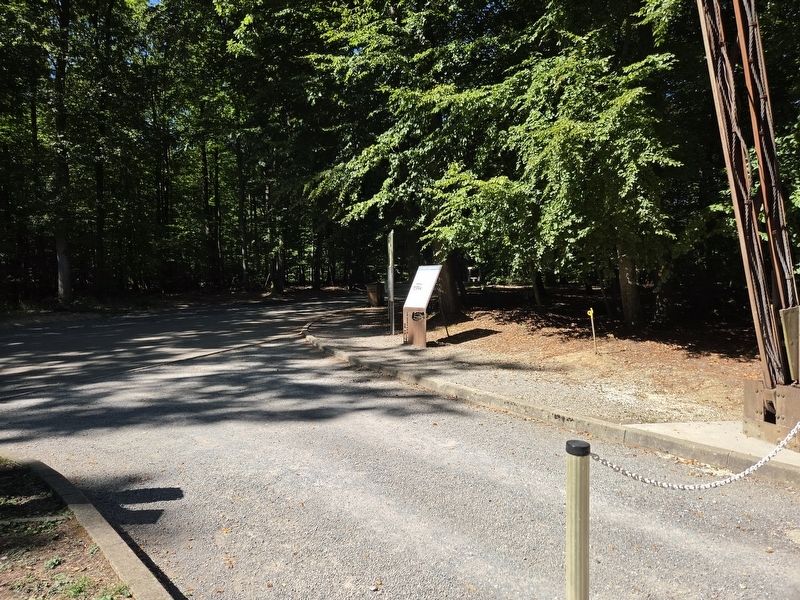
2. Le fort de Schoenenbourg / Schoenenbourg Fortress Marker
The view of the marker along the approach to the fortress.
Photographed by James Hulse, September 15, 2026
3. Le fort de Schoenenbourg / Schoenenbourg Fortress
Photographed by James Hulse, September 15, 2026
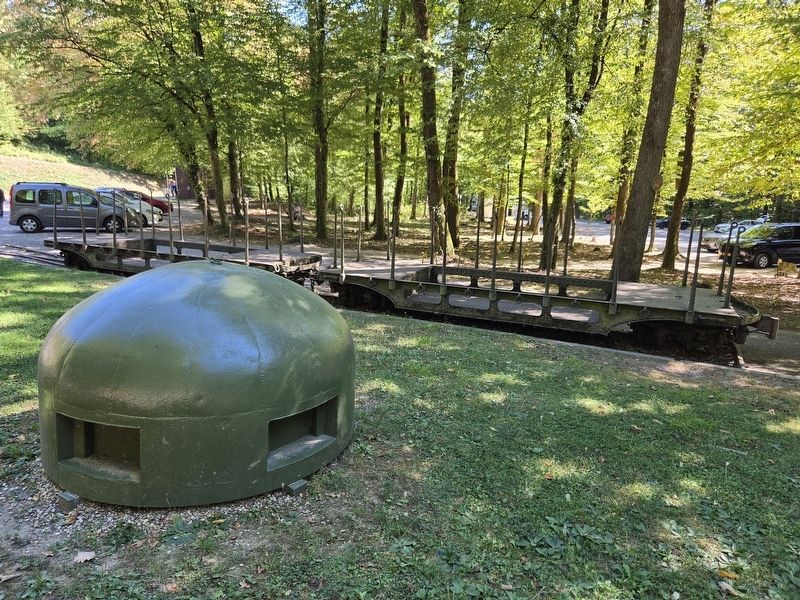
4. Le fort de Schoenenbourg / Schoenenbourg Fortress Marker
The view of a gun turret and rail car in front of the fortress.
Photographed by James Hulse, September 15, 2026
5. Le fort de Schoenenbourg / Schoenenbourg Fortress Marker
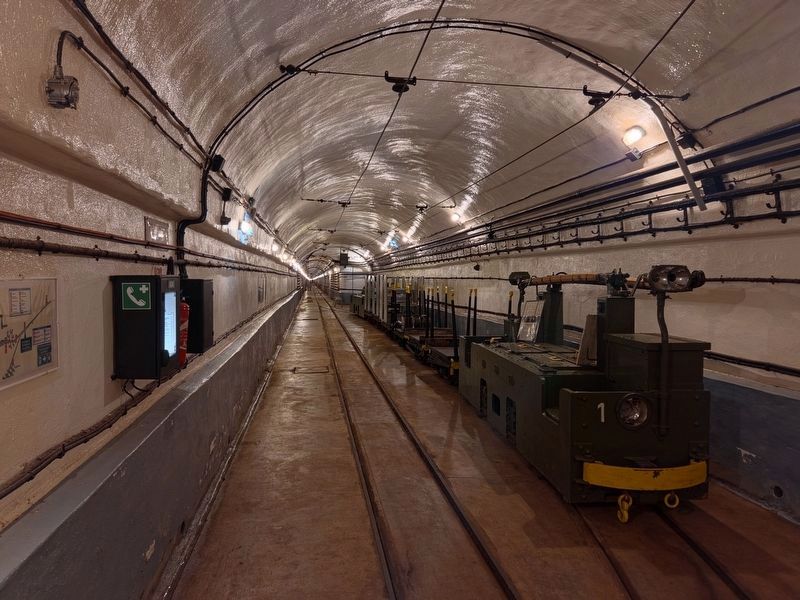
Inside view of the underground galleries linking the two main artillery bunkers with electric train and walking.
Photographed by James Hulse, September 15, 2026
6. Le fort de Schoenenbourg / Schoenenbourg Fortress Marker
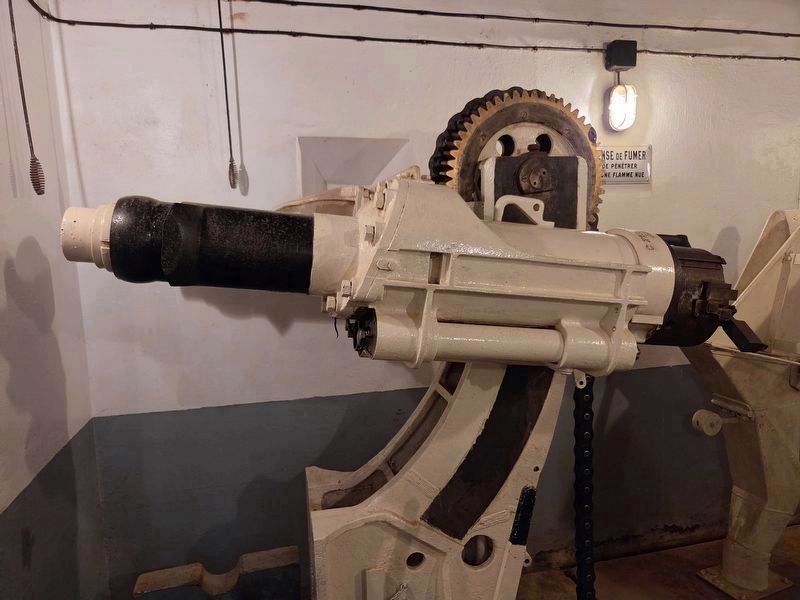
The fortress’s main gun was a 7.5 cm (75 mm, about 3 inches) artillery piece. This defensive gun would be raised up the turret to engage the enemy when attacked.
Credits. This page was last revised on September 30, 2026. It was originally submitted on September 27, 2026, by James Hulse of Medina, Texas. This page has been viewed 10 times since then. Photos: 1, 2, 3, 4, 5, 6. submitted on September 30, 2026, by James Hulse of Medina, Texas.
