Fergus in Centre Wellington in Wellington County, Ontario — Central Canada (North America)
Richard Pierpoint
(ca. 1744 - ca. 1838)
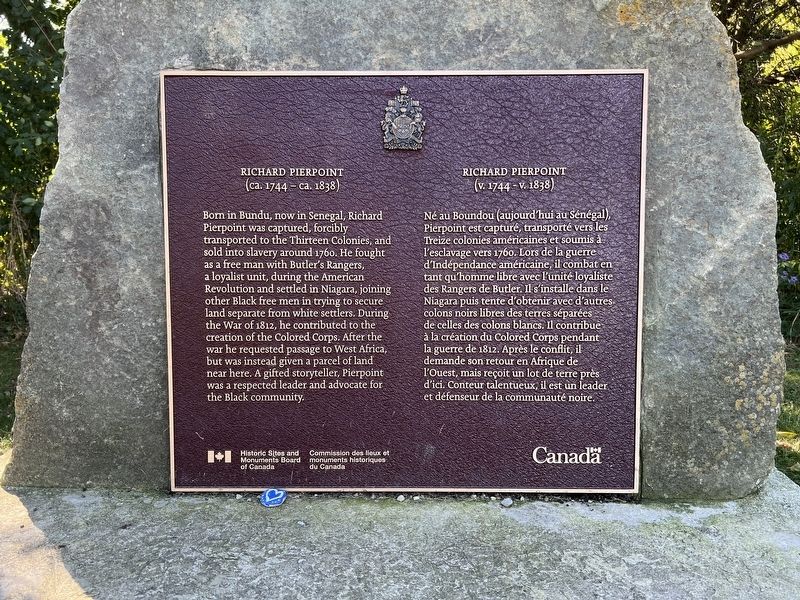
Photographed by Tim Boyd, September 25, 2026
1. Richard Pierpoint Marker

this page online
Erected by Historic Sites and Monuments Board Monuments Board of Canada.
Topics and series. This historical marker is listed in these topic lists: African Americans • Settlements & Settlers • War of 1812. In addition, it is included in the Canada, Historic Sites and Monuments Board series list. A significant historical year for this entry is 1760.
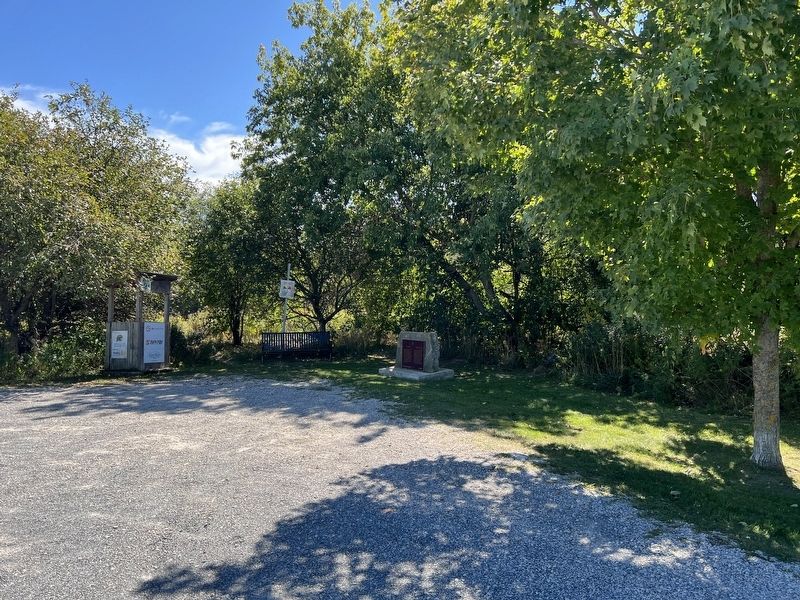
Location. 43° 42.941′ N, 80° 21.328′ W. Marker is in Centre Wellington, Ontario, in Wellington County. It is in Fergus. It is at the intersection of Anderson Street South and Lamont Street, on the right when traveling south on Anderson Street South. The marker is at the entrance to the Pierpoint Fly Fishing Nature Reserve. Touch for map. Marker is at or near this postal address: 449 Anderson Street S, Centre Wellington ON N1M 1Z8, Canada. Touch for directions.

Regionally, this marker is in the Huron-Perth-Waterloo-Wellington Area and in Southwestern Ontario. It is also in Central Canada. Globally, it is in North America, the Western
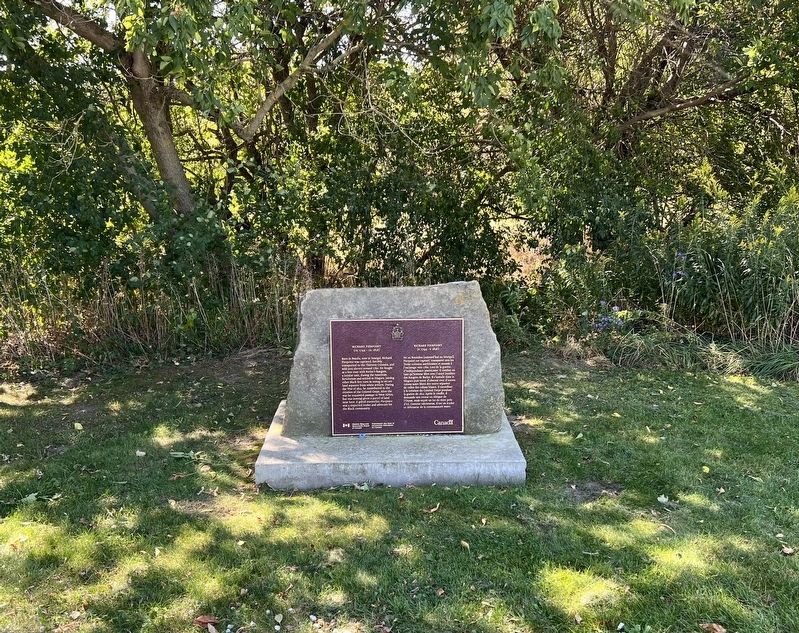
Photographed by Tim Boyd, September 35/2026
2. Richard Pierpoint Marker
Other nearby markers. At least 8 other markers are within 3 kilometers of this marker, measured as the crow flies: Richard Pierpoint: Life and Legacy (within shouting distance of this marker); Fergus Swimming Pool (approx. 2 kilometers away); St. David Street Bridge (approx. 2.1 kilometers away); The Founders of Fergus (approx. 2.2 kilometers away); Templin Gardens (approx. 2.2 kilometers away); 212 St. Andrew Street W (approx. 2.2 kilometers away); Weigh Scale Building (approx. 2.2 kilometers away); The Fergus Curling Club / Club de Curling de Fergus (approx. 2.3 kilometers away). Touch for a list and map of all markers in Centre Wellington.
Also see . . . The Coloured Corps: Black Canadians and the War of 1812.
Created in Upper Canada, where enslavement had been limited in 1793, the corps was composed of free and enslaved Black men. Many were veterans of the American Revolution, in which they fought for(Submitted on September 28, 2026, by Tim Boyd of Hamilton, Ontario.)the British (see Black Loyalists). The Coloured Corps fought in the Battle of Queenston Heights and the Battle of Fort George before it was attached to the Royal Engineers as a construction company. The unit was reactivated during the Rebellions of 1837–38 (and also served as a police force during the construction of the Welland Canal).Photographed by Tim Boyd, September 25, 20263. Richard Pierpoint Marker
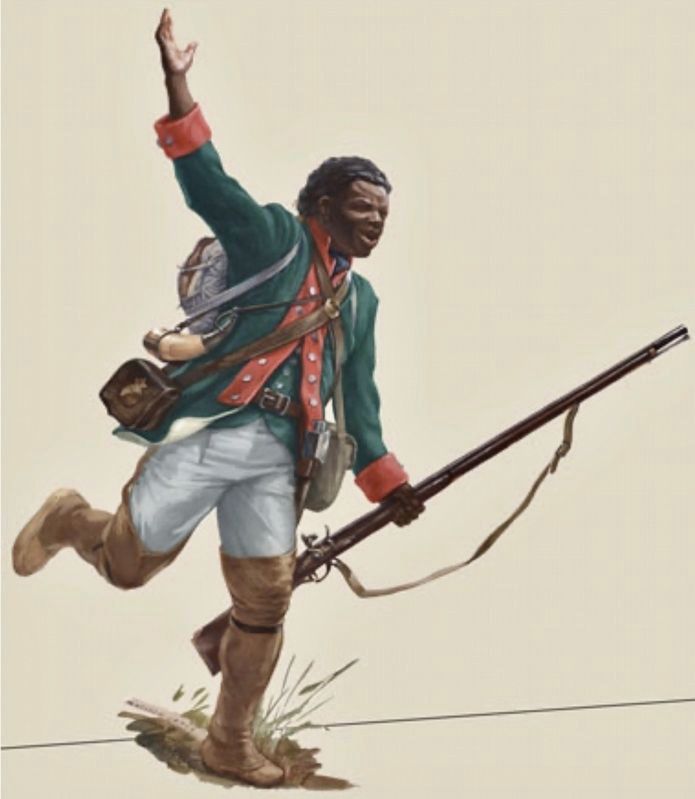
4. Illustration of Richard Pierpoint in the uniform of the Coloured Corps
Source: Canadian War Museum (public domain)
Credits. This page was last revised on September 28, 2026. It was originally submitted on September 28, 2026, by Tim Boyd of Hamilton, Ontario. This page has been viewed 11 times since then. Photos: 1, 2, 3, 4. submitted on September 28, 2026, by Tim Boyd of Hamilton, Ontario. • Andrew Ruppenstein was the editor who published this page.
