Bronzeville in Chicago in Cook County, Illinois — The American Midwest (Great Lakes)
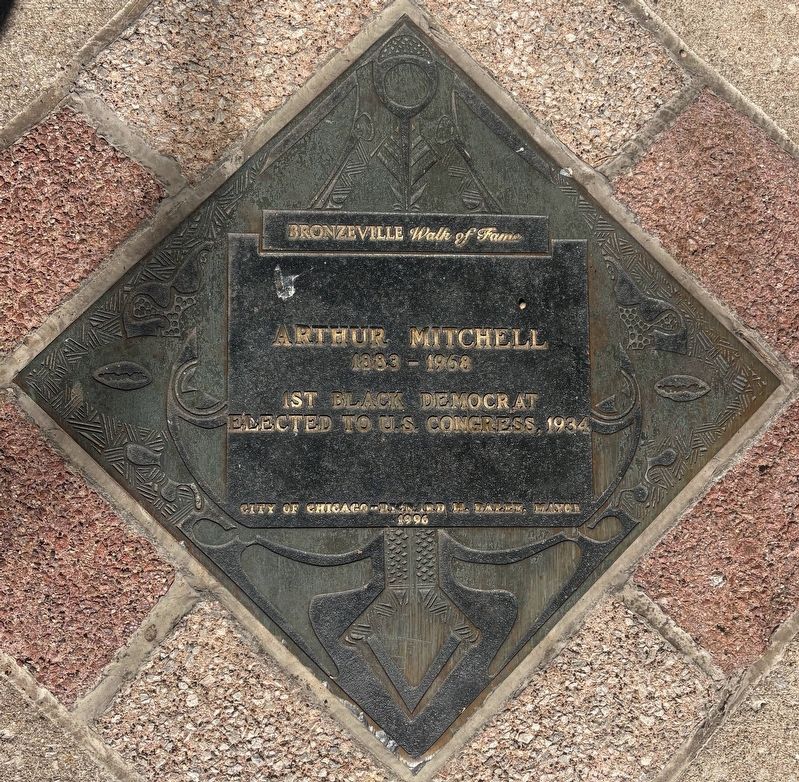
Arthur Mitchell
1883-1968
| — | Bronzeville Walk of Fame | — |
Photographed by Sean P. Flynn, September 28, 2026
1. Arthur Mitchell Marker
Erected 1996 by City of Chicago.
Topics and series. This historical marker is listed in these topic lists: African Americans • Government & Politics. In addition, it is included in the Bronzeville Walk of Fame series list. A significant historical year for this entry is 1934.
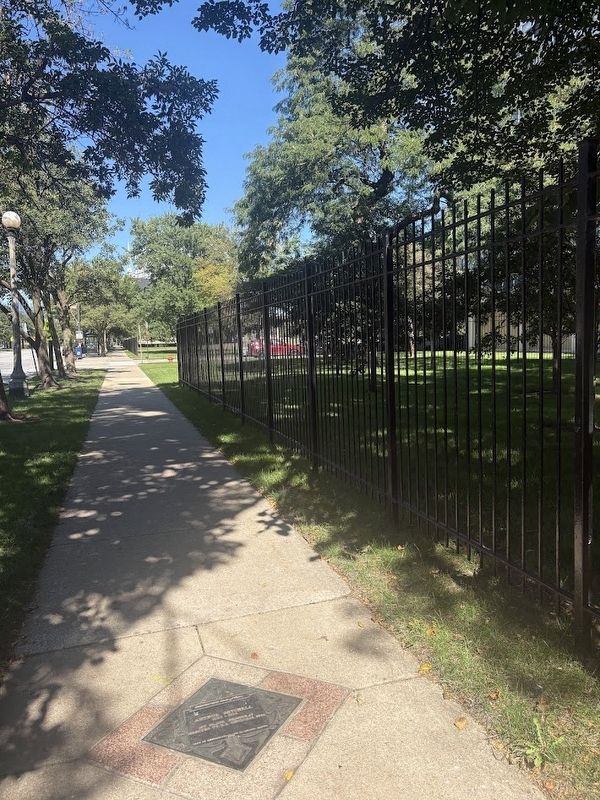
Location. 41° 50.168′ N, 87° 37.013′ W. Marker is in Chicago, Illinois, in Cook County. It is in Bronzeville. It can be reached from South Martin Luther King Jr. Drive south of East 32nd Street, on the right when traveling north. Touch for map. Marker is in this post office area: Chicago IL 60616, United States of America. Touch for directions.

Regionally, this marker is on Chicago’s South Side and in Chicago’s Bronzeville. It is also in the American Midwest. Globally, it is in North America, on the Great Lakes, in the Western Hemisphere, in the Western World, and in the Anglosphere. Historically, it finds itself in what was once the Viceroyalty of New France, the territory of the Mississippian Culture, and the Northwest Territory.
Other nearby markers. At least 8 other markers
this page online
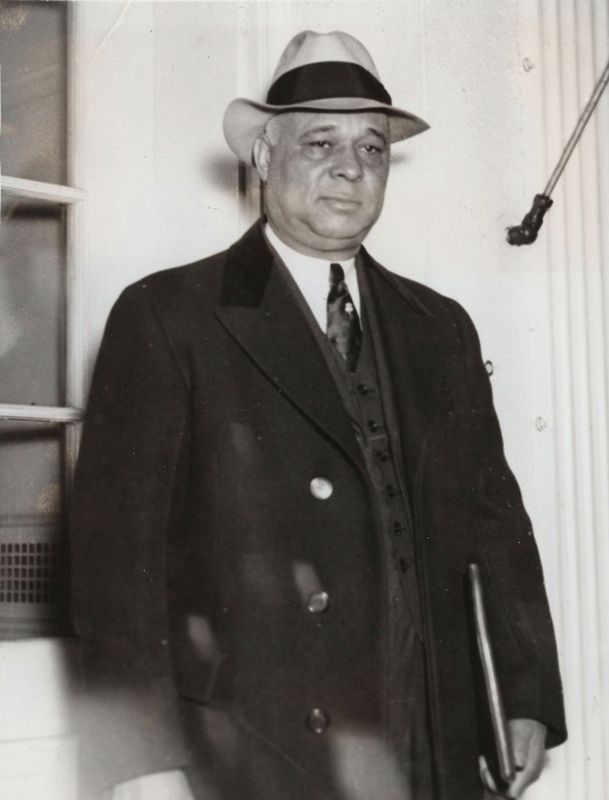
Regarding Arthur Mitchell. Mitchell served four terms in Congress, from 1935 until 1943, during which time he was the House's only African American member.
Also see . . . Arthur Wergs Mitchell. A biography from the U.S. House of Representatives website.
Excerpt: "Mitchell entered politics as a Republican, but became a Democrat after he moved to Chicago, in part because he believed there was greater room for political advancement, as most elected Black Chicago officials at that time were Republican. Mitchell’s party switch was fortuitous,(Submitted on October 2, 2026, by Sean P. Flynn of Oak Park, Illinois.)as many Black Americans shifted their allegiance to the Democratic Party in the early days of the New Deal."Photographed by Sean P. Flynn, September 28, 20262. Arthur Mitchell Marker
Collection of the U.S. House of Representatives
3. Arthur Mitchell (1883-1968)
Credits. This page was last revised on October 2, 2026. It was originally submitted on October 2, 2026, by Sean P. Flynn of Oak Park, Illinois. This page has been viewed 5 times since then. Photos: 1, 2, 3. submitted on October 2, 2026, by Sean P. Flynn of Oak Park, Illinois.
