Mitte in Leipzig, Saxony, Germany — Central Europe
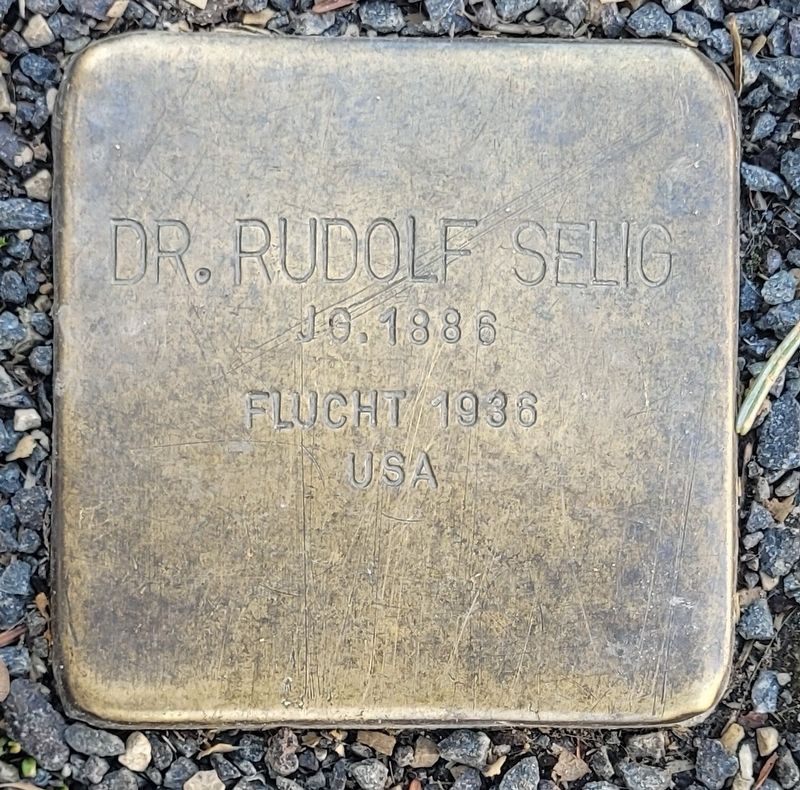
Dr. Rudolf Selig
Photographed by James Hulse, March 12, 2026
1. Dr. Rudolf Selig Marker

Jg. 1886
Flucht 1936
USA
Dr. Rudolf Selig, born in 1886, fled to the USA in 1936.
Topics and series. This historical marker is listed in this topic list: War, World II. In addition, it is included in the Stolpersteine series list. A significant historical year for this entry is 1886.
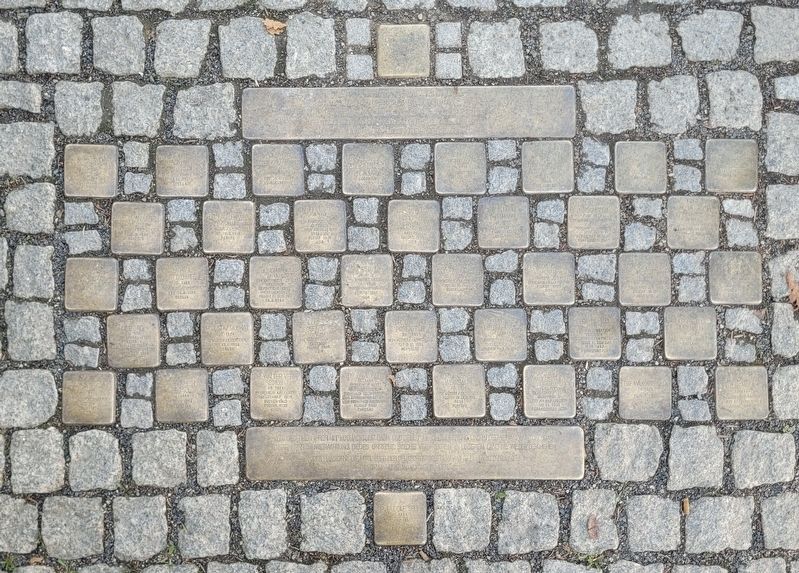
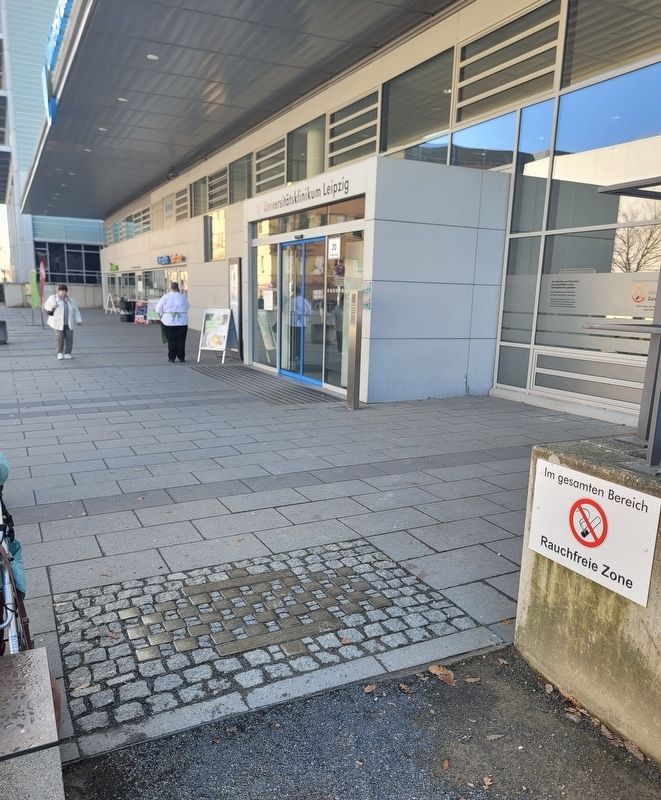
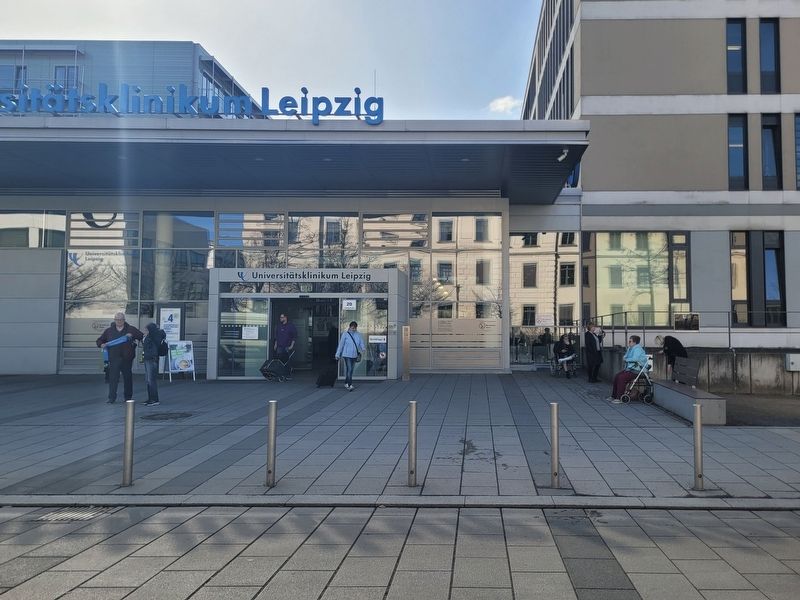
Location. 51° 19.888′ N, 12° 23.164′ E. Marker is in Leipzig, Sachsen (Saxony). It is in Mitte. It is on Liebigstraße 0.1 kilometers east of Talstraße, on the right when traveling east. The 42 Stolpersteine markers are in front of University Hospital Leipzig, to the right of the entrance. Touch for map. Marker is at or near this postal address: Liebigstraße 20, Leipzig SN 04103, Germany. Touch for directions.

Regionally, this marker is in Central Germany. Globally, it is in Europe, the European Union, Atlantic Europe, Central Europe, the Schengen Area, Western Europe, and the Western World. Historically, it finds itself in what was once the Holy Roman Empire and also the former East Germany.
Other nearby markers. At least 8 other markers are within walking distance of this marker: Dr. Kurt Ehrlich (here, next to this marker); Dr. Heinrich Jordan-Narath (here, next to this marker); Dr. Georg Willy Alexander-Katz (here, next to this marker); Dr. Ernst Adolf Ruhemann (here, next to this marker); Dr. Paul Weil (here, next to this marker); Dr. Kurt Eduard Hirschfeld (here, next to this marker); Dr. Robert Otto Rothschild (here, next to this marker); Dr. Hans Ritter von Baeyer (here, next to this marker). Touch for a list and map of all markers in Leipzig.
Also see . . . Stolperstein.
this page online
A Stolperstein (in English "stumbling block") is a ten-centimetre (four-inch) concrete cube bearing a brass plate inscribed with the name and life dates of victims of Nazi extermination or persecution. The Stolpersteine project, initiated by the German artist Gunter Demnig in 1992, aims to commemorate persons at the last place that they chose freely to reside, work or study (with exceptions possible on a case-by-case basis) before they fell victim to Nazi terror, forced euthanasia, eugenics, deportation to a concentration or extermination camp, or escaped persecution by emigration or suicide. As of June 2023, 100,000 Stolpersteine have been laid, making the Stolpersteine project the world's largest decentralized memorial.(Submitted on October 5, 2026, by James Hulse of Medina, Texas.)
Photographed by James Hulse, March 12, 2026
2. Dr. Rudolf Selig Marker
The group of Stolpersteine (Stumbling Stones) honoring doctors consists of 40 individual stones and two larger memorial stones.
Photographed by James Hulse, March 12, 2026
3. Dr. Rudolf Selig Marker
Photographed by James Hulse, March 12, 2026
4. Dr. Rudolf Selig Marker
The markers are set into the ground to the right of the hospital entrance.
Credits. This page was last revised on October 6, 2026. It was originally submitted on October 5, 2026, by James Hulse of Medina, Texas. This page has been viewed 2 times since then. Photos: 1, 2, 3, 4. submitted on October 6, 2026, by James Hulse of Medina, Texas.
