St George's Quarter in Liverpool in Merseyside, England, United Kingdom — Northwestern Europe (the British Isles)
The Battle of the Atlantic Memorial
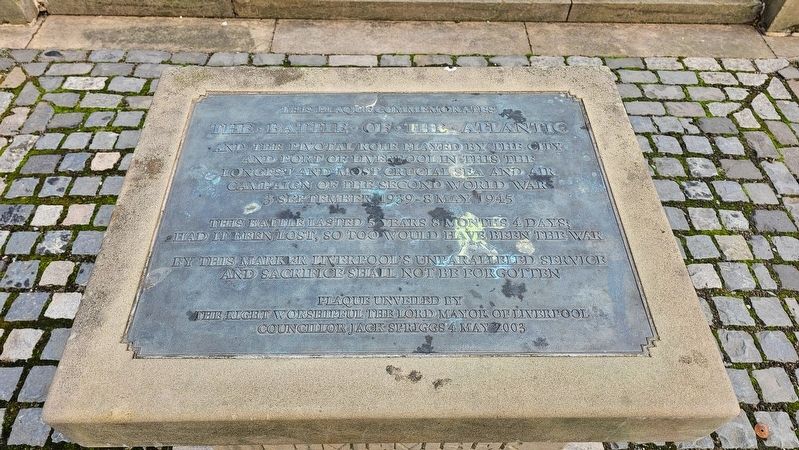
Photographed by Ian Lefkowitz, September 13, 2026
1. The Battle of the Atlantic Memorial Marker
This plaque commemorates
The Battle of the Atlantic
and the pivotal role played by the city and port of Liverpool in this the longest and most crucial sea and air campaign of the Second World War
3 September 1939–8 May 1945
This battle lasted 5 years 8 months 4 days; had it been lost, so too would have been the war.
By this marker Liverpool’s unparalleled service and sacrifice shall not be forgotten.
Plaque unveiled by
the Right Worshipful the Lord Mayor of Liverpool
Councillor Jack Spriggs 4 May 2003
Erected 2003.
Topics. This memorial is listed in this topic list: War, World II.
Location. 53° 24.507′ N, 2° 58.771′ W. Memorial is in Liverpool, England, in Merseyside. It is in the St George's Quarter. It is at the intersection of Lime Street and St. George's Place, on the left when traveling north on Lime Street. Touch for map. Memorial is at or near this postal address: 12 Lime Street, Liverpool, England L1 1JJ, United Kingdom. Touch for directions.

Regionally, this memorial is in North West England. Globally, it is on the Atlantic Ocean, in the North Atlantic
this page online
Other nearby markers. At least 8 other markers are within walking distance of this marker: Liverpool Cenotaph (a few steps from this marker); Major General William Earle (within shouting distance of this marker); Sir Arthur Bower Forwood (about 90 meters away, measured in a direct line); William Rathbone (about 90 meters away); French Prisoners Of War Memorial (about 90 meters away); Royal Air Force Memorial (about 90 meters away); The Queen's Lancashire Regiment Memorial (about 120 meters away); Royal Regiment of Artillery Memorial (about 120 meters away). Touch for a list and map of all markers in Liverpool.
Also see . . . Liverpool and the Second World War (Liverpool Museum).
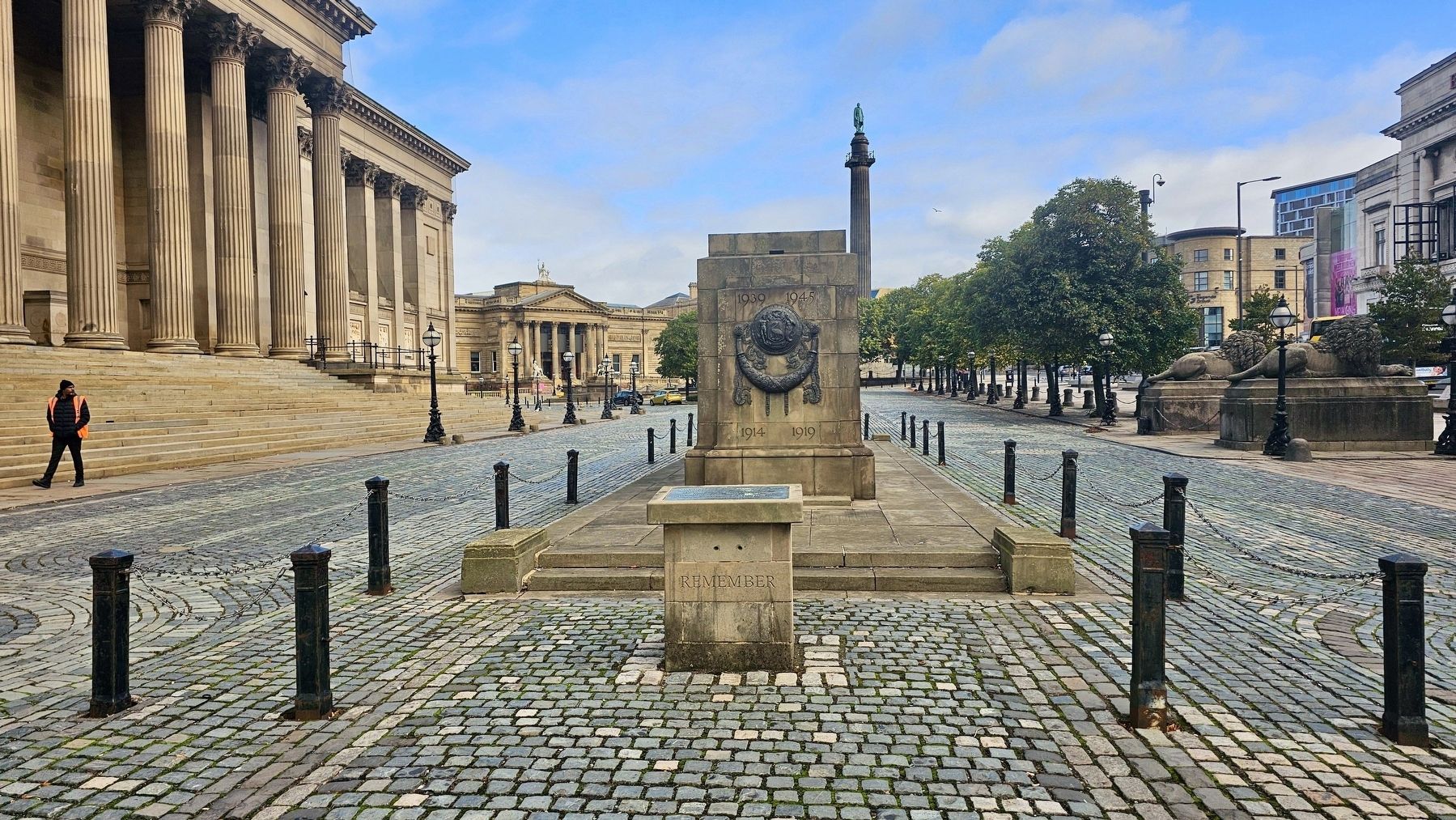
The Liverpool Blitz lasted from August 1940 until January 1942, with German air raids causing death and destruction on both sides of the Mersey. As a result more than 4,000 people were killed, including 2,736 in Liverpool, 454 in Birkenhead and 424 in Bootle. 10,000(Submitted on October 9, 2026, by Ian Lefkowitz of New York, New York.)homes were destroyed and 70,000 people were made homeless.Photographed by Ian Lefkowitz, September 13, 20262. The Battle of the Atlantic MemorialThe memorial is located in the plaza in front of St. George's Hall, in front of the Liverpool Cenotaph.
Credits. This page was last revised on October 11, 2026. It was originally submitted on October 9, 2026, by Ian Lefkowitz of New York, New York. This page has been viewed 5 times since then. Photos: 1, 2. submitted on October 9, 2026, by Ian Lefkowitz of New York, New York. • Andrew Ruppenstein was the editor who published this page.
