St George's Quarter in Liverpool in Merseyside, England, United Kingdom — Northwestern Europe (the British Isles)
Liverpool Cenotaph
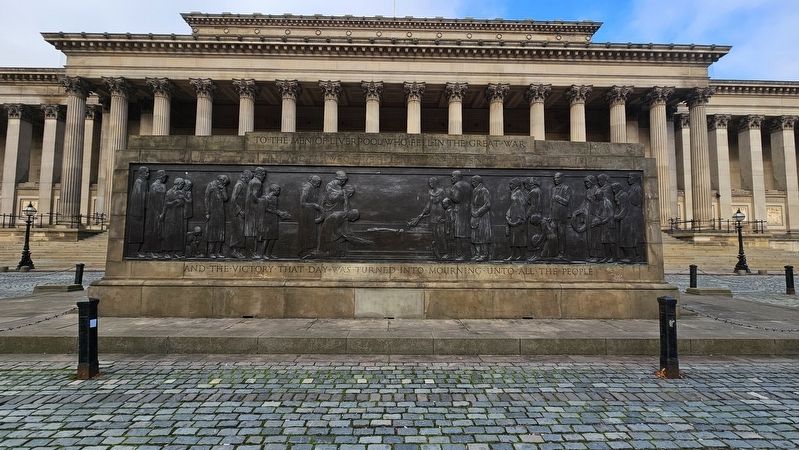
Photographed by Ian Lefkowitz, September 13, 2026
1. Liverpool Cenotaph Marker, Side One
and all who have fallen in conflict since
And the victory that day was turned into mourning unto all the people
As unknown and yet well known as dying and behold we live
Out of the north parts — a great company and a mighty army
Erected 1930.
Topics. This memorial is listed in these topic lists: War, World I • War, World II.
Location. 53° 24.513′ N, 2° 58.769′ W. Memorial is in Liverpool, England, in Merseyside. It is in the St George's Quarter. It is on Lime Street north of St. George's Place, on the left when traveling north. Touch for map. Memorial is at or near this postal address: 12 Lime Street, Liverpool, England L1 1JJ, United Kingdom. Touch for directions.

Regionally, this memorial is in North West England. Globally, it is on the Atlantic Ocean, in the North Atlantic Region, in Europe, in Atlantic Europe, on one of the British Isles, in the Western World, and in the Anglosphere. Historically, it finds itself in what was once the Roman Empire.
Other nearby markers. At least 8 other markers
this page online
Also see . . . Liverpool Cenotaph (Wikipedia).
Liverpool Cenotaph stands on St George's Plateau, to the east of St George's Hall in Liverpool, England. It was erected as a memorial to those who had fallen in the First World War. The dates of the Second World War were subsequently added. The cenotaph consists of a rectangular block of stone on a stone platform, with bronze, low-relief sculptures on the sides depicting marching troops and mourners. It was designed by Lionel Budden, with carving by Herbert Tyson Smith. Initially designated as a(Submitted on October 9, 2026, by Ian Lefkowitz of New York, New York.)Grade II listed building, its status was raised to Grade I in 2013.Photographed by Ian Lefkowitz, September 13, 20262. Liverpool Cenotaph Marker, Side Two
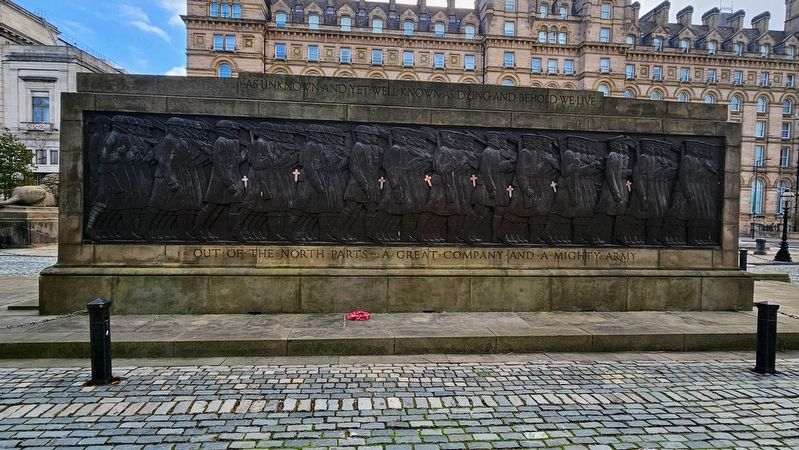
Photographed by Ian Lefkowitz, September 13, 2026
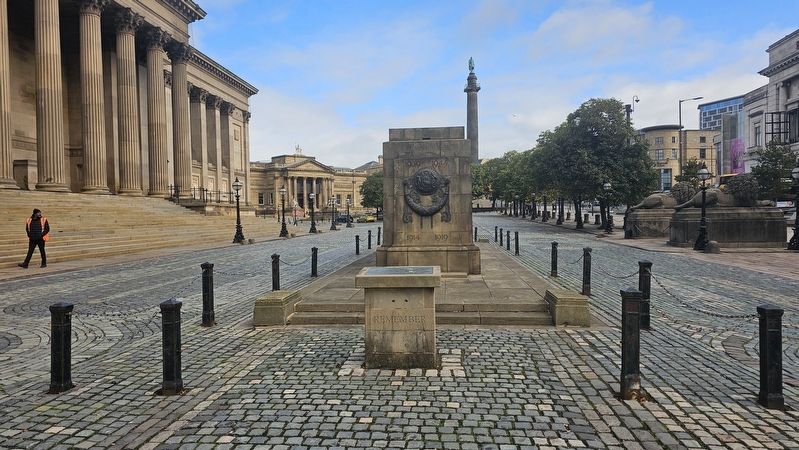
3. Liverpool Cenotaph Marker
The engraving on the side of the cenotaph includes the dates of World War I, as well as the dates of World War II, inscribed after the monument's erection.
Credits. This page was last revised on October 11, 2026. It was originally submitted on October 9, 2026, by Ian Lefkowitz of New York, New York. This page has been viewed 8 times since then. Photos: 1, 2, 3. submitted on October 9, 2026, by Ian Lefkowitz of New York, New York. • Andrew Ruppenstein was the editor who published this page.
