Kobern-Gondorf in Mayen-Koblenz, Rhineland-Palatinate, Germany — Central Europe
Die Kirchenglocken von Gondorf
⎯⎯⎯
The Church Bells of Gondorf
Photographed by James Hulse, October 5, 2026
1. Die Kirchenglocken von Gondorf / The Church Bells of Gondorf Marker

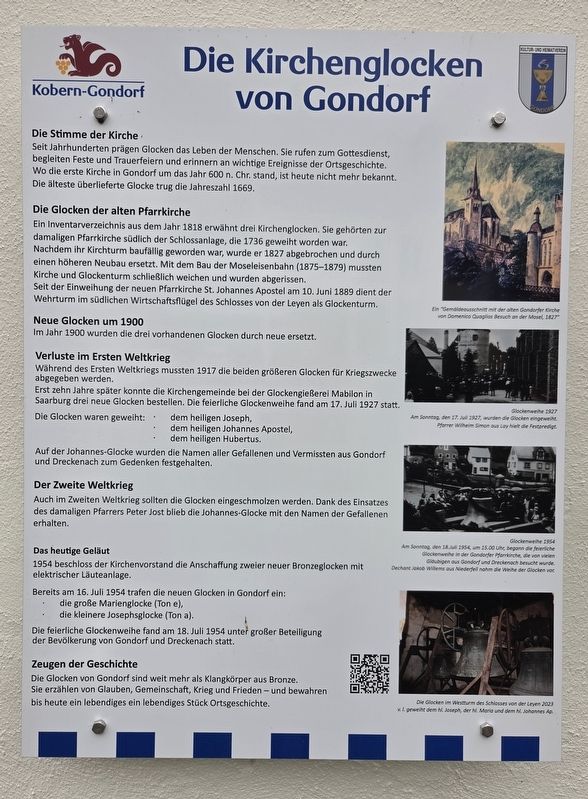
Seit Jahrhunderten prägen Glocken das Leben der Menschen. Sie rufen zum Gottesdienst, begleiten Feste und Trauerfeiern und erinnern an wichtige Ereignisse der Ortsgeschichte. Wo die erste Kirche in Gondorf um das Jahr 600 n. Chr. stand, ist heute nicht mehr bekannt. Die älteste überlieferte Glocke trug die Jahreszahl 1669.
Die Glocken der alten Pfarrkirche
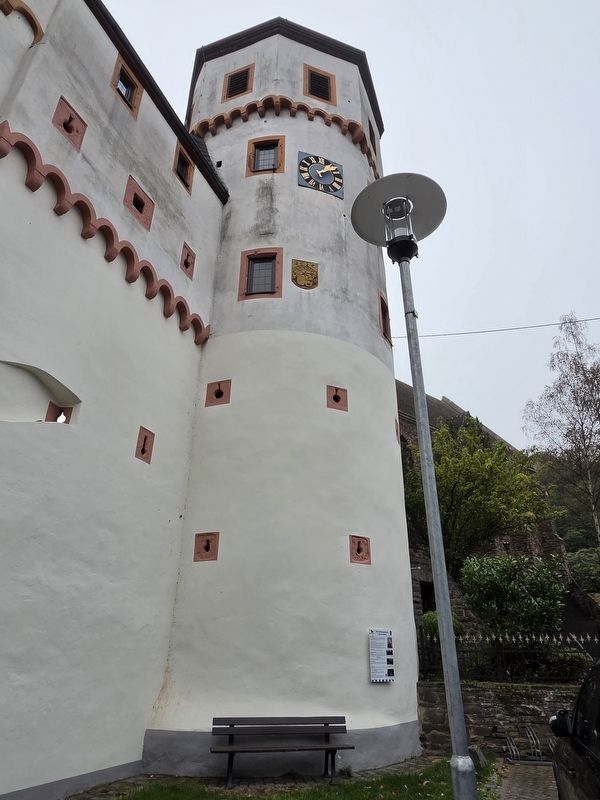
Ein Inventarverzeichnis aus dem Jahr 1818 erwähnt drei Kirchenglocken. Sie gehörten zur damaligen Pfarrkirche südlich der Schlossanlage, die 1736 geweiht worden war. Nachdem ihr Kirchturm baufällig geworden war, wurde er 1827 abgebrochen und durch einen höheren Neubau ersetzt. Mit dem Bau der Moseleisenbahn (1875–1879) mussten Kirche und Glockenturm schließlich weichen und wurden abgerissen. Seit der Einweihung der neuen Pfarrkirche St. Johannes Apostel am 10. Juni 1889 dient der Wehrturm im südlichen Wirtschaftsflügel des Schlosses von der Leyen als Glockenturm.
Neue Glocken um 1900
Im Jahr 1900 wurden die drei vorhandenen Glocken durch neue ersetzt.
Verluste im Ersten Weltkrieg
Während des Ersten Weltkriegs mussten 1917 die
this page online
Erst zehn Jahre später konnte die Kirchengemeinde bei der Glockengießerei Mabilon in Saarburg drei neue Glocken bestellen. Die feierliche Glockenweihe fand am 17. Juli 1927 statt.
Die Glocken waren geweiht: dem heiligen Joseph, dem heiligen Johannes Apostel, dem heiligen Hubertus.
Auf der Johannes-Glocke wurden die Namen aller Gefallenen und Vermissten aus Gondorf und Dreckenach zum Gedenken festgehalten.
Der Zweite Weltkrieg
Auch im Zweiten Weltkrieg sollten die Glocken eingeschmolzen werden. Dank des Einsatzes des damaligen Pfarrers Peter Jost blieb die Johannes-Glocke mit den Namen der Gefallenen erhalten.
Das heutige Geläut
1954 beschloss der Kirchenvorstand die Anschaffung zweier neuer Bronzeglocken mit elektrischer Läuteanlage.
Bereits am 16. Juli 1954 trafen die neuen Glocken in Gondorf ein: die große Marienglocke (Ton e), die kleinere Josephsglocke (Ton a).
Die feierliche Glockenweihe fand am 18. Juli 1954 unter großer Beteiligung der Bevölkerung von Gondorf und Dreckenach statt.
Zeugen der Geschichte
Die Glocken von Gondorf sind weit mehr
Photographed by James Hulse
2. Die Kirchenglocken von Gondorf / The Church Bells of Gondorf Marker
Ein "Gemäldeausschnitt mit der alten Gondorfer Kirche von Domenico Quaglios Besuch an der Mosel, 1827"
Glockenweihe 1927. Am Sonntag, den 17. Juli 1927, wurden die Glocken eingeweiht. Pfarrer Wilhelm Simon aus Lay hielt die Festpredigt.
Glockenweihe 1954. Am Sonntag, den 18. Juli 1954, um 15.00 Uhr, begann die feierliche Glockenweihe in der Gondorfer Pfarrkirche, die von vielen Gläubigen aus Gondorf und Dreckenach besucht wurde. Dechant Jakob Willems aus Niederfell nahm die Weihe der Glocken vor.
Die Glocken im Westturm des Schlosses von der Leyen 2023, v. l. geweiht dem hl. Joseph, der hl. Maria und dem hl. Johannes Ap.
The Voice of the Church
For centuries, bells have shaped people’s lives. They call people to worship, accompany celebrations and funerals, and commemorate important events in local history. The location of Gondorf’s first church, dating from around 600 AD, is no longer known. The oldest recorded bell bore the date 1669.
The Bells of the Old Parish Church
An
Photographed by James Hulse
3. Die Kirchenglocken von Gondorf / The Church Bells of Gondorf Marker
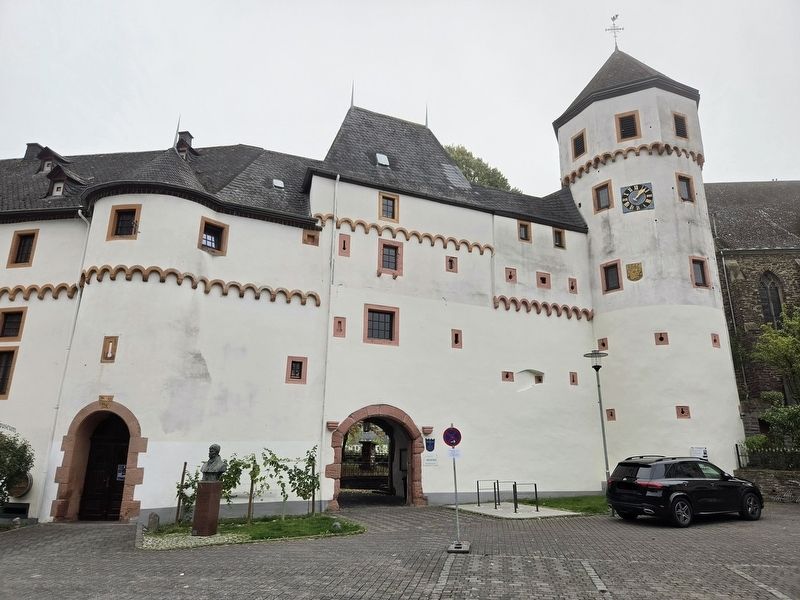
The marker is located behind the car at the base of the tower.
New Bells around 1900
In 1900, the three existing bells were replaced with new ones.
Losses during the First World War
In 1917, during the First World War, the two larger bells had to be surrendered for military purposes.
Only ten years later could the parish order three new bells from the Mabilon bell foundry in Saarburg. Their ceremonial blessing took place on July 17, 1927.
The bells were dedicated to St. Joseph, St. John the Apostle and St. Hubert.
The names of all those from Gondorf and Dreckenach who had fallen or were missing were inscribed on the St. John bell in remembrance.
The Second World War
The bells were also intended to be melted down during the Second World War. Thanks to the efforts of the parish priest, Peter Jost, the St. John bell bearing the names of the fallen was preserved.
The Present Bells
In 1954, the church council decided to purchase two new bronze bells with an electric ringing system.
The new bells arrived in Gondorf on July 16, 1954: the large St. Mary bell, tuned to E, and the smaller St. Joseph bell, tuned to A.
The ceremonial blessing took place on July 18, 1954, with strong participation from the people of Gondorf and Dreckenach.
Witnesses to History
Gondorf’s bells are much more than bronze instruments. They tell of faith, community, war and peace, and preserve a living part of local history.
Detail of a painting showing the old Gondorf church, from Domenico Quaglio’s visit to the Moselle in 1827.
Blessing of the bells in 1927. The bells were blessed on Sunday, July 17, 1927. Father Wilhelm Simon from Lay delivered the ceremonial sermon.
Blessing of the bells in 1954. The ceremony began at 3 p.m. on Sunday, July 18, 1954, in Gondorf’s parish church, attended by many worshippers from Gondorf and Dreckenach. Dean Jakob Willems from Niederfell blessed the bells.
The bells in the west tower of von der Leyen Castle in 2023. From left: bells dedicated to St. Joseph, St. Mary and St. John the Apostle.
Erected by Kobern-Gondorf.
Topics. This historical marker is listed in these topic lists: Religion & Religious Structures • War, World I • War, World II. A significant historical date for this entry is June 10, 1889.
Location. 50° 17.468′ N, 7° 27.5′ E. Marker is in Kobern-Gondorf, Rheinland-Pfalz (Rhineland-Palatinate), in Mayen-Koblenz. It is on Von-der-Leyen-Platz 0.1 kilometers west of Römerstraße, on the left when traveling west. Touch for map. Marker is at or near this postal address: Von-der-Leyen-Platz 5, Kobern-Gondorf RP 56330, Germany. Touch for directions.

Regionally, this marker is in the German Rhineland, in the Eifel, and in the Moselle Valley. Globally, it is in Europe, the European Union, Atlantic Europe, Central Europe, the Schengen Area, Western Europe, and the Western World. Historically, it finds itself in what was once the Roman Empire, the Holy Roman Empire, and the former West Germany.
Other nearby markers. At least 8 other markers are within walking distance of this marker: Gondorf (a few steps from this marker); Grabplatte / Grave Slab (a few steps from this marker); Tuffsteinsarg / Tuff Stone Coffin (a few steps from this marker); Oberburg / Upper Castle (within shouting distance of this marker); Ehemalige Gondorfer zweiklassige Volksschule / Former Gondorf Two-Class Elementary School (within shouting distance of this marker); Die „Gänseliesel“ … / The “Goose Girl” … (within shouting distance of this marker); Historische Grabkreuze / Historic Grave Crosses (within shouting distance of this marker); Ehemaliges Gondorfer Rathaus / Former Gondorf Town Hall (within shouting distance of this marker). Touch for a list and map of all markers in Kobern-Gondorf.
Credits. This page was last revised on October 15, 2026. It was originally submitted on October 14, 2026, by James Hulse of Medina, Texas. This page has been viewed 8 times since then. Photos: 1, 2, 3. submitted on October 15, 2026, by James Hulse of Medina, Texas.
