City in Köln, North Rhine-Westphalia, Germany — Central Europe
Antoniterkirche
Photographed by James Hulse
1. Antoniterkirche Marker

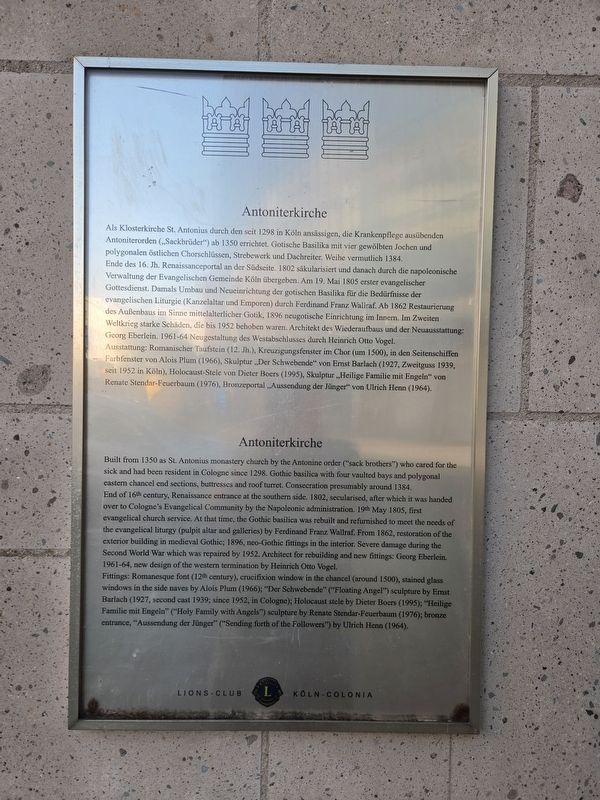
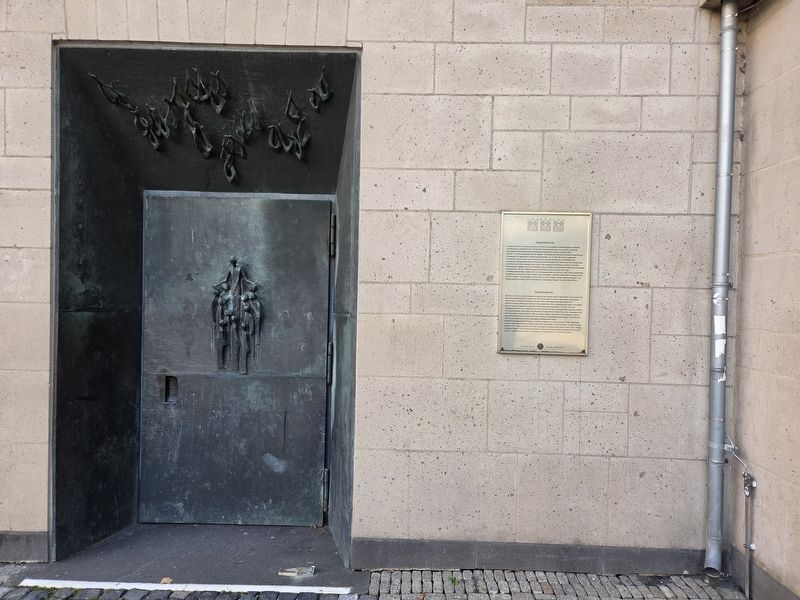
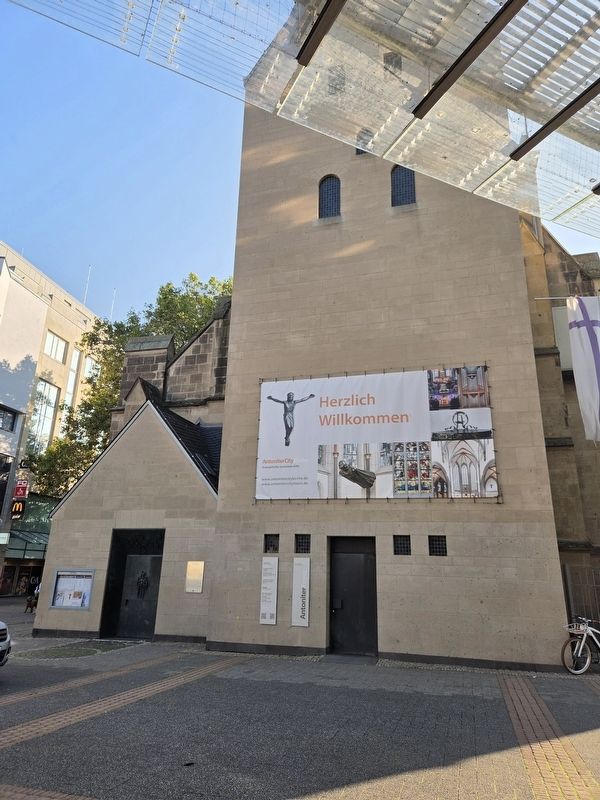
Als Klosterkirche St. Antonius durch den seit 1298 in Köln ansässigen, die Krankenpflege ausübenden Antoniterorden („Sackbrüder“) ab 1350 errichtet. Gotische Basilika mit vier gewölbten Jochen und polygonalen östlichen Chorschlüssen, Strebewerk und Dachreiter. Weihe vermutlich 1384. Ende des 16. Jh. Renaissanceportal an der Südseite. 1802 säkularisiert und danach durch die napoleonische Verwaltung der Evangelischen Gemeinde Köln übergeben. Am 19. Mai 1805 erster evangelischer Gottesdienst. Damals Umbau und Neueinrichtung der gotischen Basilika für die Bedürfnisse der evangelischen Liturgie (Kanzelaltar und Emporen) durch Ferdinand Franz Wallraf. Ab 1862 Restaurierung des Außenbaus im Sinne mittelalterlicher Gotik, 1896 neugotische Einrichtung im Innern. Im Zweiten Weltkrieg starke Schäden, die bis 1952 behoben waren. Architekt des Wiederaufbaus und der Neuausstattung: Georg Eberlein. 1961-64 Neugestaltung des Westabschlusses durch Heinrich Otto Vogel. Ausstattung: Romanischer Taufstein (12. Jh.), Kreuzigungsfenster im Chor (um 1500), in den Seitenschiffen Farbfenster von Alois Plum (1966),
this page online
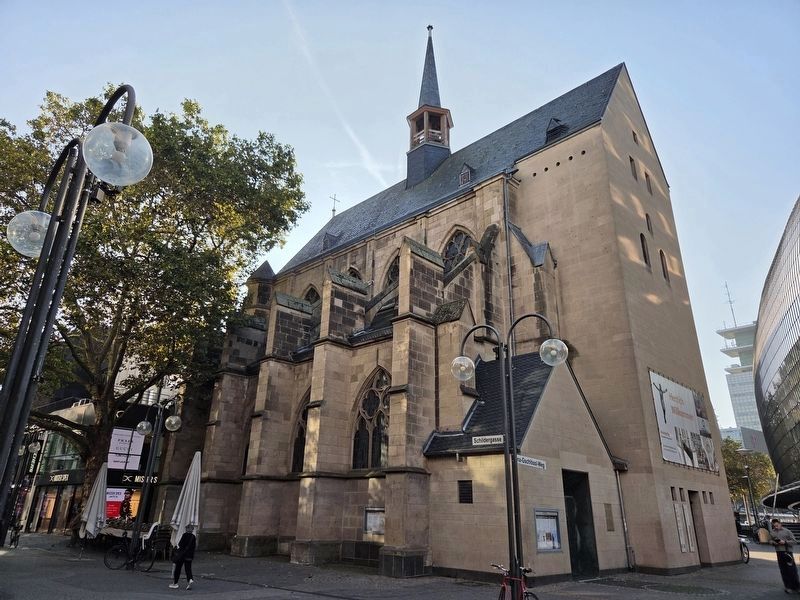
Built from 1350 as St. Antonius monastery church by the Antonine order (“sack brothers”) who cared for the sick and had been resident in Cologne since 1298. Gothic basilica with four vaulted bays and polygonal eastern chancel end sections, buttresses and roof turret. Consecration presumably around 1384. End of 16th century, Renaissance entrance at the southern side. 1802, secularised, after which it was handed over to Cologne’s Evangelical Community by the Napoleonic administration. 19th May 1805, first evangelical church service. At that time, the Gothic basilica was rebuilt and refurnished to meet the needs of the evangelical liturgy (pulpit altar and galleries) by Ferdinand Franz Wallraf. From 1862, restoration of the exterior building in medieval Gothic; 1896, neo-Gothic fittings in the interior. Severe damage during the Second World War which was
Photographed by James Hulse, October 6, 2026
2. Antoniterkirche Marker
Erected by Lions Club Köln-Colonia.
Topics. This historical marker is listed in this topic list: Religion & Religious Structures. A significant historical date for this entry is May 19, 1805.
Location. 50° 56.179′ N, 6° 57.177′ E. Marker is in Köln, Nordrhein-Westfalen (North Rhine-Westphalia). It is in City. It is on Schildergasse 0.1 kilometers east of Antonsgasse. Touch for map. Marker is at or near this postal address: Schildergasse 57, Köln HE 50667, Germany. Touch for directions.

Regionally,
Photographed by James Hulse
3. Antoniterkirche Marker
Other nearby markers. At least 8 other markers are within walking distance of this marker: Mathilde Joseph (a few steps from this marker); At This Location (about 90 meters away, measured in a direct line); Fygen Lutzenkirchen (about 180 meters away); St. Cäcilien / Museum Schnütgen (about 180 meters away); Dr. Alfred L. Tietz (about 180 meters away); Lina Wolf (about 240 meters away); St. Peter (approx. 0.2 kilometers away); Margarete Pins (approx. 0.4 kilometers away). Touch for a list and map of all markers in Köln.
Photographed by James Hulse, October 6, 2026
4. Antoniterkirche
Credits. This page was last revised on October 15, 2026. It was originally submitted on October 14, 2026, by James Hulse of Medina, Texas. This page has been viewed 8 times since then. Photos: 1, 2, 3, 4. submitted on October 15, 2026, by James Hulse of Medina, Texas.
