Liverpool in Merseyside, England, United Kingdom — Northwestern Europe (the British Isles)
Martins Bank Building
Photographed by Ian Lefkowitz, September 13, 2026
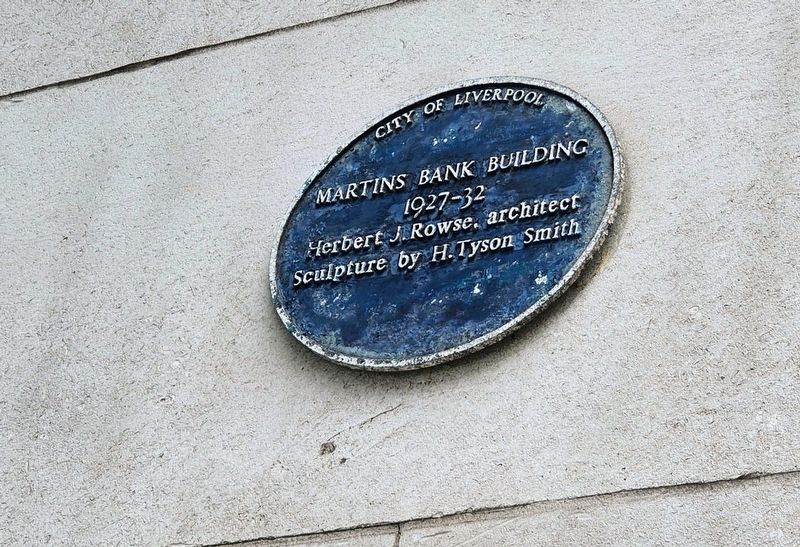
1. Martins Bank Building Marker
1927–32
Herbert J. Rowse, architect
Sculpture by H. Tyson Smith
Erected by City of Liverpool.
Topics. This historical marker is listed in these topic lists: Architecture • Industry & Commerce. A significant historical year for this entry is 1932.
Location. 53° 24.41′ N, 2° 59.531′ W. Marker is in Liverpool, England, in Merseyside. It can be reached from the intersection of Water Street and Lower Castle Street, on the right when traveling west. Touch for map. Marker is at or near this postal address: 7 Water Street, Liverpool, England L2 0RD, United Kingdom. Touch for directions.

Regionally, this marker is in North West England. Globally, it is on the Atlantic Ocean, in the North Atlantic Region, in Europe, in Atlantic Europe, on one of the British Isles, in the Western World, and in the Anglosphere. Historically, it finds itself in what was once the Roman Empire.
Other nearby markers. At least 8 other markers are within walking distance of this marker: Sir Banastre Tarleton MP (within shouting distance of this marker); India Buildings (within shouting distance of this marker);
this page online
Also see . . . Martins Bank Building (Wikipedia).
The Martins Bank Building is a Grade II* listed building and former bank located on Water Street in Liverpool, England. Built as the head office of the now defunct Martins Bank, the seven-storey classical style building has been described as one of the country's best examples of an interwar classical building. Designed by Herbert James Rowse, the bank building opened in 1932 as a replacement for the Bank of England Building which was proving unable to cope with city's increased demand for service.(Submitted on October 16, 2026, by Ian Lefkowitz of New York, New York.)
Additional keywords. plaque
Photographed by Ian Lefkowitz, September 13, 2026
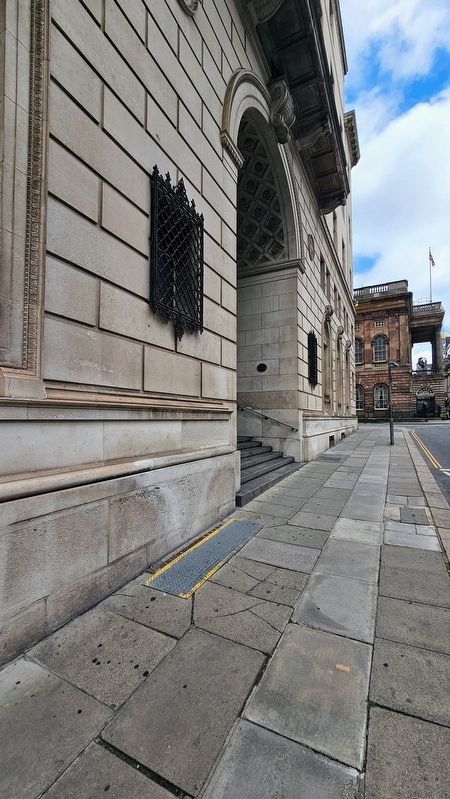
2. Martins Bank Building Marker
The marker is located in the portico of the Martins Bank Building, facing Water Street.
Photographed by Ian Lefkowitz, September 13, 2026
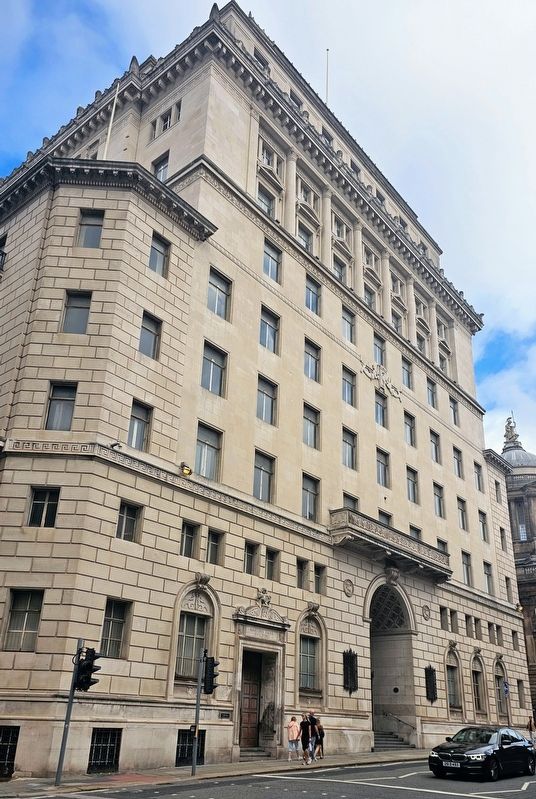
3. Martins Bank Building
This Grade II listed building, as of 2026, is under renovation.
Credits. This page was last revised on October 16, 2026. It was originally submitted on October 16, 2026, by Ian Lefkowitz of New York, New York. This page has been viewed 6 times since then. Photos: 1, 2, 3. submitted on October 16, 2026, by Ian Lefkowitz of New York, New York. • Andrew Ruppenstein was the editor who published this page.
