Liverpool in Merseyside, England, United Kingdom — Northwestern Europe (the British Isles)
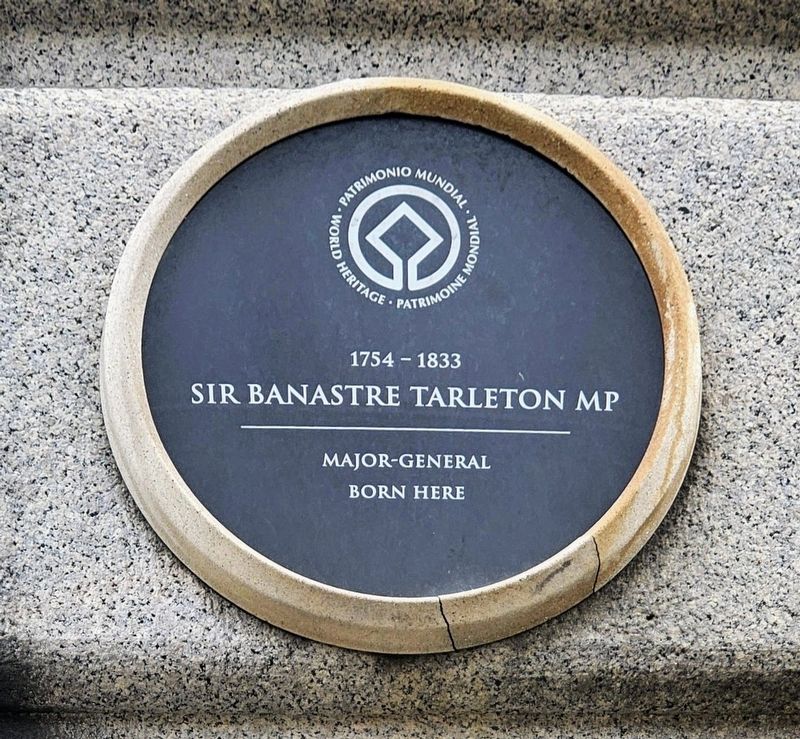
Sir Banastre Tarleton MP
1754 – 1833
Photographed by Ian Lefkowitz, September 13, 2026
1. Sir Banastre Tarleton MP Marker
Sir Banastre Tarleton MP
Major-General
Born here
Erected by UNESCO World Heritage Site.
Topics and series. This historical marker is listed in this topic list: War, US Revolutionary. In addition, it is included in the UNESCO World Heritage Sites series list. A significant historical year for this entry is 1754.
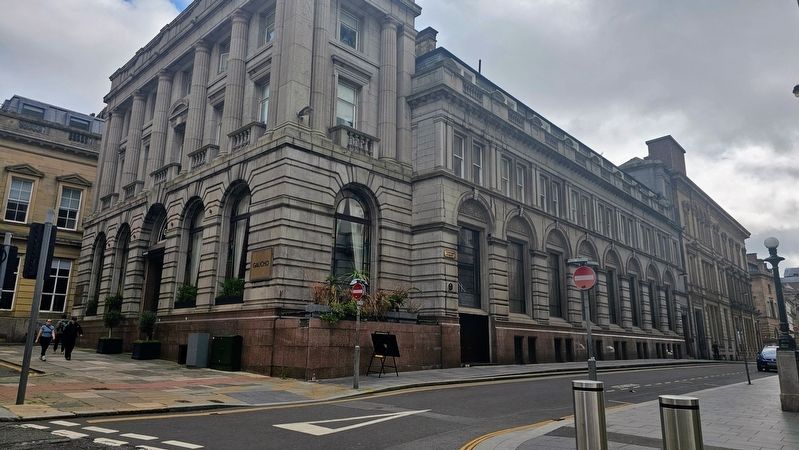
Location. 53° 24.391′ N, 2° 59.534′ W. Marker is in Liverpool, England, in Merseyside. It is at the intersection of Fenwick Street and Water Street, on the right when traveling north on Fenwick Street. Touch for map. Marker is at or near this postal address: 7 Water Street, Liverpool, England L2 0RD, United Kingdom. Touch for directions.

Regionally, this marker is in North West England. Globally, it is on the Atlantic Ocean, in the North Atlantic Region, in Europe, in Atlantic Europe, on one of the British Isles, in the Western World, and in the Anglosphere. Historically, it finds itself in what was once the Roman Empire.
Other nearby markers. At least 8 other markers are within walking distance of this marker: Martins Bank Building (within shouting distance of this marker); India Buildings
this page online
Also see . . . Banastre Tarleton (National Park Service).
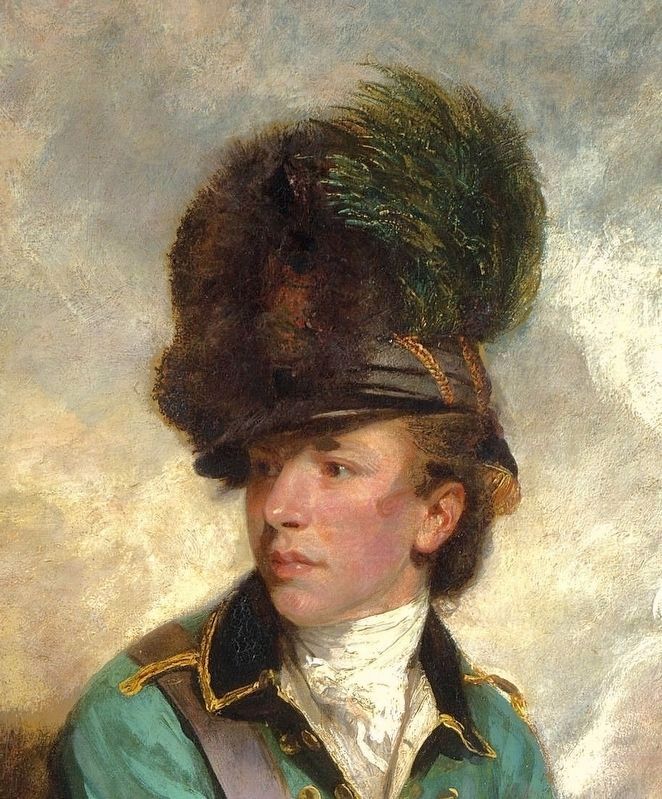
Nicknamed "Bloody Ban" by Patriots, Banastre Tarleton became infamous in the southern states during the American Revolution. His conduct illustrated and exacerbated the problems the British faced in pacifying the population of the Carolinas. As the commander of a cavalry and mounted infantry unit, his unit became the eyes and ears of Lt. Gen. Charles Cornwallis' southern army, winning battlefield glories until a decisive day at Cowpens on January 17, 1781...Tarleton returned to England a hero in 1782. Sir Joshua Reynolds painted his portrait. From 1790 until 1812, with the exception of one year,(Submitted on October 16, 2026, by Ian Lefkowitz of New York, New York.)he represented Liverpool in the House of Commons, where he was noted for his defense of the slave trade.Photographed by Ian Lefkowitz, September 13, 20262. Sir Banastre Tarleton MP MarkerThe plaque is located beneath the sign for Fenwick Street.
Additional keywords. black plaque
Humphrey Tribble, (CC ), via Wikimedia Commons, May 6, 2025
3. Portrait of Banastre Tarleton by Joshua Reynolds, c. 1782
Credits. This page was last revised on October 16, 2026. It was originally submitted on October 16, 2026, by Ian Lefkowitz of New York, New York. This page has been viewed 6 times since then. Photos: 1, 2, 3. submitted on October 16, 2026, by Ian Lefkowitz of New York, New York. • Andrew Ruppenstein was the editor who published this page.
