Downtown in Regina in Sherwood No. 159, Saskatchewan — The Prairie Region (North America)
Steam Locomotive #5093
Photographed by Cosmos Mariner, June 21, 2022
1. Steam Locomotive #5093 Marker
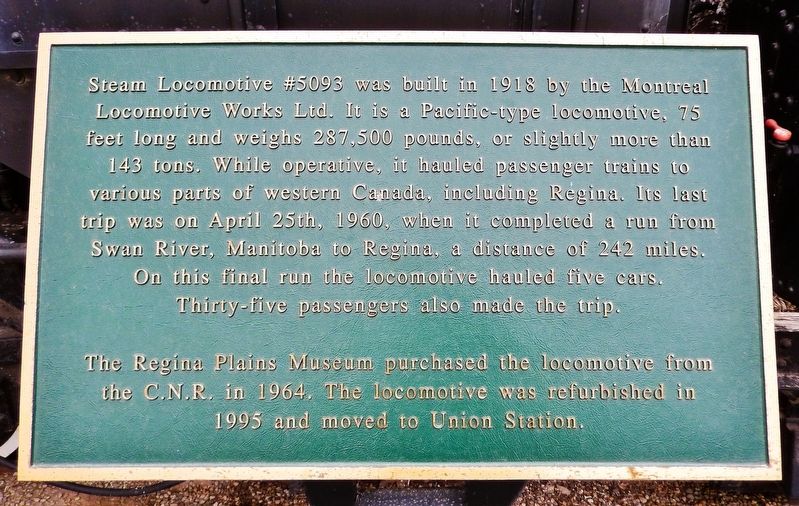
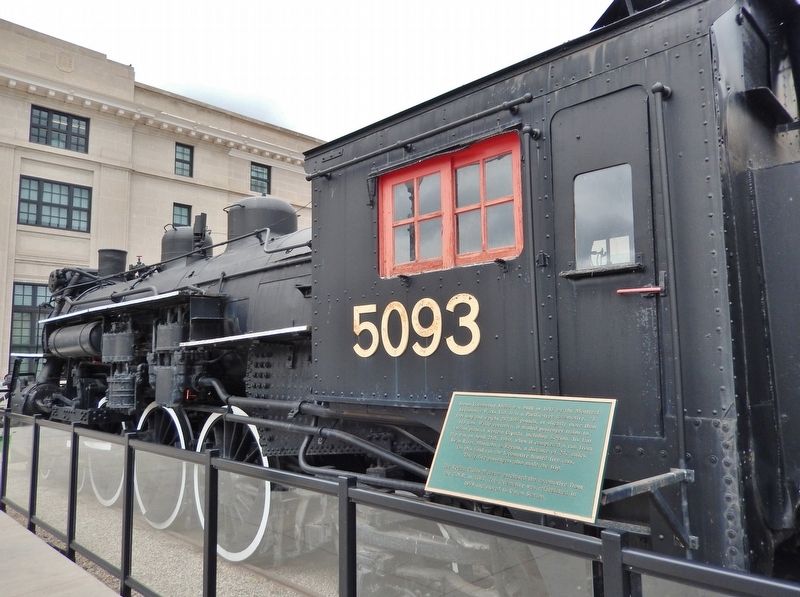
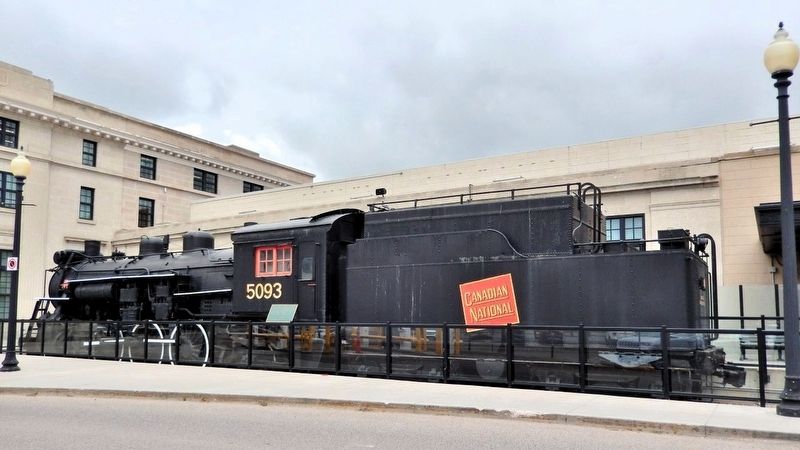
Steam Locomotive #5093 was built in 1918 by the Montreal Locomotive Works Ltd. It is a Pacific-type locomotive, 75 feet long and weighs 287,500 pounds, or slightly more than 143 tons. While operative, it hauled passenger trains to various parts of western Canada, including Regina. Its last trip was on April 25th, 1960, when it completed a run from Swan River, Manitoba to Regina, a distance of 242 miles.
On this final run the locomotive hauled five cars. Thirty-five passengers also made the trip.
The Regina Plains Museum purchased the locomotive from the C.N.R. in 1964. The locomotive was refurbished in 1995 and moved to Union Station.
Topics. This historical marker is listed in this topic list: Railroads & Streetcars. A significant historical year for this entry is 1918.
Location. 50° 27.185′ N, 104° 36.442′ W. Marker is in Regina, Saskatchewan, in Sherwood No. 159. It is in Downtown. It is on Saskatchewan Drive just west of Broad Street, on the right when traveling west. The marker and locomotive are on exhibit outside the Casino Regina complex, formerly the Canadian National Railway Union Station. Touch for map. Marker is
this page online

Regionally, this marker is in Southeast Saskatchewan. It is also in the Prairies. Globally, it is in North America, the Western Hemisphere, the Western World, and the Anglosphere. Historically, it finds itself in what was once a British colony and also Rupert’s Land.
Other nearby markers. At least 8 other markers are within walking distance of this marker: Union Station (within shouting distance of this marker); Western Trust Building (approx. 0.4 kilometers away); Ackerman Building (approx. 0.4 kilometers away); The Northern Bank (approx. 0.4 kilometers away); Campbell, Wilson & Strathdee Building (approx. 0.4 kilometers away); Frederick W. Hill Mall (approx. half a kilometer away); Glockenspiel (approx. 0.6 kilometers away); This plaque marks the site of Knox Presbyterian Church, later to become Knox United Church (approx. 0.6 kilometers away). Touch for a list and map of all markers in Regina.
Also see . . . 4-6-2 “Pacific” Locomotive (Wikipedia).
Excerpt: Under the Whyte notation for the(Submitted on October 22, 2026, by Cosmos Mariner of Cape Canaveral, Florida.)classification of steam locomotives, 4-6-2 represents the wheel arrangement of four leading wheels on two axles, six powered and coupled driving wheels on three axles and two trailing wheels on one axle. The 4-6-2 locomotive became almost globally known as a Pacific type after a locomotive built by the Baldwin Locomotive Works in Philadelphia was shipped across the Pacific Ocean to New Zealand.Photographed by Cosmos Mariner, June 21, 20222. Steam Locomotive #5093 MarkerThe marker is beside the locomotive cab.
On many railways worldwide, Pacific steam locomotives provided the motive power for express passenger trains throughout much of the early to mid-20th century, before either being superseded by larger types in the late 1940s and 1950s, or replaced by electric or diesel-electric locomotives during the 1950s and 1960s.
During the first half of the 20th century, the Pacific rapidly became the predominant passenger steam power in North America. Between 1902 and 1930, about 6,800 locomotives of the type were built by North American manufacturers for service in the United States and Canada. With exported locomotives included, about 7,300 were built in total. Canadian Pacific (CP) employed several Pacific classes built between 1906 and 1914 by the CPat its Angus Shops and by the Montreal Locomotive Works.Photographed by Cosmos Mariner, June 21, 20223. Steam Locomotive #5093 and Tender
Photographed by Cosmos Mariner, June 21, 2022
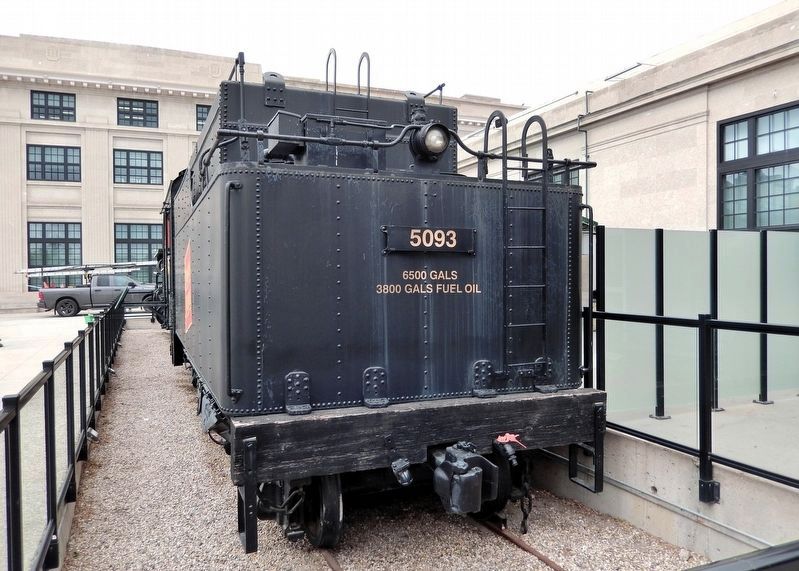
4. Tender #5093
3800 gallons of fuel oil
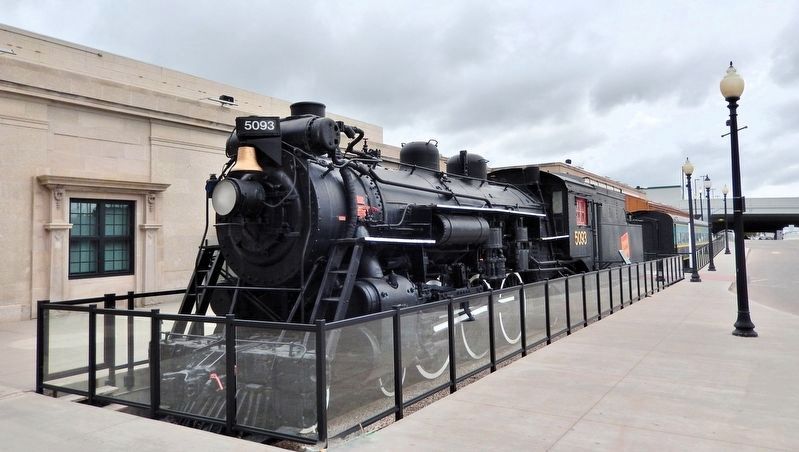
Photographed by Cosmos Mariner, June 21, 2022
5. Steam Locomotive #5093
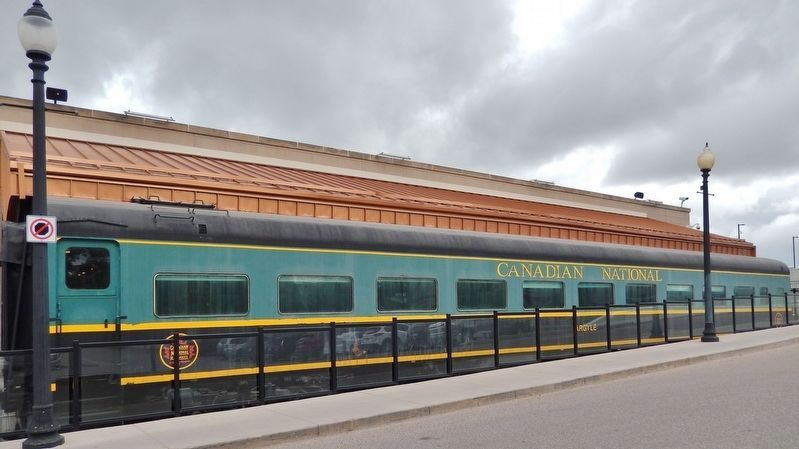
Photographed by Cosmos Mariner, June 21, 2022
6. Nearby C.N.R. Dining Car “Argyle”
Credits. This page was last revised on October 22, 2026. It was originally submitted on October 21, 2026, by Cosmos Mariner of Cape Canaveral, Florida. This page has been viewed 11 times since then. Photos: 1, 2, 3, 4, 5, 6. submitted on October 22, 2026, by Cosmos Mariner of Cape Canaveral, Florida.
