Wrigleyville in Chicago in Cook County, Illinois — The American Midwest (Great Lakes)
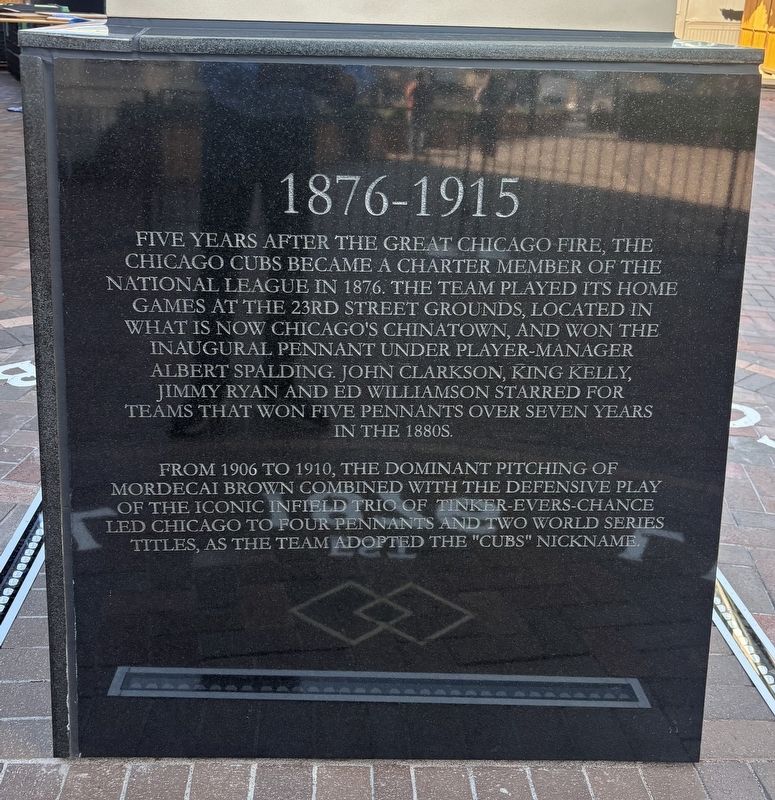
1876-1915
Photographed by Sean P. Flynn, November 10, 2026
1. 1876-1915 Marker
From 1906 to 1910, the dominant pitching of Mordecai Brown combined with the defensive play of the iconic infield trio of Tinker-Evers-Chance led Chicago to four pennants and two World Series titles, as the team adopted the "Cubs" nickname.
Erected 2026 by Chicago Cubs.
Topics and series. This historical marker is listed in this topic list: Sports. In addition, it is included in the Baseball Hall of Famers, and the The Great Chicago Fire of 1871 series lists. A significant historical year for this entry is 1876.
Location. 41° 56.865′ N, 87° 39.407′ W. Marker is in Chicago, Illinois, in Cook County. It is in Wrigleyville. It is on North Clark Street north of West Addison Street, on the right when traveling north.
this page online

Regionally, this marker is on Chicago’s North Side. It is also in the American Midwest. Globally, it is in North America, on the Great Lakes, in the Western Hemisphere, in the Western World, and in the Anglosphere. Historically, it finds itself in what was once the Viceroyalty of New France, the territory of the Mississippian Culture, and the Northwest Territory.
Other nearby markers. At least 8 other markers are within walking distance of this marker: 1953-1989 (here, next to this marker); 1916-1952 (here, next to this marker); 1990-2026 (here, next to this marker); Wrigley Field (within shouting distance of this marker); a different marker also named Wrigley Field (within shouting distance of this marker); 2016 (within shouting distance of this marker); Ryne Sandberg (within shouting distance of this marker); Ron Santo (about 300 feet away, measured in a direct
Photographed by Sean P. Flynn, November 10, 2026
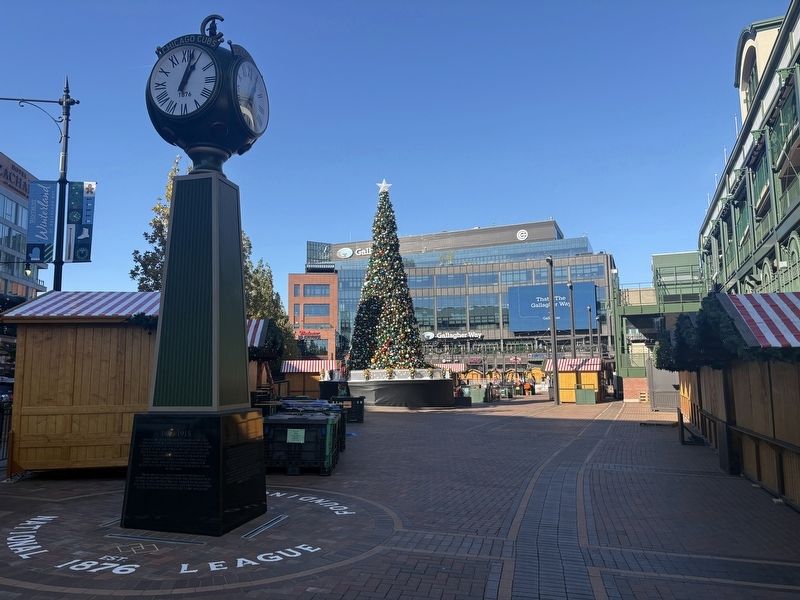
2. Clock at Gallagher Way at Wrigley Field
More about this marker. This is one of four markers at the base of the Founders Clock, erected in August 2026 by the Chicago Cubs in Gallagher Way, the plaza next to Wrigley Field. Each marker describes an era in Cubs history; painted around the clock are the words, “National League Founding Member, Estd. 1876.”
Also see . . .
1. The Evolution of Nicknames for the North Siders. An article by the Society of American Baseball Research (SABR) examines the history of nicknames for Chicago's National League baseball team. The team was first referred to as the "Cubs" in the Chicago Daily News on March 27, 1902.
Excerpt: “By 1907, the team was universally called the Cubs by all the newspapers. That year, the name ‘Cubs’ first appeared on the club’s scorecards. Credit for that might go to Frank Chance of Tinker to Evers to Chance fame. The first baseman from Salida, California, served as the Chicago player-manager from 1905 to 1912 after breaking in with the team in 1898. Chance insisted in 1907 that the club be called the ‘Cubs’ exclusively. The Chicago newspapers(Submitted on November 11, 2026, by Sean P. Flynn of Oak Park, Illinois.)fell in line. The Cubs nickname was officially recognized during the 1907 World Series, when new coats were issued to the players sporting a large bear figure on each sleeve.”Photographed by Sean P. Flynn, November 10, 20263. The Founders Clock, with a side view of Wrigley Field’s iconic marquee

2. 23rd Street Grounds: The long-forgotten first home of the Chicago’s NL ballclub. The Wrigley Rapport blog writes about 23rd Street Grounds, the Cubs' home in 1876, the first year of the National League. No known images of the park exist, and there is some debate about where exactly it stood on Chicago's South Side.
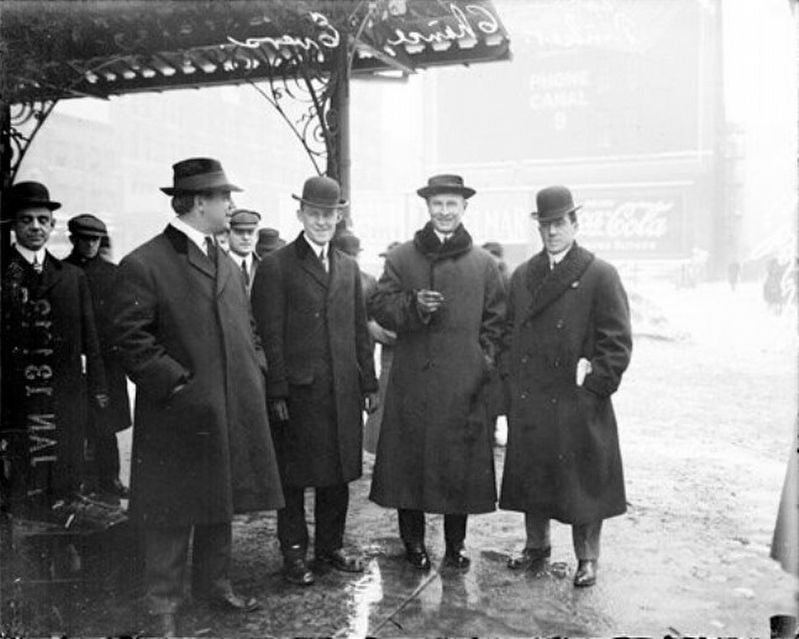
Excerpt: "Back in 1874, the Cubs (known as the White Stockings then) were part of the old National Association when they moved into the park permanently. They had lost their former home, Union Base-Ball Grounds to the Great Chicago Fire in 1871. That park was located in present day Millennium Park. In 1876 when the National League was founded the White Stockings played their first season as an NL team at the 23rd Street Grounds and went 54–13 that year and won the National League Pennant. After the stadium served again as their home in 1877, they moved back to the(Submitted on November 11, 2026, by Sean P. Flynn of Oak Park, Illinois.)site of the old Union Base-Ball Grounds where Lakefront Park was constructed as their new home."Chicago Daily News Collection, Chicago History Museum (SDN-058120), circa 19134. Frank Chance, Johnny Evers and Joe TinkerThe famed "Tinker-to-Evers-to-Chance" double play combination meets a few years after they led the Cubs to World Series championships in 1907 and 1908. They are likely the three men facing the camera at the center of this photo.
Credits. This page was last revised on November 11, 2026. It was originally submitted on November 10, 2026, by Sean P. Flynn of Oak Park, Illinois. This page has been viewed 7 times since then. Photos: 1, 2, 3. submitted on November 10, 2026, by Sean P. Flynn of Oak Park, Illinois. 4. submitted on November 11, 2026, by Sean P. Flynn of Oak Park, Illinois.
