
Hamburg-Mitte in Hamburg-Mitte, Germany — Central Europe
Rüstungsproduktion
⎯⎯⎯
Wartime Manufacturing
Photographed by James Hulse
1. Rüstungsproduktion / Wartime Manufacturing Marker

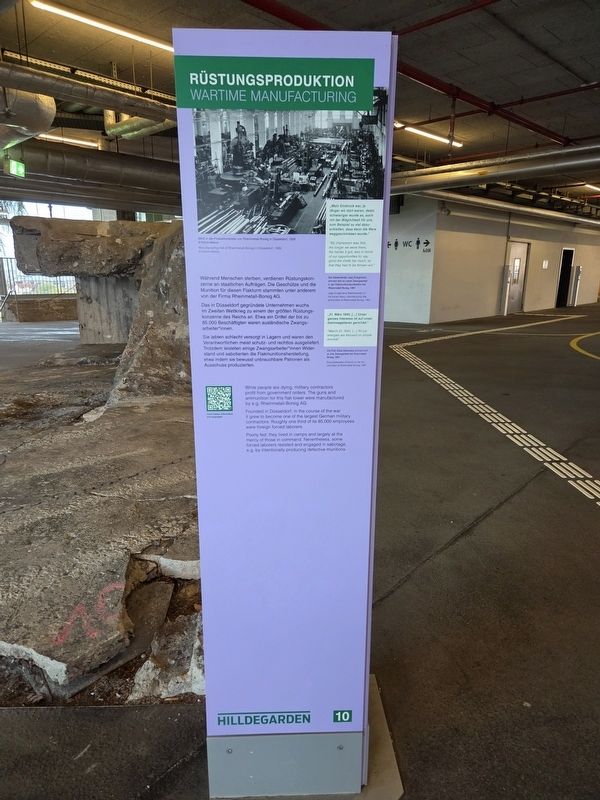
Das in Düsseldorf gegründete Unternehmen wuchs im Zweiten Weltkrieg zu einem der größten Rüstungskonzerne des Reichs an. Etwa ein Drittel der bis zu 85.000 Beschäftigten waren ausländische Zwangsarbeiter*innen.
Sie lebten schlecht versorgt in Lagern und waren den Verantwortlichen meist schutz- und rechtlos ausgeliefert. Trotzdem leisteten einige Zwangsarbeiter*innen Widerstand und sabotierten die Flakmunitionsherstellung, etwa indem sie bewusst unbrauchbare Patronen als Ausschuss produzierten.
„Mein Eindruck war, je länger wir dort waren, desto schwieriger wurde es, auch mit der Möglichkeit für uns, zum Beispiel zu viel abzuschleifen, dass dann die Ware weggeschmissen wurde.“
Der Niederländer Jaap Knegtmans erinnert sich an seine Zwangsarbeit in der Flakmunitionsproduktion bei Rheinmetall-Borsig, 1987.
„21. März 1945. [...] Unser ganzes Interesse ist auf unser Dahinvegetieren gerichtet.“
Die Polin Eliza Stokowska erinnert sich an ihre Zwangsarbeit bei Rheinmetall-Borsig, 1987.
Blick in die Produktionshalle von Rheinmetall-Borsig in Düsseldorf, 1939
© Picture Alliance
this page online
Founded in Düsseldorf, in the course of the war it grew to become one of the largest German military contractors. Roughly one third of its 85,000 employees were foreign forced laborers.
Poorly fed, they lived in camps and largely at the mercy of those in command. Nevertheless, some forced laborers resisted and engaged in sabotage, e.g. by intentionally producing defective munitions.
“My impression was that, the longer we were there, the harder it got, also in terms of our opportunities to, say, grind the shells too much, so that they had to be thrown out.”
Jaap Knegtmans (Netherlands) on his forced labor, manufacturing flak ammunition at Rheinmetall-Borsig, 1987.
“March 21, 1945. [...] All our energies are focused on simple survival.”
Eliza Stokowska (Poland) on her forced labor at Rheinmetall-Borsig, 1987.
Manufacturing hall of Rheinmetall-Borsig in Düsseldorf, 1939
© Picture Alliance
Erected by Hilldegarden e.V. (Marker Number 10.)
Topics.
Photographed by James Hulse, October 10, 2026
2. Rüstungsproduktion / Wartime Manufacturing Marker
Location. 53° 33.401′ N, 9° 58.215′ E. Marker is in Hamburg, in Hamburg-Mitte. It is in Hamburg-Mitte. It is on Feldstraße just west of Heiligengeistfeld, on the left when traveling west. The marker stands on the open-air rooftop of the Hamburg Bunker, beneath the hotel built above it. Touch for map. Marker is at or near this postal address: Feldstraße 66, Hamburg 20357, Germany. Touch for directions.

Regionally, it is in Europe, the European Union, Atlantic Europe, Central Europe, the Schengen Area, Western Europe, and the Western World. Historically, it finds itself in what was once the Holy Roman Empire, the Hanseatic League, and the former West Germany.
Other nearby markers. At least 8 other markers are within walking distance of this marker: Ersatzleitstand / Backup Control Center (here, next to this marker); Munitionskammer / Munitions Depot (here, next to this marker); Flakturm • Luftschutzbunke • Machtsymbol / Flak Tower • Air Raid Shelter • Symbol of Power (here, next to this
Photographed by James Hulse, October 10, 2026
3. Rüstungsproduktion / Wartime Manufacturing Marker
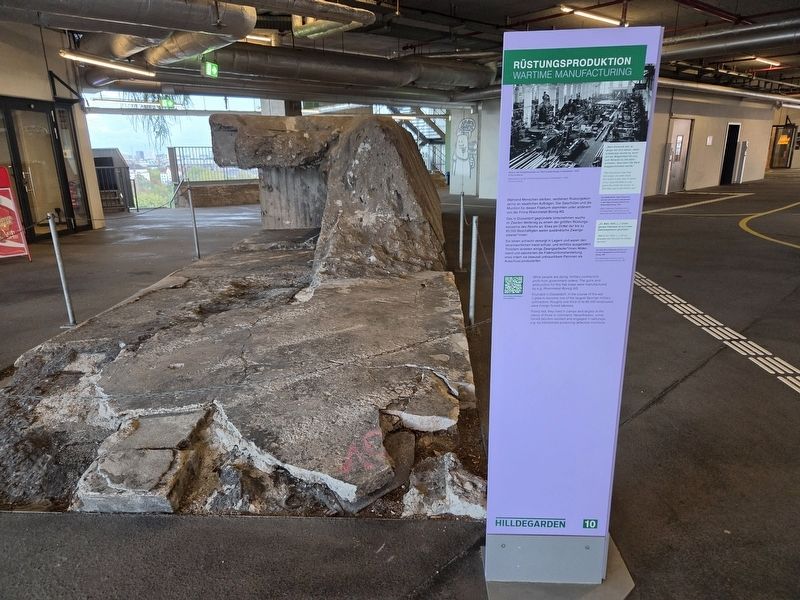
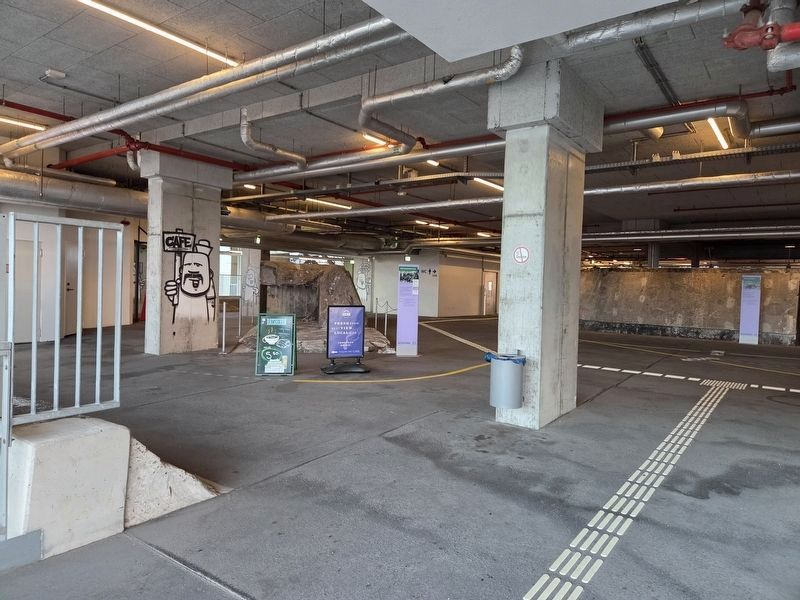
The marker is on the bunker’s rooftop, near the hotel built above the original structure.
More about this marker. The former flak tower is now the Hamburg Bunker, a complex with a hotel, restaurants, music and event spaces, and a rooftop garden. An exterior walkway leads upward past historical panels explaining its wartime history.
Credits. This page was last revised on November 17, 2026. It was originally submitted on November 16, 2026, by James Hulse of Medina, Texas. This page has been viewed 6 times since then. Photos: 1, 2, 3. submitted on November 17, 2026, by James Hulse of Medina, Texas.
